Close Menu
The Battery MagazineThe Battery Magazine
  • Just In
  • Batteries
    • Battery Manufacturing (BESS)
    • Battery Materials & Chemistries
    • Battery Recycling
    • C&I Storage
  • Solar
  • Renewable energy
    • Wind Energy
    • Hydropower
    • Green Hydrogen
    • Bioenergy
  • Tenders
    • Energy Storage
    • Solar Energy
    • Wind Energy
  • Policy
    • Storage
    • Solar
    • Wind
    • EV
    • Transmission
  • EV
    • EV Batteries
    • EV Charging Infrastructure
    • Electric Mobility Trends
  • Grid
    • Transmission & Distribution
    • Grid Infrastructure
    • Power Generation
    • Power Equipments
  • Exclusive
    • Cover Story
    • Watt Matters
    • Perspective
    • Articles
  • More
    • E-Mag
    • Events
    • Contact Us
Facebook LinkedIn WhatsApp
The Battery MagazineThe Battery Magazine
  • Just In
  • Batteries
    • Battery Manufacturing (BESS)
    • Battery Materials & Chemistries
    • Battery Recycling
    • C&I Storage
  • Solar
  • Renewable energy
    • Wind Energy
    • Hydropower
    • Green Hydrogen
    • Bioenergy
  • Tenders
    • Energy Storage
    • Solar Energy
    • Wind Energy
  • Policy
    • Storage
    • Solar
    • Wind
    • EV
    • Transmission
  • EV
    • EV Batteries
    • EV Charging Infrastructure
    • Electric Mobility Trends
  • Grid
    • Transmission & Distribution
    • Grid Infrastructure
    • Power Generation
    • Power Equipments
  • Exclusive
    • Cover Story
    • Watt Matters
    • Perspective
    • Articles
  • More
    • E-Mag
    • Events
    • Contact Us
LinkedIn Facebook WhatsApp YouTube
The Battery MagazineThe Battery Magazine
Home » Batteries » CEA Releases Draft Safety Regulations for Battery Energy Storage Systems
Batteries

CEA Releases Draft Safety Regulations for Battery Energy Storage Systems

PrakashBy PrakashJune 23, 20253 Mins Read
Facebook Twitter LinkedIn WhatsApp
The Ministry of Power in India, through its CEA has issued a draft of amendment to its safety regulations in regard to the electric supply.

The Ministry of Power in India, through its Central Electricity Authority (hereinafter referred to as CEA), has issued a draft of amendment to its safety regulations in regard to the electric supply. This draft is known as the Central Electricity Authority (Measures relating to Safety and Electric Supply) (First Amendment) Regulations, 2025 that outlines how detailed safety standards must be put in place particularly to any Battery Energy Storage Systems (BESS).

A public notice calling comments on this draft has been given under Section 177 of Electricity Act, 2003. The stakeholders and the members of the population have up to July 20, 2025, to present their feedback. The draft is available on CEA Web site or may also be read physically in the CEA office at New Delhi during working hours.

The main idea of such draft regulations is the increased safety requirements of BESS installations. The new chapter, chapter X-A has been added that deals with wide range of safety requirements such as fault tolerance, fire protection, emergency stops, security aspects, ventilation, and identification of hazard.

Another important suggestion includes that the battery chargers should not be incompatible with the battery chemistry whereas the system design must be able to tolerate two failures without causing catastrophic failure of the system. All types of components will have to follow all the safety standards.

In addition to that, Battery Management System (BMS) must be able to monitor and record voltage, temperature, and current at cell and module level. It should also produce warning signals and shut down operations when one or more of the parameters, being monitored, enter danger ranges. Power Conversion System (PCS) should be automatic and it should be grid-synchronized and have self-protection characteristics.

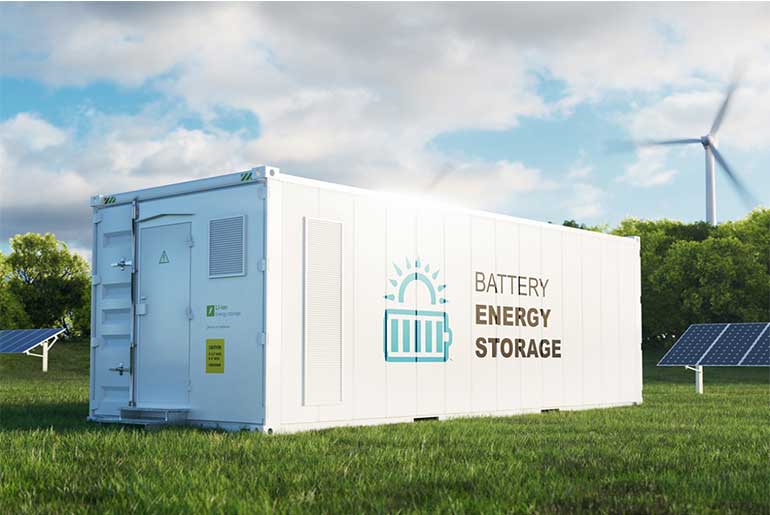
The battery containers must be explosion-proof and have enough ventilation. Certain set distances have been established between containers and buildings and in case such distances are not met, then a lot of fire testing will need to be done to ensure safety. They also require that any BESS container experiencing capacity of 200 kWh or more should have water-based fire suppression system.

There are however other regulations that require appropriate lighting, warning exits, identification signs and security measures like fences and use of CCTV cameras. Electrolyte spillage containment, appropriately earthing, and manual emergency stops are also to be provided.

A third-party fire safety audit by an independent organisation should be done within three months of publication of the final regulation and the report of that audit must be submitted to the Electrical Inspector. Also, the concerned state government is obliged to train the fire safety officers to deal with the risks associated with BESS, the guidelines to be issued within three months of the notification by the Directorate General of Fire Safety (DGFS).

Another rule (Regulation 137) has also been brought about, which indicates that a list with relevant standards suitable to these amendments will be supplied by the CEA independently by three months after launching of the rule. These draft amendments belong to the growing interest of India in the safety of energy storage systems where the battery technology becomes an inseparable part of the energy infrastructure in the country. The initiative by the CEA highlights the need to have a regulated set of rules to work around mitigating fire, chemical, and work hazards as the sector takes a new course.

whatsapp icon Electrify your feed! Click here to join our Whatsapp group and to get the latest updates, expert insights, and innovations driving India’s energy storage revolution.

Battery Management System BESS CEA Ministry of Power Power Conversion System
Prakash
  • Website
  • LinkedIn

I am a Junior Journalist with experience in researching, reporting, and creating engaging content across diverse topics and platforms. My work has strengthened my skills in communication, relationship building, and understanding people, while also honing my organisational and problem-solving abilities.

Keep Reading

NavPrakriti and IIT Kharagpur

NavPrakriti and IIT Kharagpur Partner to Advance Battery Recycling and Critical Mineral Recovery

Advait Energy Secures 150 MW/300 MWh BESS Project from GUVNL

Advait Energy Secures 150 MW/300 MWh BESS Project from GUVNL

SJVN Flags

SJVN Flags Renewable Power Demand Gap Amid Rising Capacity Additions

Comments are closed.

Renewable energy
IIT Guwahati

IIT Guwahati Develops Perovskite Technology Achieving 25.73% Solar Cell Efficiency

June 4, 2026
India’s Clean Energy Sector

India’s Clean Energy Workforce Grows by 6.6 Lakh, Rooftop Solar Leads Job Creation

June 4, 2026
SJVN Flags

SJVN Flags Renewable Power Demand Gap Amid Rising Capacity Additions

June 4, 2026
Kyro Capital

Kyro Capital Launches ₹100 Crore Pre-IPO Fund Targeting Renewable Energy and Growth Sectors

June 3, 2026
Batteries
NavPrakriti and IIT Kharagpur

NavPrakriti and IIT Kharagpur Partner to Advance Battery Recycling and Critical Mineral Recovery

June 4, 2026
Advait Energy Secures 150 MW/300 MWh BESS Project from GUVNL

Advait Energy Secures 150 MW/300 MWh BESS Project from GUVNL

June 4, 2026
cylib and Vianode

cylib and Vianode Partner to Advance Recycled Graphite for EV Batteries

June 4, 2026
Trina Storage

Trina Storage Wins 160 MWh Ultra-High Voltage Battery Project in Japan’s Kyushu Region

June 3, 2026

Subscribe for Updates

Get the latest news about energy storage in your inbox.

    © 2026 Thebatterymagazine.com.
    • Home
    • About Us
    • Contact Us
    • Privacy Policy
    • Terms of Service

    Type above and press Enter to search. Press Esc to cancel.