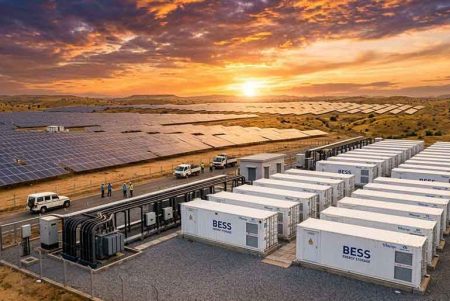
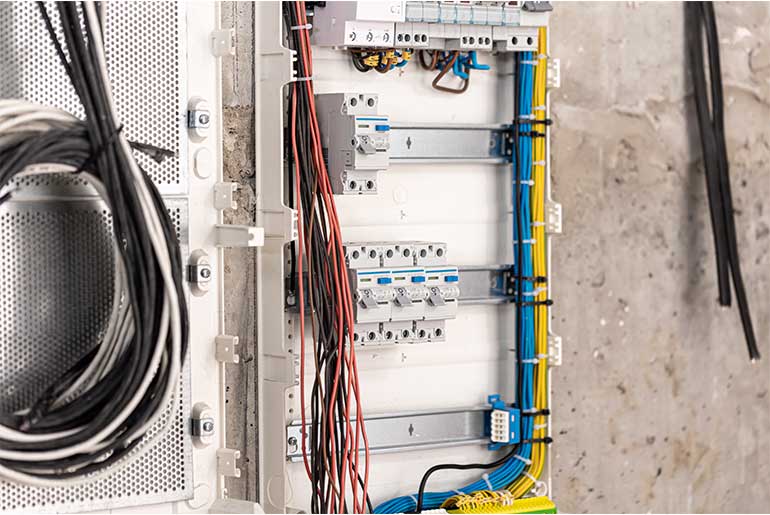
The European Commission’s decision to ban photovoltaic (PV) inverters and power conversion systems (PCS) from China and other countries classified as high risk in all EU-funded clean energy projects could affect around 14% of Europe’s forecast solar PV demand between 2026 and 2030, according to a new analysis by Wood Mackenzie.
The report estimates that the restriction will impact more than 28 GWdc of PV inverter demand over the five years. It also projects that 12% of forecast energy storage deployments could be affected, with the utility-scale storage segment expected to face the highest exposure.
The move aims to reduce Europe’s dependence on Chinese suppliers, which accounted for over 80% of inverter shipments to Europe in 2025. Countries in Central and Eastern Europe, where EU-funded renewable energy projects are more common, are expected to experience the greatest impact. Romania, Bulgaria, Czechia, the Baltic states and Greece are among the most exposed markets.
The European Commission has also encouraged EU Member States to apply the same restrictions to renewable energy projects financed through national budgets. If adopted widely, the scope of the ban could extend well beyond current estimates.
Despite higher prices for European-made alternatives, Wood Mackenzie estimates that the overall increase in project costs would remain relatively limited, ranging between 2% and 8%, depending on the project segment.
Joe Shangraw, Research Analyst at Wood Mackenzie, said that while higher equipment costs are a concern, the policy may also create procurement challenges, require design modifications and force developers to separate integrated battery-inverter systems, particularly in cost-sensitive Eastern European markets.
Wood Mackenzie further noted that proposed revisions to the EU Cybersecurity Act could significantly expand the policy by covering all solar PV inverters and energy storage power conversion systems, regardless of whether projects receive EU funding.
Juan Monge, Principal Analyst at Wood Mackenzie, said the policy could shift 4–5 GW of annual inverter demand away from Chinese suppliers through 2030. However, he noted that nearly 80% of Europe’s solar and energy storage market is still financed through private and national funding channels, where Chinese inverter manufacturers are expected to retain a strong market presence unless Member States introduce broader restrictions.
 Electrify your feed! Click here to join our Whatsapp group and to get the latest updates, expert insights, and innovations driving India’s energy storage revolution.