

Huawei and Senegal’s national electricity utility, Senelec, have jointly launched a white paper on grid-forming battery energy storage technology, outlining a roadmap to strengthen grid stability and support higher renewable energy penetration in Senegal.
Huawei and Senelec, in collaboration with other industry partners, have unveiled the White Paper on Grid-Forming Energy Storage Technology in Senegal at the Huawei Northern Africa Inclusive Energy Summit 2026, held in Rabat, Morocco.
The summit brought together more than 300 participants, including government representatives, energy industry leaders and technology partners, to discuss Africa’s energy transition. The white paper aims to provide practical guidance for deploying grid-forming battery energy storage systems (GFM BESS) and addressing the challenges associated with integrating renewable energy into power networks.
Grid-Forming BESS to Strengthen Power Grid Stability
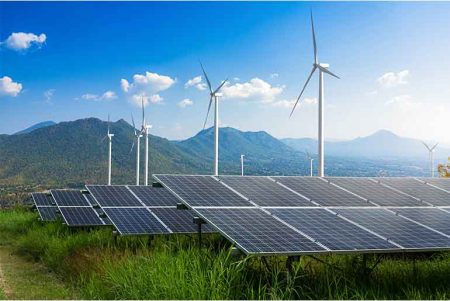
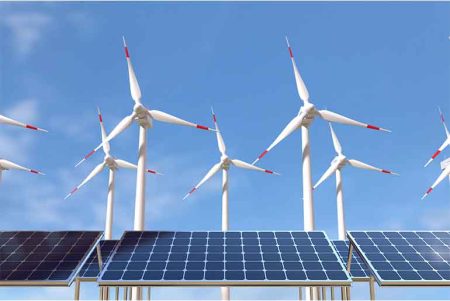
According to the white paper, African power grids face increasing stability challenges as renewable energy penetration rises beyond 30%. Higher shares of renewable energy can reduce system inertia and short-circuit capacity, creating challenges for conventional grid operations.
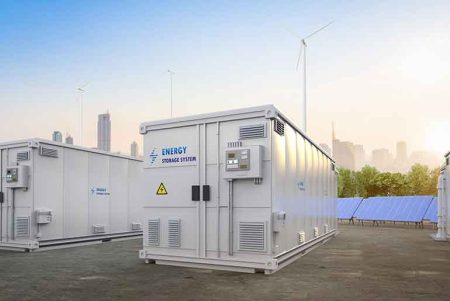
Grid-forming battery energy storage systems can provide essential grid support functions, including voltage and frequency regulation. Unlike conventional grid-following systems, grid-forming technology can actively support grid stability, enabling power networks to operate reliably with higher shares of renewable energy.
The technology is expected to play an important role in supporting the integration of solar and other renewable energy sources while improving the reliability of electricity networks.
Africa’s Energy Access and Grid Modernisation Challenges
During the summit, Eng. Abel Didier Tella, Director General of the Association of Power Utilities of Africa (APUA), highlighted that more than 560 million people in sub-Saharan Africa still lack access to electricity.
He noted that achieving universal electricity access by 2030 would require three times the current annual pace of electrification. He also highlighted the importance of digital transformation, solar power and battery energy storage in improving electricity access and supporting sustainable energy development.
China’s Experience in Digital Grid Transformation
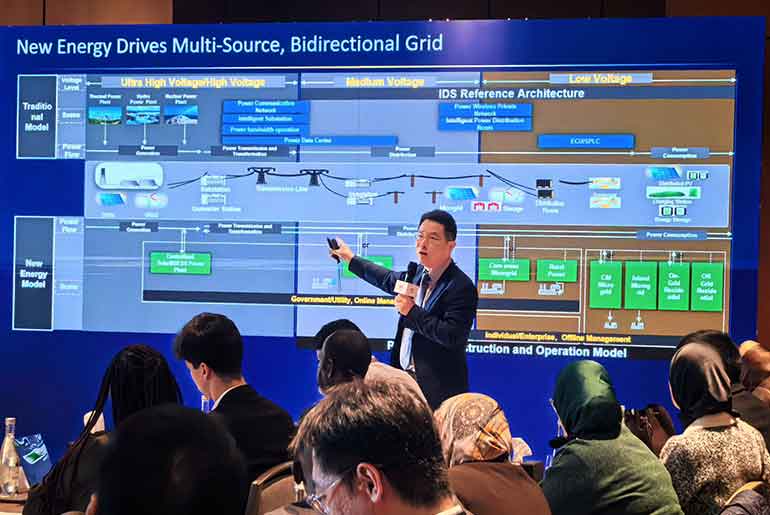
The summit also featured insights from China’s experience in modernising electricity distribution networks. Zhang Genzhou, former Chief Information Officer of State Grid Shaanxi, presented the province’s approach to managing the rapid growth of distributed solar PV, electric vehicle charging infrastructure and energy storage.
In Shaanxi, renewable energy accounts for 51.3% of total installed power generation capacity, surpassing thermal power. Over five years, distributed solar PV capacity increased 7.6 times, while EV charging infrastructure expanded 14 times.
To address these developments, the province adopted a digital-first approach by deploying edge sensing terminals, communication systems and AI-based operational technologies across 180,000 transformer areas.
The initiative delivered several operational improvements:
- Fault Location Time: Reduced from 42 minutes to 5 minutes.
- Power Restoration Time: Reduced from 3.6 hours to 1.9 hours.
- Customer Complaint Rates: Declined by 34%.
- Operation and Maintenance Costs: Reduced by 32%.
Zhang highlighted that African utilities could adopt similar digitalisation strategies, including improved grid monitoring, unified technical standards and AI-driven operations, to strengthen electricity distribution networks.
Huawei’s Focus on Africa’s Energy Transition
Huawei said it will continue working with governments, power utilities and industry partners across Africa to support energy infrastructure development through digitalisation and intelligent technologies.
The launch of the Senegal grid-forming energy storage white paper marks a step towards expanding battery energy storage deployment and improving grid readiness for renewable energy integration across the African power sector.
 Electrify your feed! Click here to join our Whatsapp group and to get the latest updates, expert insights, and innovations driving India’s energy storage revolution.