
Close Menu
The Battery MagazineThe Battery Magazine
  • Just In
  • Batteries
    • Battery Manufacturing (BESS)
    • Battery Materials & Chemistries
    • Battery Recycling
    • C&I Storage
  • Solar
  • Renewable energy
    • Wind Energy
    • Hydropower
    • Green Hydrogen
    • Bioenergy
  • Tenders
    • Energy Storage
    • Solar Energy
    • Wind Energy
  • Policy
    • Storage
    • Solar
    • Wind
    • EV
    • Transmission
  • EV
    • EV Batteries
    • EV Charging Infrastructure
    • Electric Mobility Trends
  • Grid
    • Transmission & Distribution
    • Grid Infrastructure
    • Power Generation
    • Power Equipments
  • Exclusive
    • Cover Story
    • Watt Matters
    • Perspective
    • Articles
  • More
    • E-Mag
    • Events
    • Contact Us
Facebook LinkedIn WhatsApp
The Battery MagazineThe Battery Magazine
  • Just In
  • Batteries
    • Battery Manufacturing (BESS)
    • Battery Materials & Chemistries
    • Battery Recycling
    • C&I Storage
  • Solar
  • Renewable energy
    • Wind Energy
    • Hydropower
    • Green Hydrogen
    • Bioenergy
  • Tenders
    • Energy Storage
    • Solar Energy
    • Wind Energy
  • Policy
    • Storage
    • Solar
    • Wind
    • EV
    • Transmission
  • EV
    • EV Batteries
    • EV Charging Infrastructure
    • Electric Mobility Trends
  • Grid
    • Transmission & Distribution
    • Grid Infrastructure
    • Power Generation
    • Power Equipments
  • Exclusive
    • Cover Story
    • Watt Matters
    • Perspective
    • Articles
  • More
    • E-Mag
    • Events
    • Contact Us
LinkedIn Facebook WhatsApp YouTube
The Battery MagazineThe Battery Magazine
Home » Renewable energy » MIT-WPU Develops Scalable Solution to Tackle India’s Rising Solar Panel Waste
Renewable energy

MIT-WPU Develops Scalable Solution to Tackle India’s Rising Solar Panel Waste

PrakashBy PrakashOctober 7, 20253 Mins Read
Facebook Twitter LinkedIn WhatsApp
MIT-WPU Develops Scalable Solution to Tackle India’s Rising Solar Panel Waste

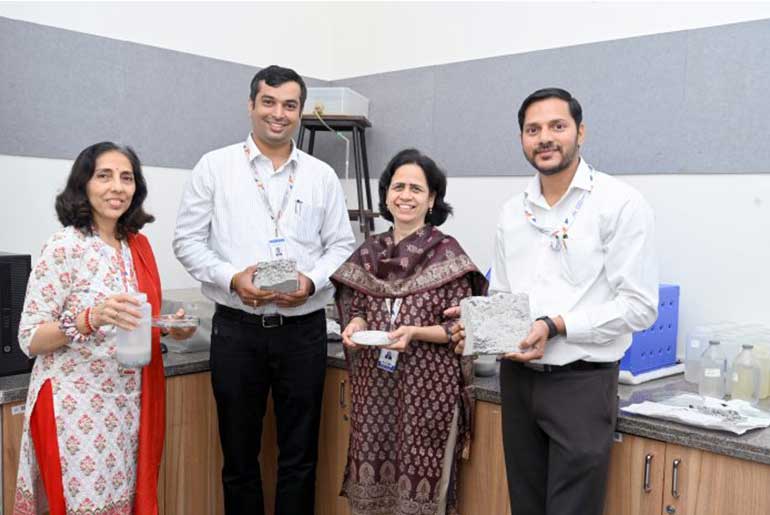
Since the solar photovoltaic (PV) waste of India is likely to increase to almost 200,000 tons by 2030 and more than 1.8 million tons by 2050, a research team of MIT World Peace University (MIT-WPU) has invented and confirmed a scalable recycling procedure to handle this new problem. There has been laboratory experimentation and industry feedback in its process. In order to fund this pioneering project, the team has been awarded a research grant of 25 lakh by the Rajiv Gandhi Science and Technology Commission (RGSTC), Government of Maharashtra.

The solution would directly respond to the increasing problem of PV waste in India and would be consistent with the UN Sustainable Development Goals (SDGs) to Goal 9 (Industry, Innovation, and Infrastructure) and Goal 11 (Sustainable Cities and Communities) by facilitating the idea of the circularity of industrial activity and sustainable urban development.

Most end of life solar panels are currently stored or partially dismantled to reclaim some aluminum and cables, but the valuable metals of silver (Ag), copper (Cu), tin (Sn) and lead (Pb) are often lost to the complex, laminated structure of the panels. As a solution to this, Dr. Sarita R. Zele, Professor, Research and Development and Dr. Nivedita Gogate, Associate Professor, Civil Engineering and Dr. Deepti Marathe and Dr. Amrut Joshi are at the forefront of this groundbreaking project at MIT-WPU. Other people involved in this research are Amar Shitole, Omkar Gajare, Neha Jadhav, Veda Shewalkar, Atharv Jagdale, Pranali Dhiware, Sameer Thamke, Anjali Gabhane, Sumit Dafe, Avanti Gulhane, Dhanashree Langhi, Ruturaj Jadhav, Ameya Bakal, and Chirag Sonawane.

This recycling process not only allows retrieving these high-value products but also converts the nonrecoverable elements of the panels into other useful construction products, including bricks, blocks and aggregates. Such a dual mechanism allows us to avoid dangerous garbage in the landfills, as well as decreases the use of virgin resources and creates a circular connection between the renewable energy and construction sectors.

Dr. Sarita R. Zele, Professor of Research and Development at MIT-WPU, stated, “Solar energy is one of the pillars of India’s clean energy transition, but its by-product—solar panel waste—is a growing concern. Our research provides a sustainable solution that not only recovers valuable resources but also converts waste into useful construction products. This ensures that renewable energy continues to be truly green and environmentally responsible.”

Dr. Nivedita Gogate, Associate Professor, Civil Engineering, MIT-WPU, added, “Our innovation bridges renewable energy and construction, turning a waste challenge into an opportunity. By creating an industrial symbiosis, we reduce landfill burden, conserve virgin raw materials, and promote a circular economy. We believe this model can be scaled across India to make solar adoption more sustainable.”

Since India is steadily increasing its solar capacity targets in accordance to national clean energy policies, the innovative study of MIT-WPU makes sure that the already increasing renewable energy infrastructure does not result in future environmental issues.

whatsapp icon Electrify your feed! Click here to join our Whatsapp group and to get the latest updates, expert insights, and innovations driving India’s energy storage revolution.
clean energy MIT-WPU renewable energy
Prakash
  • Website
  • LinkedIn

I am a Junior Journalist with experience in researching, reporting, and creating engaging content across diverse topics and platforms. My work has strengthened my skills in communication, relationship building, and understanding people, while also honing my organisational and problem-solving abilities.

Keep Reading

Ashwani Dhiman

Microtek International Appoints Ashwani Dhiman as AGM to Strengthen Battery and Energy Storage Business

NGEL Floats Tender for 3,200 MWh Battery Storage Project in Rajasthan

NGEL Floats Tender for 3,200 MWh Battery Storage Project in Rajasthan

PIP Partners with Fourier to Deploy Hydrogen-Powered Energy Storage System in Gujarat

PIP Partners with Fourier to Deploy Hydrogen-Powered Energy Storage System in Gujarat

Comments are closed.

Renewable energy
PIP Partners with Fourier to Deploy Hydrogen-Powered Energy Storage System in Gujarat

PIP Partners with Fourier to Deploy Hydrogen-Powered Energy Storage System in Gujarat

June 4, 2026
IIT Guwahati

IIT Guwahati Develops Perovskite Technology Achieving 25.73% Solar Cell Efficiency

June 4, 2026
India’s Clean Energy Sector

India’s Clean Energy Workforce Grows by 6.6 Lakh, Rooftop Solar Leads Job Creation

June 4, 2026
SJVN Flags

SJVN Flags Renewable Power Demand Gap Amid Rising Capacity Additions

June 4, 2026
Batteries
Ashwani Dhiman

Microtek International Appoints Ashwani Dhiman as AGM to Strengthen Battery and Energy Storage Business

June 4, 2026
NavPrakriti and IIT Kharagpur

NavPrakriti and IIT Kharagpur Partner to Advance Battery Recycling and Critical Mineral Recovery

June 4, 2026
Advait Energy Secures 150 MW/300 MWh BESS Project from GUVNL

Advait Energy Secures 150 MW/300 MWh BESS Project from GUVNL

June 4, 2026
cylib and Vianode

cylib and Vianode Partner to Advance Recycled Graphite for EV Batteries

June 4, 2026

Subscribe for Updates

Get the latest news about energy storage in your inbox.

    © 2026 Thebatterymagazine.com.
    • Home
    • About Us
    • Contact Us
    • Privacy Policy
    • Terms of Service

    Type above and press Enter to search. Press Esc to cancel.