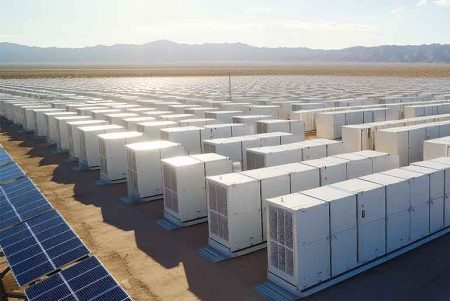
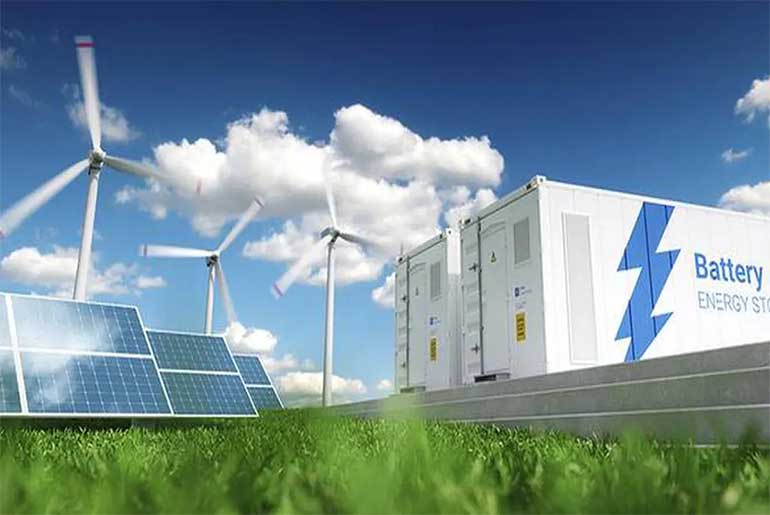
The battery storage industry of India continues to develop with new state-owned agencies, SECI (Solar Energy Corporation of India) and CEA (Central Electricity Authority). Most recently, SECI declared the massive tender of 1,200 MW of solar photovoltaic (PV) power with 600 MW/3,600 MWh battery capacity, which is to be interconnected with the Inter-State Transmission System (ISTS).
This competitive solicitation is a Request for Selection (RfS) issued by SECI, which works under the Ministry of New and Renewable Energy (MNRE) and is a key contributor in the propagation of the National Solar Mission. The successful bidders will enter into a 25-year Power Purchase Agreement (PPA) with SECI in their case build own operate (BOO) solar-plus-storage projects, as was seen in the earlier tenders. SECI will then offer the power produced and stored by such projects to its buying entities.
Battery storage will enable the provision of electricity at peak hours. Those who win the bid will be bound to use clean energy in order to get it at the peak hours, to be exact, between 6 PM and 9 AM of the next day. The batteries during all these six hours should be able to discharge for one hour. The developers are required to make sure that they are able to provide 3,000 kWh of energy per installed MWac of solar PV in the given peak hours. The time of a pre-bid meeting shall be July 10, 2025, and bidding will be opened on August 21.
SECI and other government agencies have long offered tenders that have helped to develop the procurement sector in the nascent energy storage industry in India. During one of the latest workshops organized by the CEA, SECI officials spoke about the BESS (Battery Energy Storage Systems) tender and tariffs in India and about their experience working on BESS projects that are under operation and construction. As per the CEA briefing, SECI revealed that the Solar+BESS tender tariffs that it received during August 2018 dropped to IR3.09/unit as of September 2020 2019.
Debmalya Sen, the president of the India Energy Storage Alliance (IESA), in a guest blog on Energy-Storage.news, explained the disruption potential of three broad categories of tenders that incorporate energy storage namely: standalone BESS, solar-plus-storage systems, and Firm, Dispatchable Renewable Energy (FDRE).
To date, SECI has released two Solar+BESS tenders, together with 1,200 MW solar PV and 1,200 MWh BESS in March 2024 and 2,000 MW PV and 4,000 MWh BESS in August 2024. Although it can be seen as a success so far, it is still too early with Indian solar-plus-storage tenders. Based on SEN statistics, solar PV and battery storage have been operationalized only to the tune of 200 MW and 200 MWh, respectively, under the Solar+BESS tender.
A further 1200 MW of PV and 1200 MWh of BESS capacity are already under construction, and 3400 MW of PV and 5400 MW of BESS have been commissioned but are not built, showing that project timelines are rising. Cancellations have also been witnessed in some of the tendered projects, pointing to the difficulties in this sphere.
On similar unfoldings, the CEA has also published new safety regulations on battery storage installations, which shall come into operation on publication in the authority’s official gazette. These rules specify the installation and operation of the BESS assets, with their attention on the battery management system (BMS) and power conversion system (PCS).
The regulations also include general stipulations like testing of fire and explosion testing by involved standards, charger compatibility with specified battery chemistry, and incorporation of two-fault tolerance in designs as security against a catastrophic loss. The more specific requirements embody explosion-proof design at the level of the container, preservation of the clearance of 7.5 meters between the enclosures of BESS and the surrounding structures, and the obligatory extensive fire tests, ventilation, hazard detection and suppression, security systems, as well as the emergency shutdown technologies.
CEA will also demand a third-party fire safety audit whose reports will be filed to relevant fire inspectors, and there shall be trained persons at hand in the event of an emergency. Such recent regulations are in response to the increasing demands across the world concerning BESS safety standards, especially in the European Union and the US whose codes and standards are more established. The next version of the National Fire Protection Association (NFPA) standard NFPA 855 will feature the large-scale fire-testing requirement, though this requirement has already been accepted by most of the companies in the industry as best practices.
The CEA expects that India will need much energy storage capacity (74 GW/411 GWh of batteries and pumped hydro energy storage (PHES) by 2031-2032 in order to reach its non-fossil fuel electricity target of 500 GW by 2030 and to be on the path to a net-zero electricity system by 2070. At the recent workshop, CEA staff and participants established that there is a necessity to more appreciate the benefit of BESS given its capacity to offer an extended scope of grid applications such as frequency regulation, ancillary services, and voltage support. They further added that it was best to create a national testing and certification laboratory on BESS compliance and expand the credibility of domestic systems. Also, the incentives to produce critical components, including BMS, fire protection equipment, liquid-cooling thermal management, and BESS containers, were proposed.
 Electrify your feed! Click here to join our Whatsapp group and to get the latest updates, expert insights, and innovations driving India’s energy storage revolution.