
Contemporary Amperex Technology Co. Limited (CATL) has further solidified its position as the global leader in battery technology with a series of historic global recognitions and developments that, taken together, mark a clear shift towards a sustainable, intelligent, and circular electric vehicle ecosystem.
From becoming the world’s first lithium-ion battery plant recognized as a Sustainability Lighthouse by the World Economic Forum (WEF), to receiving the prestigious 2026 WEF MINDS Award for AI-driven battery design, and actively shaping global conversations on critical minerals circularity, CATL is emerging as a defining force in the next phase of the energy transition.
CATL’s Yibin Plant Named World’s First Lithium-Ion Battery Sustainability Lighthouse
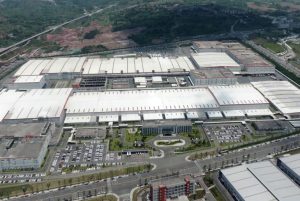
CATL announced that its Yibin manufacturing facility in Sichuan, China has been officially recognized by the World Economic Forum as a Sustainability Lighthouse within the Global Lighthouse Network (GLN).
This achievement marks a historic first for the industry:
- World’s first lithium-ion battery plant to receive the Sustainability Lighthouse designation
- First and only battery plant globally to be recognized by WEF for both productivity and sustainability
The Yibin site had earlier been named a WEF Lighthouse in 2022 for outstanding productivity performance. With its latest recognition in 2025, it becomes a dual-honor facility, setting a global benchmark for intelligent, low-carbon manufacturing.
WEF Recognition Highlights
In its official announcement, the World Economic Forum stated:
“For the world’s largest battery production site, rapid expansion related to rising carbon emissions, high energy use, and an increasing value-chain carbon footprint and manufacturing costs posed significant challenges. To solve this, the site combined an AI-driven energy transformation, micro-grid photovoltaic storage, process innovation, and low-carbon product R&D. The site resulted in a 56% reduction in carbon footprint and helped 13 suppliers achieve carbon neutrality certification.”
Industry-Leading Sustainability Outcomes at Yibin
The Sustainability Lighthouse designation specifically recognizes Yibin’s success in delivering deep, measurable reductions across energy use, emissions, water consumption, and waste, while pursuing integrated net-zero, decarbonization, and circular economy goals.
Key Sustainability Achievements
- 56% reduction in overall carbon footprint
- AI-driven energy optimization across core manufacturing processes
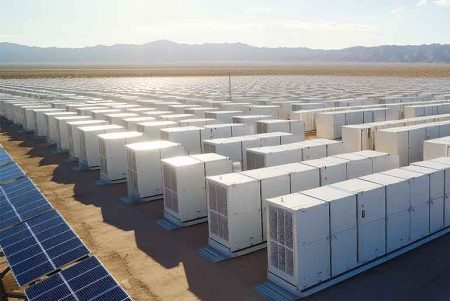
- On-site photovoltaic micro-grid and energy storage integration
- Green supply-chain transformation supporting supplier decarbonization
- Advanced circular economy practices across materials and packaging
With this designation, CATL now holds four WEF Lighthouse certifications, the highest number in the global lithium battery industry:
- Ningde – Lighthouse (2021)
- Yibin – Lighthouse (2022) and Sustainability Lighthouse (2025)
- Liyang – Lighthouse (2023)
Intelligent Manufacturing in Action: AI, Energy Efficiency and Circular Packaging
Facing systemic challenges such as high energy consumption, carbon-intensive supply chains, and low circular efficiency, the Yibin plant has established an industry-leading intelligent manufacturing system.
AI-Driven Equipment Optimization
To address energy-intensive production processes, CATL has deployed machine-learning-based optimization across critical equipment:
- Real-time operational data predicts demand and minimizes idle or standby energy use
- Dynamic equipment adjustments improve overall efficiency
- Intelligent control systems regulate airflow and fan frequency in coating processes, significantly lowering energy consumption
Circular Packaging at Scale
CATL has expanded packaging circularity across domestic and international operations:
- Reusable and universal racks now cover all China-based projects
- IIoT-enabled lifecycle scheduling improves material flow and reuse rates
- Overseas operations use advanced simulations to design lightweight, low-impact packaging that meets international logistics standards
Together, these initiatives position Yibin as a global reference point for intelligent, sustainable battery manufacturing.
CATL Wins WEF 2026 MINDS Award for AI-Driven Battery Design

Further strengthening its innovation leadership, CATL has been honored with the World Economic Forum’s 2026 MINDS Award for its project titled “Augmented Intelligence Leading Next-Generation Lithium-ion Battery Design.”
The project was selected as one of only 15 globally recognized AI initiatives under the MINDS programme, which evaluates candidates across five dimensions:
- Strategy
- Talent
- Data
- Technology
- Governance
The initiative is spearheaded by the WEF Centre for AI Excellence and focuses on responsible, deployable, and high-impact AI solutions.
WEF Assessment
According to the official WEF report:
“By transforming battery cell design into a fully data-driven process, CATL is changing how next-generation EV batteries are developed… CATL turned a deep reservoir of proprietary, multimodal data into a sustained AI advantage.”
Redefining Battery R&D with Augmented Intelligence
As global new energy vehicle (NEV) penetration surpasses 50% and EV development cycles compress to just 18 months, battery performance, safety, and reliability have become decisive competitive factors for automakers.
Traditional lithium-ion battery design has relied heavily on manual testing and engineers’ experience, resulting in long development timelines and high costs.
CATL’s Intelligent Cell Design platform fundamentally changes this paradigm.
How the Platform Works
- Combines physics-based electrochemical models with machine learning
- Operates on an on-premises private cloud
- Trained on:
- Over 100,000 battery design cases
- 600TB of test data
- More than 50 million data records
- Incorporates aftermarket data from a wide range of NEVs
With physics-informed machine learning and agentic AI, the platform functions like a “digital engineer,” automatically generating, evaluating, and refining battery designs.
Performance Impact
- Up to 95% prediction accuracy
- Design recommendations generated in seconds
- Virtual cell designs produced in minutes
- Significant improvements in performance, reliability, and efficiency compared with manual approaches
Ni Jun, Chief Manufacturing Officer and Co-President of Engineering Manufacturing System at CATL, said:
“In complex industrial scenarios like battery production, relying solely on ‘Artificial Intelligence’ can’t solve core problems. I advocate more for ‘Augmented Intelligence’. By integrating our intelligent design system with engineers’ in-depth understanding of material properties, process principles and system engineering, we can strengthen the human–AI partnership and ensure consistent, reliable product quality.”
Circular Battery Economy Gains Urgency Amid Critical Minerals Risk
These developments coincide with a major new report by the Ellen MacArthur Foundation, launched at the World Economic Forum in Davos, warning of an impending critical minerals bottleneck driven by the global EV boom.
The report, Leading The Charge – Turning Risk into Reward with a Circular Economy for EV Batteries and Critical Minerals, warns that:
- Major supply shortfalls are expected by the mid-2030s
- Sustained battery metals supply shocks could result in 40–50% consumer price increases
- A typical EV contains over 200 kg of critical minerals, six times that of a conventional car
Wen-Yu Weng, Executive Leader for Critical Minerals at the Foundation, stated:
“Today’s EV battery system is a strategic risk – it’s linear, material-hungry, and fragile. A circular economy for EV batteries is no longer optional.”
CATL Commits to Scaling Circular Solutions Globally
As a strategic partner of the Ellen MacArthur Foundation, CATL has reaffirmed its commitment to circular battery systems.
Jiang Li, Vice President and Board Secretary of CATL, said:
“The insights outlined in this paper show how circular approaches are essential to the energy transition. CATL looks forward to working with partners across the value chain to keep batteries and materials in use longer, unlocking environmental and economic value while strengthening system resilience.”
With EVs projected to account for 65–75% of global car sales by 2050, CATL’s combined focus on AI-driven innovation, sustainable manufacturing, and circular economy leadership positions the company at the center of the global energy transition.
As CATL moves forward, it aims to advance AI from merely “enabling” to “creating,” transforming batteries from consumable products into long-term strategic assets for a low-carbon future.
 Electrify your feed! Click here to join our Whatsapp group and to get the latest updates, expert insights, and innovations driving India’s energy storage revolution.