

The Central Electricity Authority (CEA) and the Danish Energy Agency (DEA) have jointly published the first editions of the Indian Technology Catalogue on Energy Storage and the Indian Technology Catalogue on Green Fuels 2026, providing technology cost and performance benchmarks for India’s energy transition. Released under the India-Denmark Energy Partnership, the catalogues offer publicly accessible references for policymakers, project developers, researchers and industry stakeholders.
The energy storage catalogue, released in August 2026, examines nine technology families and their cost and performance outlook through 2070. The green fuels catalogue covers technologies including electrolysers, hydrogen storage, green ammonia, biogas, biomass gasification, ethanol and methanol production.
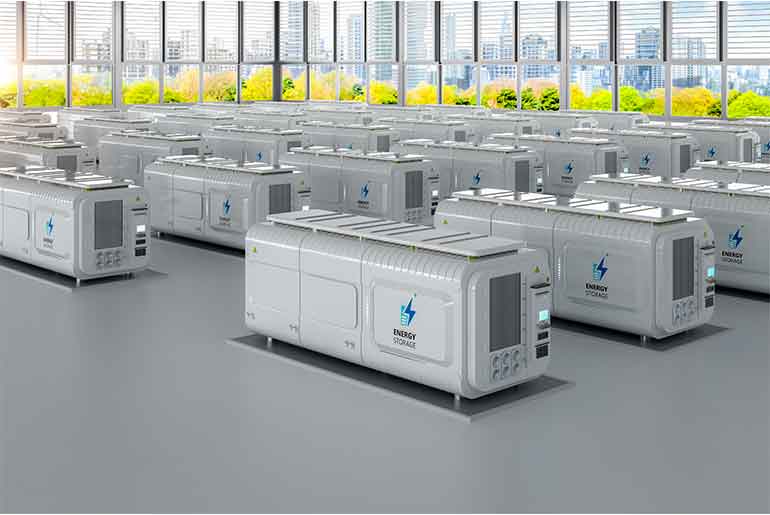
Energy Storage Catalogue Covers Nine Technology Families
The energy storage catalogue includes lithium-ion batteries, sodium-ion batteries, pumped storage hydropower, vanadium redox flow batteries, compressed air energy storage (CAES), molten salt thermal storage, liquid air energy storage and compressed CO₂ energy storage.
The technologies are classified according to power rating, discharge duration and deployment maturity. As of 2026, pumped storage and lithium-ion batteries are considered commercial and mature technologies, while CAES, flow batteries, sodium-sulphur batteries and advanced lead-acid batteries are categorised as commercial and growing. Liquid air, compressed CO₂ and sodium-ion technologies remain emerging or niche.
The catalogue records India’s operational pumped storage capacity at 7.17 GW across 11 projects as of March 2026. Another 16.12 GW is under construction, while 71 projects with a combined capacity of approximately 100 GW are in the pipeline.
Battery Technologies and Emerging Storage Projects
The catalogue examines the environmental impact and cost trajectories of different battery chemistries. NMC lithium-ion batteries have an average global warming potential of 17.63 kg CO₂ equivalent per kg, largely attributable to mining and manufacturing. LFP batteries eliminate the need for cobalt and have up to 50% lower global warming potential, while sodium-ion batteries offer a smaller ecological footprint due to the abundance of sodium.
India’s early grid-scale storage installations are also documented, including the 10 MW/10 MWh Tata-AES-Mitsubishi project in Delhi and the 20 MW/40 MWh BSES Rajdhani standalone battery energy storage system at Kilokari.
Among emerging technologies, the catalogue references international sodium-ion, CAES, liquid air and CO₂ battery projects. In India, NTPC is implementing a 20 MW/160 MWh compressed CO₂ energy storage project at its Kudgi power station in Karnataka, which is scheduled for commissioning in 2026.
Green Fuels Catalogue Covers Hydrogen, Ammonia and Biofuels
The green fuels catalogue includes nine technology chapters covering electrolysers, hydrogen storage, green ammonia, biomass gasification, biogas production and upgrading, first-generation ethanol, and methanol production through biomass gasification and power-based routes.
For electrolysers, alkaline electrolysis and proton exchange membrane (PEM) technologies are classified as commercial, while solid oxide electrolytic cells remain in the pioneer phase. The catalogue projects investment costs for alkaline, PEM and solid oxide electrolysers to decline significantly by 2050, alongside improvements in efficiency.
Indian projects highlighted include Larsen & Toubro’s 380 kW alkaline electrolyser facility in Hazira, Gujarat, and GAIL’s 10 MW PEM electrolyser plant in Guna, Madhya Pradesh. The catalogue also documents ACME’s integrated green hydrogen and green ammonia facility in Bikaner, Rajasthan.
On hydrogen storage, the publication covers pressurised tanks, liquid organic hydrogen carriers and geological storage. It notes that India has no operational underground hydrogen storage facilities, while deep saline aquifers could offer significant storage potential.
India Seeks to Expand Domestic Green Fuel Production
The green fuels catalogue also highlights India’s developing biogas and ethanol sectors. The country had installed more than 5.1 million biogas plants, with a combined capacity of approximately 4.43 million cubic metres per day. By March 2025, 150 compressed biogas projects had been commissioned, with a cumulative capacity of 1,211 tonnes per day.
The CEA-DEA green fuels catalogue also highlights opportunities to reduce India’s dependence on imported methanol. Domestic methanol production stood at 0.0693 million tonnes in FY2022-23, against consumption of 2.84 million tonnes, with more than 90% of demand met through imports. The catalogue cites NTPC’s CO₂-to-methanol demonstration plant at Vindhyachal, developed in partnership with Jakson Green and Toyo Engineering, which began producing methanol in June 2025.
Cost Benchmarks and Technology Outlook
Both catalogues use cost data in fixed 2023 prices, excluding taxes and subsidies, and reference the final investment decision year. The green fuels publication prioritises Indian data and supplements it with international references where domestic information is limited.
For energy storage, learning curves are applied to lithium-ion and sodium-ion batteries, while pumped storage is assumed to have relatively stable costs. Projections for flow batteries, CAES and molten salt thermal storage are based on literature reviews.
CEA and DEA said the catalogues will be updated as technologies evolve, with the latest editions available through the CEA website. The publications follow the 2022 catalogue on electricity generation and storage and are intended to provide a common analytical basis for technology planning and investment decisions.
 Electrify your feed! Click here to join our Whatsapp group and to get the latest updates, expert insights, and innovations driving India’s energy storage revolution.