

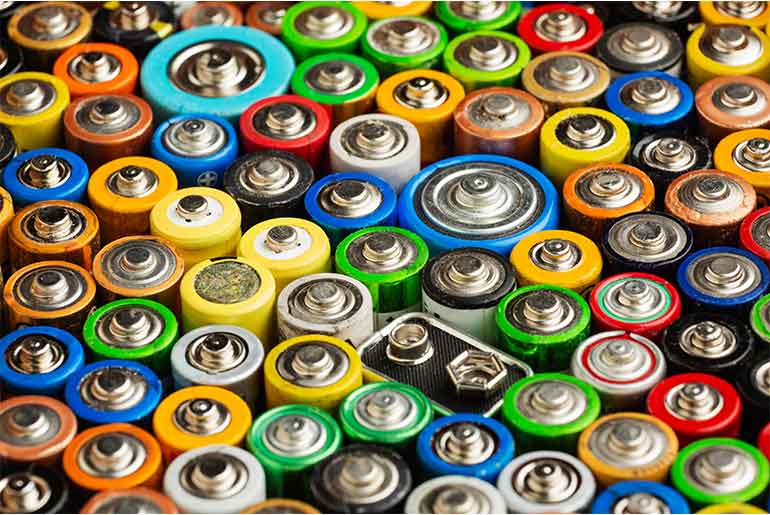
Sodium-ion batteries (SIBs) are gaining commercial traction as an alternative to lithium-ion technology, with more than 70 GWh of supply agreements signalling growing confidence among downstream customers, according to a new analysis by Wood Mackenzie. The report highlights supply chain diversification, cold-weather performance and long-term cost advantages as key factors supporting sodium-ion battery commercialisation, particularly across China, the United States, Germany and India.
The report, titled Sodium-ion Batteries: Commercialisation Begins, Economics to Follow, identifies sodium-ion technology as one of the most cost-effective emerging alternatives to lithium-ion battery storage. While leading manufacturers are expected to achieve cell-level cost parity with lithium iron phosphate (LFP) batteries by the end of 2026, module- and system-level parity is projected to emerge after 2030.
Sodium-Ion Batteries Offer Supply Chain and Temperature Advantages
According to Wood Mackenzie, sodium-ion batteries are gaining interest due to their supply chain security, cycle life and wider operating temperature range. Their performance across varying temperature conditions, including cold-weather environments, is emerging as an important advantage in commercial applications.
Ankita Chauhan, Director, Global Supply Chain and Integrated Power & Renewables Research at Wood Mackenzie, said geopolitical supply advantages and superior temperature performance are driving near-term commercialisation of sodium-ion batteries.
China Leads Sodium-Ion Battery Manufacturing Expansion
China continues to lead sodium-ion battery development and manufacturing, supported by significant capacity expansion plans and growing commercial commitments.
BYD has planned 30 GWh of sodium-ion battery manufacturing capacity in China, while CATL is targeting at least 1 GWh of sodium-ion battery shipments by the end of 2026.
China, the United States and Europe have secured substantial offtake agreements, while India remains in the early stages of commercial validation.
Wood Mackenzie estimates China’s learning rate for sodium-ion batteries at 18–20% during 2026–2035, reflecting the country’s comparatively advanced manufacturing ecosystem and commercialisation efforts.
Sodium-Ion Batteries Offer Lower Lifetime Costs Despite Higher Initial Investment
Wood Mackenzie estimates that sodium-ion batteries currently carry a global average upfront cost of $229/kWh, compared with $200/kWh for LFP batteries. However, sodium-ion technology offers approximately 21% lower total cost of ownership (TCO) over a 20-year project life.
The long-term cost advantage is attributed to the potential elimination of battery augmentation requirements and lower operating expenditure. The report also indicates that system economics remain relatively stable across two- to four-hour storage durations.
However, regional supply chain limitations and trade barriers could constrain near-term deployment. China’s export controls, India’s underdeveloped supply chain, slower US gigafactory expansion and German trade policies are among the challenges identified by Wood Mackenzie.
Policy Support Strengthens Sodium-Ion Battery Market Outlook
Government policies and incentives are emerging as important drivers of sodium-ion battery adoption, alongside technology improvements and cost reductions.
In China, a consumption tax introduced for lithium-ion batteries in July 2026 explicitly exempts sodium-ion batteries until the end of 2028. Meanwhile, LFP batteries face a 2% levy from September 2026, increasing to 4% from September 2027.
In the United States, approximately 58% Section 301 tariffs on Chinese energy storage cells are encouraging domestic battery production, supported by Inflation Reduction Act (IRA) 45X manufacturing credits.
Europe’s carbon-footprint disclosure requirements under the EU Battery Regulation are also providing a structural advantage for alternative battery technologies.
In India, the government is supporting domestic manufacturing through a $1.25 billion incentive scheme and duty exemptions on manufacturing equipment, according to Wood Mackenzie.
Sodium-Ion and LFP Batteries to Serve Different Applications
Wood Mackenzie expects the period between 2030 and 2035 to be critical for sodium-ion battery economics, as manufacturing scale and technology improvements begin to strengthen its competitiveness.
Priya Shrivastava, Senior Research Analyst, Power & Renewables, Battery Storage Supply Chain at Wood Mackenzie, said LFP remains the established choice for battery storage projects being deployed today, particularly for two- to four-hour applications.
Although sodium-ion batteries offer manufacturers an alternative technology and potential supply chain advantages, the chemistry still faces challenges related to production scale-up, cell material development and establishing a consistent performance track record.
The report expects the battery market to evolve into a diversified technology landscape, with sodium-ion, LFP and other battery chemistries serving different applications and storage duration requirements.
As commercial production expands and manufacturing costs decline, sodium-ion batteries could strengthen their position in the global energy storage market, particularly where supply chain diversification and temperature performance are critical considerations.
 Electrify your feed! Click here to join our Whatsapp group and to get the latest updates, expert insights, and innovations driving India’s energy storage revolution.