

India’s ₹14,500 crore VGF push signals a shift from supporting standalone battery projects to building a broader grid-scale storage ecosystem. But can policy support translate into commissioned capacity, domestic manufacturing and commercially viable projects?
India’s renewable energy transition is entering a phase where generating electricity is no longer the only challenge. The country must also answer a more difficult question: how do you ensure that the electricity generated when the sun is shining and the wind is blowing remains available when generation falls but demand continues to rise?
This is where energy storage enters the picture. And the Union Cabinet’s latest approval of ₹14,500 crore in Viability Gap Funding (VGF) for 92 GWh of grid-scale energy storage capacity signals just how seriously India is beginning to approach this challenge.
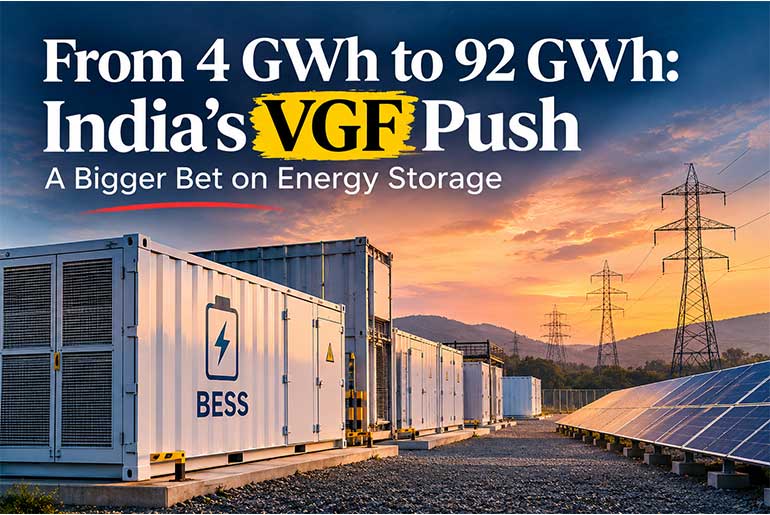
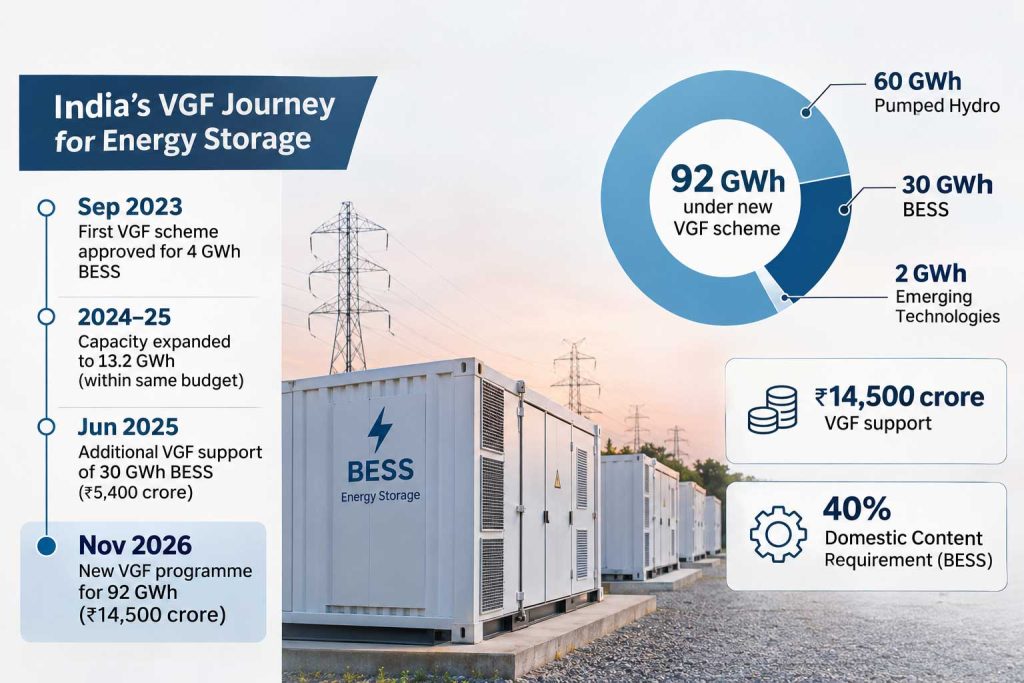
Approved on 4 November 2026, the new VGF scheme will support 60 GWh of pumped hydro storage, 30 GWh of Battery Energy Storage Systems (BESS) and another 2 GWh through emerging storage technologies. The programme will run from FY 2026–27 to FY 2030–31 and is expected to attract an estimated investment of ₹97,600 crore.
But the significance of this announcement goes beyond the financial allocation. It reflects the changing direction of India’s storage policy, which has gradually moved from supporting an initial battery storage target to building a diversified energy storage infrastructure.
To understand what this new announcement means, it is worth looking back at how India’s VGF journey began, what has changed since then and what still needs to happen before the country can turn its storage ambitions into operational assets.
The Beginning: India’s First VGF Push for Battery Storage
India’s journey towards grid-scale battery storage support formally gathered momentum in September 2023, when the Union Cabinet approved its first VGF scheme for developing 4,000 MWh (4 GWh) of Battery Energy Storage Systems.
The scheme came with a budgetary support of ₹3,760 crore and was designed to make battery storage projects financially viable. At the time, the government proposed providing VGF of up to 40% of the capital cost, helping developers bridge the gap between project costs and the revenues they could reasonably expect from the electricity market.
Why was this necessary?
Battery storage projects require substantial upfront investment. Unlike conventional power generation projects, their financial viability depends on several factors, including battery costs, charging arrangements, discharge tariffs, utilisation levels and the revenue available from providing grid services.
For developers and distribution companies, these uncertainties can make it difficult to justify investments, particularly when the market is still developing.
VGF was introduced to address this gap. Instead of expecting projects to become commercially viable without assistance, the government stepped in to reduce part of the initial financial burden.
The original scheme also established a structured disbursement mechanism. Financial assistance was to be released in stages, including 10% after financial closure, 45% after achieving commercial operation and the remaining 45% over the following three years.
This was an important starting point. India was not simply announcing a battery storage target; it was attempting to create a financial framework through which developers could begin building projects.
From 4 GWh to 13.2 GWh: Falling Battery Costs Changed the Equation
One of the most interesting developments in India’s early VGF journey was that the original target did not remain unchanged.
As battery prices declined, the estimated cost of developing storage capacity also came down. The Ministry of Power subsequently increased the capacity supported under the original scheme from 4 GWh to 13.2 GWh without increasing the approved budgetary allocation of ₹3,760 crore.
The estimated VGF requirement per MWh fell from ₹96 lakh to ₹46 lakh, or 30% of the capital cost, whichever was lower, according to the Ministry’s parliamentary response in April 2025.
This adjustment revealed an important relationship between battery economics and government policy. When the cost of storage declines, the same financial support can potentially unlock a larger amount of capacity.
However, lower battery prices alone could not resolve every implementation challenge.
The Ministry’s April 2025 response to Parliament also disclosed that no expenditure had been incurred under the scheme during FY 2024–25 because none of the projects had achieved financial closure at that stage.
This is an important detail in understanding the evolution of VGF in India. An expanded capacity target does not automatically mean that the projects have been financed, constructed or commissioned.
For the storage industry, the distinction between announced capacity and operational capacity remains critical.
June 2025: Another 30 GWh BESS Push
India’s storage support expanded further in June 2025, when the Ministry of Power initiated another VGF programme to support 30 GWh of Battery Energy Storage Systems.
This time, the scheme was backed by ₹5,400 crore from the Power System Development Fund (PSDF).
The programme was designed to support storage deployment across states and optimise the use of existing power infrastructure. Of the targeted capacity, 25 GWh was allocated to 15 states, while the remaining 5 GWh was allocated to NTPC.
The objective was to encourage BESS deployment where it could help address non-solar-hour electricity demand, improve grid flexibility and make better use of renewable generation.
The programme also highlighted the growing role of distribution companies and state-level power utilities in India’s storage transition.
By this stage, the country’s approach to VGF had begun to evolve. Financial assistance was no longer limited to demonstrating the viability of battery storage. It was increasingly being used as an instrument to encourage larger-scale deployment.
November 2026: VGF Expands Beyond Batteries
Now comes the latest development.
With the approval of ₹14,500 crore in VGF support for 92 GWh of energy storage capacity, the government has taken a broader approach to storage infrastructure.
Unlike the earlier programmes that focused primarily on BESS, the new scheme brings together battery storage, pumped hydro and emerging technologies.
The estimated investment across these projects stands at ₹97,600 crore.
Put simply, the government is providing ₹14,500 crore in financial support to help unlock an investment programme of nearly ₹1 lakh crore.
The proposed capacity is also significant when viewed against India’s existing grid-scale storage base. According to the Cabinet announcement, the new scheme is intended to support additional capacity equivalent to approximately 170% of the country’s present-day grid-scale energy storage capacity.
There is another important distinction here: the 92 GWh represents capacity yet to be commissioned. It should not be interpreted as capacity already available to the grid.
The projects will be allocated through a tariff-based competitive bidding process. Public and private sector electricity distribution companies will be eligible for VGF support for BESS and pumped hydro projects, while alternative storage technology projects can be implemented by public and private sector entities.
This means the next phase will depend not just on the availability of government funding, but also on competitive project selection, financial closure, development and commissioning.
The 411 GWh Challenge: How Much Storage Does India Actually Need?
The latest VGF approval becomes even more significant when placed against India’s long-term energy storage requirement.
According to the Central Electricity Authority’s National Electricity Plan, India’s grid-scale energy storage requirement is projected to reach approximately 411 GWh by FY 2031–32.
This includes:
- 236.22 GWh of Battery Energy Storage Systems.
- 175.18 GWh of pumped hydro storage.
The latest VGF programme supports 92 GWh, or approximately 22.4% of this projected requirement.
That is a considerable contribution, but it also reveals the scale of the remaining challenge.
India cannot rely on one financial assistance programme to meet its entire storage requirement. Additional investments, state-level procurement, private sector participation and other policy interventions will be necessary.
The country must also build the transmission infrastructure, grid connectivity and market mechanisms required to ensure that storage assets are used efficiently.
The real question, therefore, is not simply how much capacity India has announced. It is how much capacity can be brought online, connected to the grid and operated commercially within the available timeframe.
Why Is Pumped Hydro Getting Twice the Capacity of BESS?
One of the most interesting features of the new VGF scheme is its allocation towards pumped hydro storage.
Of the 92 GWh targeted, 60 GWh has been earmarked for pumped hydro, compared with 30 GWh for battery storage.
Why does this matter?
Battery Energy Storage Systems and pumped hydro address different requirements of the electricity grid.
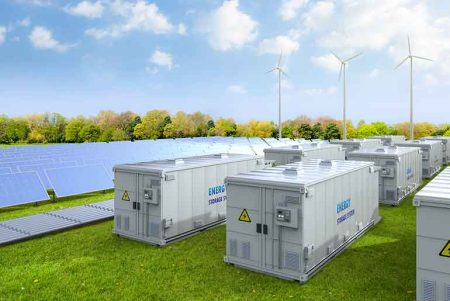
BESS stores electricity electrochemically. During periods of surplus generation, batteries can be charged and subsequently discharged when demand rises or renewable generation declines. They offer rapid response, modular deployment and flexibility in locating storage closer to electricity demand or renewable energy projects.
Pumped hydro storage works differently. It uses surplus electricity to pump water from a lower reservoir to an upper reservoir. When electricity is required, the stored water is released through turbines to generate power.
Pumped hydro can support large-scale and longer-duration storage requirements, although project development can involve significant land, environmental, geographical and construction considerations.
For India, the two technologies need not be viewed as competing solutions.
As renewable energy penetration increases, the grid will require different forms of flexibility. Battery storage can respond quickly to changing power conditions, while pumped hydro can contribute to large-scale storage and balancing requirements.
The government’s allocation suggests an effort to develop a more diversified storage portfolio rather than depending entirely on battery technology.
The additional 2 GWh allocated to emerging storage technologies also leaves room for alternative solutions to demonstrate their commercial and operational potential.
The Manufacturing Opportunity: A 40% Domestic Content Requirement
For India’s battery manufacturing ecosystem, the new VGF scheme carries another important message.
The government has introduced a minimum Domestic Content Requirement (DCR) of 40% for BESS projects under the programme.
This provision is intended to strengthen indigenous manufacturing, encourage domestic industry participation and reduce dependence on imported components.
For Indian manufacturers, the opportunity could extend across several parts of the BESS value chain.
These include battery cells, modules, packs, battery management systems, power conversion systems, energy management systems, thermal management solutions, enclosures and other associated electrical components.
However, the exact components and calculation methodology covered by the 40% requirement will need to be examined through the detailed scheme guidelines.
It is important not to interpret the provision as an automatic requirement for 40% domestically manufactured battery cells.
The broader question is whether India’s manufacturing ecosystem can supply the quality, scale and technology required by an expanding grid-scale storage market.
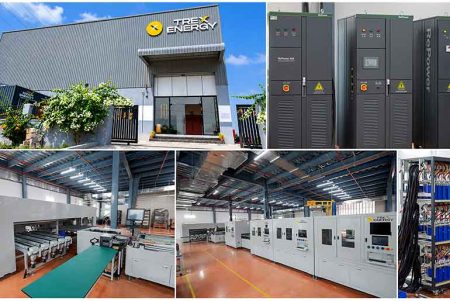
India has made progress in battery manufacturing, but building a competitive domestic ecosystem requires more than assembling battery packs. It involves developing cell manufacturing capabilities, securing raw materials, improving process technology, strengthening testing infrastructure and building reliable component supply chains.
The VGF scheme could provide a demand-side push by creating a larger project pipeline for domestic suppliers.
However, this opportunity will depend on how effectively the domestic content provisions are implemented and whether Indian manufacturers can meet project requirements without compromising cost competitiveness.
Nearly ₹1 Lakh Crore in Investment: Who Stands to Benefit?
The estimated investment of ₹97,600 crore makes the latest VGF approval significant for a wide range of industry participants.
Battery manufacturers and BESS integrators could see increased demand as more grid-scale projects move towards procurement and implementation.
Power conversion system manufacturers, BMS developers, EMS providers, thermal management companies and electrical equipment suppliers could also find opportunities as projects take shape.
For renewable energy developers, storage could become an increasingly important part of project planning, particularly for firm and dispatchable renewable energy supply.
Independent power producers and infrastructure companies may also participate through competitive bidding, project development and long-term power supply arrangements.
The pumped hydro segment could create opportunities for developers, engineering companies, civil contractors, turbine manufacturers and other infrastructure suppliers.
But the investment figure should be viewed as an estimated project investment, not as money already committed or spent.
The actual pace of investment will depend on project awards, financing arrangements, construction timelines and the ability of developers to secure viable tariffs.
The Real Test: From Announcements to Commissioning
India’s VGF journey offers an important lesson: financial support is necessary, but it is not sufficient.
The earlier schemes have already demonstrated that capacity targets can be expanded as battery economics improve. They have also highlighted the importance of financial closure and project execution.
Under the original 2023 programme, the government had to revise its capacity assumptions as battery prices declined. Yet, as the Ministry’s 2025 parliamentary response showed, the projects had not achieved financial closure at that earlier reporting point.
By July 2026, the government had reported further progress under the existing schemes. Parliamentary information cited in November 2026 reporting indicated that under the original programme, Letters of Award had been issued for 12.7 GWh, BESPAs had been executed for 6.54 GWh and 0.5 GWh had been commissioned. Under the separate 30 GWh programme, Letters of Award had reached 22.43 GWh and BESPAs 19.65 GWh.
These figures illustrate why the implementation stages deserve as much attention as the headline capacity.
A Letter of Award is not the same as financial closure. A signed Battery Energy Storage Purchase Agreement is not the same as a commissioned project. And a commissioned project still needs to operate reliably and deliver the services for which it was developed.
The new VGF scheme will therefore need to move through several stages: competitive bidding, project allocation, financing, procurement, construction, grid integration and commercial operation.
Land availability, transmission connectivity, battery supply chains, project financing and long-term revenue certainty will all influence the pace of deployment.
For pumped hydro projects, land acquisition, clearances, water availability and construction timelines will also require attention.
The success of the programme will ultimately be judged not by the amount of VGF announced, but by the storage capacity that becomes operational.
India’s Storage Transition Is Entering a Different Phase
From the initial 4 GWh BESS programme in 2023 to the 92 GWh grid-scale storage initiative approved in November 2026, India’s policy approach has undergone a considerable change.
The latest VGF programme brings together three important priorities: expanding storage capacity, supporting renewable energy integration and strengthening domestic manufacturing.
It also reflects a wider understanding that the energy transition cannot be built on generation capacity alone. A power system with a growing share of solar and wind needs infrastructure that can manage changing supply patterns, balance demand and deliver electricity when it is needed.
The next few years will reveal whether India can translate this policy ambition into projects that are financed, built and commissioned on time.
For battery manufacturers, storage developers, technology providers and power utilities, the opportunity is substantial. But so is the responsibility to deliver reliable and commercially viable infrastructure.
The ₹14,500 crore VGF approval may provide the financial push. The estimated ₹97,600 crore investment may bring the industry together. Yet, the real milestone will be reached when the announced gigawatt-hours are no longer just figures in a policy document, but working storage assets supporting India’s electricity grid.
Because India’s next energy challenge is not simply to generate more clean electricity. It is to make that electricity available whenever the country needs it.
 Electrify your feed! Click here to join our Whatsapp group and to get the latest updates, expert insights, and innovations driving India’s energy storage revolution.