Recalling his participation in its groundbreaking ceremony, CM Fadnavis said he had not imagined the scale and quality of the factory that would take shape. He described the Superfactory as “absolutely amazing” and praised it as one of India’s best. He congratulated Vineet Mittal and the Avaada team on establishing the Superfactory.
The Chief Minister said that seeing commitments made through MoU translate into functioning factories, and seeing Maharashtra and India become part of global supply chains, gave him the energy to continue his work in public life.
“Thanks to Vineet ji and the investment he has made, there is now considerable interest in solar modules in Nagpur. If all the other investors complete their investments on time, Nagpur will have the country’s largest solar module ecosystem,” CM Fadnavis said.
“The next big thing is Chhatrapati Sambhajinagar and Nagpur. If you are not investing here, you are missing something,” CM Fadnavis said.
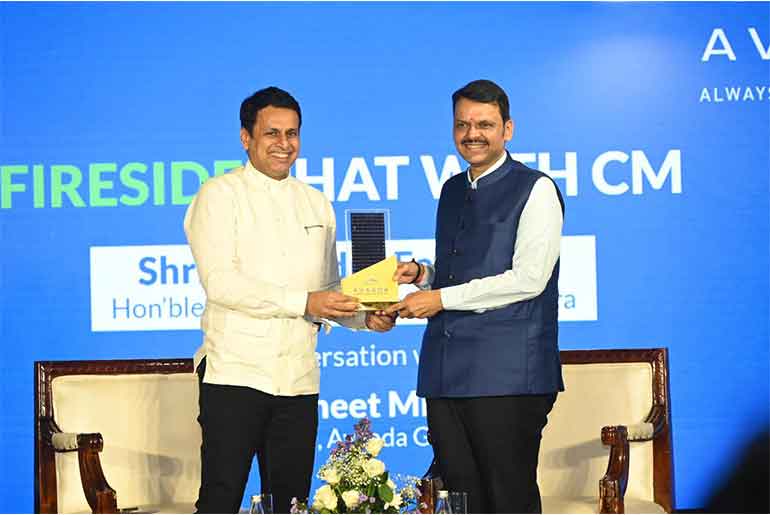
To mark the visit, Vineet Mittal presented the Chief Minister with a commemorative memento incorporating the first solar cell manufactured at Avaada Superfactory in Nagpur. The memento symbolised the facility’s progress from an investment commitment to solar cell production in Maharashtra.
Outlining investment opportunities in the region, CM Fadnavis described plans for an approximately 2,000-acre New Nagpur development along Samruddhi Mahamarg. Planned as a central business district comparable in concept to Mumbai’s Bandra Kurla Complex, it would provide modern infrastructure for global capability centres, advanced manufacturing and smart industry. He said approximately half the land acquisition had been completed, with the remainder targeted for completion within three months.
He also highlighted growing industrial activity in Chhatrapati Sambhajinagar and Jalna, particularly in electric vehicles, and the expansion of the Butibori industrial area. He encouraged entrepreneurs to consider opportunities beyond Mumbai and Pune as improved connectivity opens up new locations for manufacturing and services.
The Chief Minister described Samruddhi Mahamarg as a foundation for industrial development across Vidarbha, Marathwada and North Maharashtra. He outlined a proposed rail freight corridor connecting JNPT and Vadhavan Port with inland industrial centres to improve the movement of goods and access to global markets. He also referred to wider infrastructure and urban development plans, including Mumbai 3 and Mumbai 4, intended to support new investment and improve connectivity.
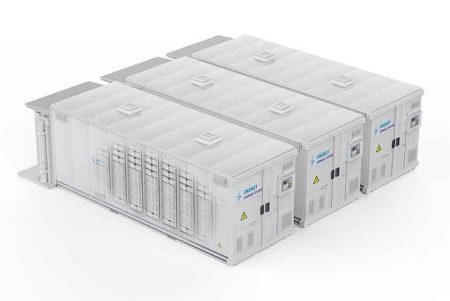
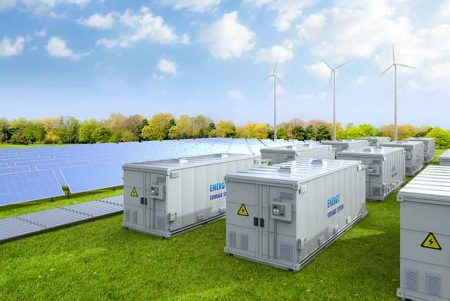
On industrial competitiveness, CM Fadnavis emphasised the importance of affordable electricity. He said the five-year tariff proposal provided for tariffs to decline each year and highlighted the potential of solar power and battery energy storage systems, including systems expected to be produced by companies such as Avaada, to support reliable and more affordable electricity.
The CM Devendra Fadnavis also discussed Mumbai’s redevelopment ambitions, describing a model that groups slum areas into 19 clusters. He outlined a target to redevelop 80% of these areas over the next decade, with a focus on a more structured process and building residents’ confidence.
Reflecting on public leadership, CM Devendra Fadnavis said that decisions required conviction, execution and tangible public benefit. He cited Samruddhi Mahamarg as an example of pursuing long-term economic gains despite initial opposition.
Asked about the affection behind being addressed as “Devendra Bhau”, he said public trust was both humbling and a significant responsibility. “And now, after all these years of working, entire Maharashtra has become family,” he said.
He stressed on the importance of remaining grounded and listening to honest feedback, including from old friends who still speak to him without being influenced by his office. On work–life balance, he acknowledged the demands his schedule places on his wife and daughter and thanked them for their understanding and support.
Vineet Mittal, Chairman, Avaada Group, said, “An MoU creates an expectation; a working factory fulfils a commitment. The Chief Minister’s encouragement belongs to the entire team that built Avaada’s Nagpur Superfactory. His message to the entrepreneurs present was equally clear: examine the opportunities emerging in Vidarbha and Marathwada. At Avaada, we are committed to translating that opportunity into manufacturing capability, skilled employment and stronger domestic supply chains.”
Avaada Electro, the solar PV manufacturing arm of Avaada Group, operates 8.5 GW of N-Type TOPCon glass-to-glass module manufacturing capacity across Nagpur and Dadri. At Nagpur, 3 GW of N-Type TOPCon solar cell manufacturing capacity is operational, with another 3 GW in an advanced stage of commissioning and expected to become operational in the quarter ending September 30, 2026. Avaada Electro also plans to establish 3 GW of ingot and wafer manufacturing capacity at Nagpur, extending its manufacturing operations into earlier stages of the solar value chain. The company’s manufacturing expansion aims to strengthen domestic supply chains and increase value addition in India.
Avaada Electro, the solar PV manufacturing entity of Avaada Group, is a supplier of solar PV cells and modules. With R&D and AI-driven automation, Avaada Electro is focused on performance, reliability and sustainability – supporting both India’s energy transition and global clean-energy competitiveness.
Avaada Group is an integrated energy transition conglomerate with businesses spanning solar manufacturing, renewables, green hydrogen and energy storage solutions.
 Electrify your feed! Click here to join our Whatsapp group and to get the latest updates, expert insights, and innovations driving India’s energy storage revolution.