


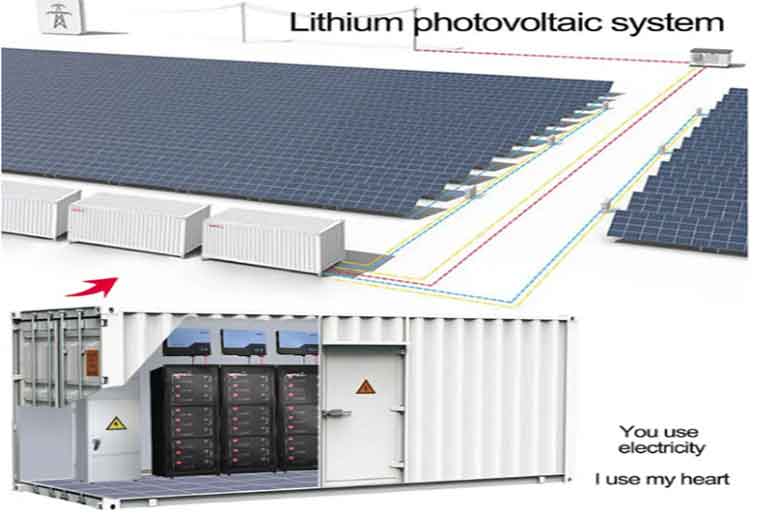
Chinese photovoltaic equipment manufacturer MULTIFIT is expanding its solar energy storage portfolio with hybrid inverters, integrated battery systems and photovoltaic equipment for residential, commercial, industrial and off-grid applications. The company is focusing on technologies that connect solar generation with battery storage, allowing electricity generated during daylight hours to be stored for use when solar output declines.
As solar installations become increasingly integrated with battery storage, energy storage inverters play an important role in managing electricity flows between photovoltaic modules, batteries and connected loads. These systems convert direct current (DC) electricity into alternating current (AC), while coordinating battery charging and discharging according to system requirements.
Established in 2009, MULTIFIT operates from Beijing, with a manufacturing base in Shantou, Guangdong Province. It develops and supplies photovoltaic equipment under its Vmaxpower and MULTIFIT brands. Its product portfolio includes hybrid and off-grid inverters, solar panels, batteries, charge controllers and photovoltaic system equipment.
Hybrid Inverters and Integrated Storage Systems
One of the company’s products is the Vmaxpower MULT8KH3 three-phase hybrid inverter. According to the specifications provided by the company, the system has a maximum DC input voltage of 1,000 V and an MPPT operating voltage range of 180–850 VDC. It delivers a 400 V three-phase AC output and supports lithium-ion and lead-acid batteries within a stated voltage range of 125–600 V.
The inverter also includes CAN and RS485 communication interfaces and carries an IP65 enclosure protection rating. These features are intended to support integration with compatible photovoltaic and battery systems across different installation environments.
MULTIFIT also offers the M-ESS3200W stackable energy storage system, which combines a 3,200 W inverter with an integrated lithium battery and solar charging functions. The listed battery capacity is approximately 8 kWh. Such integrated configurations can simplify equipment arrangements for installations requiring combined solar generation and storage, although the appropriate system size depends on electricity consumption, peak demand and required backup duration.
The company also supplies off-grid inverters and inverter-chargers for installations with different power supply arrangements, including systems incorporating utility or generator inputs.
Targeting Residential, Commercial and Off-Grid Applications
MULTIFIT’s product portfolio is intended for a range of solar applications. In residential installations, rooftop solar systems combined with batteries can store surplus daytime generation for evening consumption. Commercial and industrial facilities can use storage to shift solar electricity to periods when generation is lower, depending on their load patterns and electricity tariffs.
For remote locations with limited grid access, photovoltaic generation combined with battery storage can provide an independent electricity supply. Such systems require careful sizing based on energy demand, battery autonomy, available sunlight and the power requirements of connected equipment.
Beyond inverter and battery manufacturing, MULTIFIT’s activities include photovoltaic system design, installation, cleaning and operation and maintenance. Its equipment portfolio also includes solar cleaning robots and cleaning brushes intended to address dust accumulation on photovoltaic modules.
Manufacturing and Technical Capabilities
The company reports holding more than 60 independent intellectual property rights and over 40 product certifications. It also lists quality and management certifications including ISO 9001, ISO 14000, OHSMS 28001, CE and FCC.
MULTIFIT reports sales across more than 100 countries and regions. Its stated manufacturing and technical capabilities include a production facility of approximately 3,000 square metres and a technical team of 40 people. The company also reports collaboration with Peking University and Shantou University.
As solar deployment expands across different market segments, the integration of photovoltaic generation and battery storage is creating demand for equipment suited to varying electrical configurations and operating requirements. MULTIFIT is positioning its inverter, battery and photovoltaic equipment portfolio to address these applications, with system performance ultimately depending on equipment compatibility, installation quality and operating conditions.
 Electrify your feed! Click here to join our Whatsapp group and to get the latest updates, expert insights, and innovations driving India’s energy storage revolution.