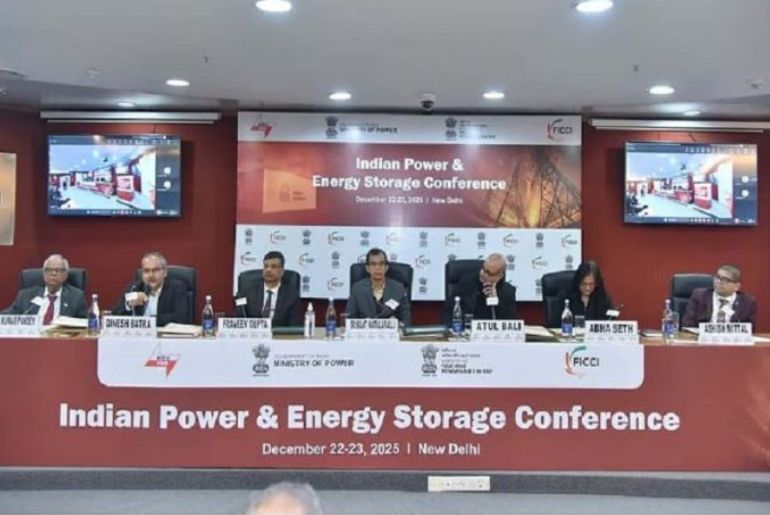
India’s power sector has reached a critical inflexion point, where energy storage, grid flexibility, and effective policy implementation will play a decisive role in sustaining economic growth while achieving climate commitments, officials and industry leaders said at the Indian Power & Energy Storage Conference 2025. The event was organized by FICCI and supported by the Ministry of Power, Ministry of New & Renewable Energy (MNRE), and the Central Electricity Authority (CEA).
With over 500 GW of installed capacity, India ranks as the world’s third-largest electricity producer. While renewables account for more than 50% of installed capacity, thermal power continues to supply nearly 70% of actual electricity generation, highlighting the need for balanced planning.
Srikant Nagulapalli, Additional Secretary at the Ministry of Power, said, “India’s energy transition is not only about climate action, but also about achieving energy independence and supporting rapid economic growth towards 2047.”
He outlined proposals in the forthcoming Electricity (Amendment) Bill to improve distribution efficiency, enhance market development, and optimize infrastructure utilization, emphasizing the role of data analytics, AI-enabled grid management, and performance-linked incentives.
On distribution reforms, Atul Bali, Director, National Smart Grid Mission, said, “Smart metering and smart grids are driving a visible turnaround in the distribution sector by improving billing efficiency, revenue realization, and consumer empowerment.”
Regarding thermal generation, Praveen Gupta, Member (Thermal), CEA, noted, “Flexible operation of thermal power plants is becoming essential with rising renewable penetration, but it must be implemented in a manner that safeguards plant health and long-term viability.”
Industry concerns were echoed by Dinesh Batra, Co-Chair, FICCI Power Committee, who stated, “Thermal power continues to be the backbone of India’s electricity system, but increasing flexibility requirements are placing significant technical stress on assets.”
Analysts highlighted the role of policy, technology, and financial sustainability in enabling grid stability. Ashish Mittal, Director, CRISIL, said, “Digitisation, real-time markets, renovation of existing assets, and flexible operations will be crucial in meeting India’s rapidly evolving demand-supply dynamics.”
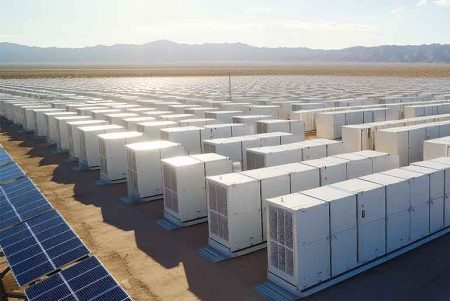
Energy storage was identified as a key enabler, with Anil Kumar Pandey, Advisor, Jindal Power, stating, “Energy storage is the missing link in addressing peak demand challenges and maximising renewable utilisation.”
The conference concluded with consensus on policy-industry collaboration, storage-led flexibility, market reforms, and technology-driven transformation to build a resilient power ecosystem aligned with India’s Viksit Bharat @2047 vision.
 Electrify your feed! Click here to join our Whatsapp group and to get the latest updates, expert insights, and innovations driving India’s energy storage revolution.