On December 22, EVE Energy officially commenced construction of its “EVE Sodium Energy Headquarters and Jinyuan Robotics AI Center” at its Huizhou headquarters, signaling a significant investment as the company positions itself at the forefront of next-generation batteries, artificial intelligence (AI), and robotics.
The move comes amid rapid growth in the sodium-ion battery sector and accelerating developments in AI-driven robotics. EVE Energy’s dual investment reflects both a strategic alignment with industry trends and a long-term vision to drive innovation and sustainable growth.
The sodium battery facility, with a total investment of around 1 billion yuan and a gross floor area of 90,000 sq. meters, is designed as an integrated platform covering research and development, pilot testing, and mass production. The company plans to develop “non-flammable” and “zero-trace” sodium batteries, which offer a wide operating temperature range, high power capability, long cycle life, and enhanced safety. The zero-trace concept refers to low-carbon materials that degrade naturally, enabling zero-carbon battery solutions for AI data center (AIDC) applications. The facility is designed for an annual capacity of 2 GWh, ensuring safe, green power that can quickly respond to fluctuating energy demands.
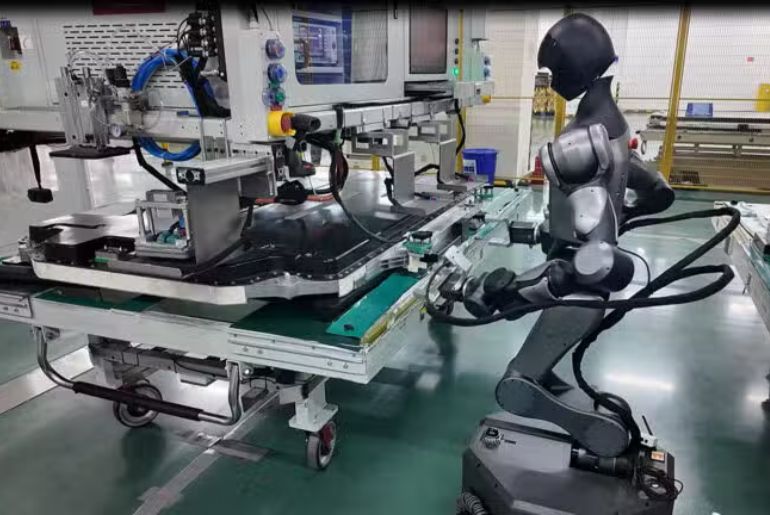
The Jinyuan Robotics AI Center, spanning 50,000 sq. meters, will integrate the full lifecycle of robotics innovation, from R&D and prototyping to pilot runs, final assembly, and skills training. Guided by a “scenario-driven design and task-driven functionality”philosophy, the center combines robotics with generative AI to deliver full-stack, scenario-based intelligent solutions under a “1+1+N” model.
EVE Energy emphasized the strategic synergy between AI and battery production. Liu, EVE Energy, said, “This dual investment reflects a two-way strategy in the AI era, using AI to drive smarter battery manufacturing while production facilities accelerate AI innovation.”
The park is expected to become a leading domestic hub integrating sodium battery industrialization with AI and robotics innovation, helping reduce lithium dependency, boost energy storage adoption, and accelerate intelligent manufacturing, contributing to the global energy transition.
 Electrify your feed! Click here to join our Whatsapp group and to get the latest updates, expert insights, and innovations driving India’s energy storage revolution.