

THE NEXT SOLAR MODULE IS ALREADY BEING BUILT
The solar industry has reached a scale where the next technology shift will not happen quietly. India added a record 44.61 GW of solar capacity in FY2025–26, taking cumulative installed solar capacity to 150.26 GW as of 31 March 2026, according to the Government of India. By the end of August 2026, India’s installed solar capacity had risen further to around 168.04 GW. But as installations accelerate, the focus is shifting towards the solar module themselves — how they are designed, which cell technologies power them, how efficiently they convert sunlight into electricity, and how reliably they perform over decades.
But the more revealing numbers are inside the factories.
The 17th edition of ITRPV, developed by VDMA, puts 2025 global module shipments at around 706 GW, against approximately 668 GW of installations. Average module prices were around US$0.09/W. Global cell capacity had reached roughly 1.26 TW by the end of 2025 — almost twice the capacity the world added that year.
That manufacturing surplus is intensifying the race to lower cost per watt, increase efficiency, reduce material use and extract more electricity from every square metre.
The technology base has already shifted. ITRPV 2026 estimates that n-type wafers accounted for about 82% of the wafer market in 2025. TOPCon had become the dominant crystalline-silicon architecture, while PERC continued to decline and HJT remained a smaller high-efficiency platform.
Materials are becoming equally important. PV manufacturing consumed around 7,244 tonnes of silver in 2025, making metallisation a major cost, resource and technology issue.
The question is therefore no longer simply how much electricity a module can produce. It is how efficiently it can produce it, how long it can keep producing it, how much it costs, how much material it consumes, how quickly factories can scale it, and whether developers and lenders will trust it for the next 25 to 30 years.
For India, the timing is critical.
As of the latest October 2026 updates, MNRE’s Approved List of Models and Manufacturers (ALMM) contained approximately 228.5 GW of listed solar-module manufacturing capacity under List-I and 37.8 GW of listed domestic solar-cell capacity under List-II. This represents a roughly sixfold gap between listed module and cell capacity. These figures reflect approved, listed manufacturing capacities—not actual annual production. MNRE issued the 12th revision of List-II on 8 October 2026.
ALMM List-II was first issued in July 2025 and came into force for applicable projects from 1 June 2026. Between the ninth and twelfth revisions of ALMM List-II, issued from August to October 2026, reported solar-cell capacity additions totalled approximately 5.94 GW. The additions included capacity increases by Avaada Electro, Emmvee Energy, Waaree Energies and Premier Energies, alongside new listings for Jupiter Solartech and Gopin Semicon. These revisions lifted India’s listed solar-cell manufacturing capacity to approximately 37.8 GW by October 2026.
The distinction matters because a module factory can change its product mix. A cell factory represents a deeper commitment to equipment, process recipes, yields, metallisation, quality control, workforce and suppliers.
India is therefore not simply deciding how many gigawatts of modules it wants to manufacture. It is increasingly deciding which cell architectures it wants to manufacture at scale. And that changes the question.
The next solar module may not be defined by one technology replacing another. It may be defined by technologies learning to work together.
The industry is no longer asking only:
Which cell is better today?
It is asking:
What will the solar module of the next decade actually look like — and can India build it?
FROM PERC TO N-TYPE — AND NOW TO MULTIPLE PATHWAYS
For more than a decade, solar followed a familiar formula: improve the silicon cell, increase efficiency, reduce cost and manufacture at larger scale. That pattern is now changing.
The PERC-to-n-type transition is complete in market terms. According to the 17th edition of the International Technology Roadmap for Photovoltaics (ITRPV), TOPCon overtook PERC in 2024 and widened its lead in 2025. TOPCon accounted for about 75% of crystalline-silicon cell production, versus 14% PERC and 5% HJT. N-type wafers represented about 82% of the wafer market, with ITRPV expecting this to exceed 98% within a decade.
The efficiency gap is narrower than the technology debate suggests. In 2025, commercial module efficiency stood at about 23.5% for TOPCon and HJT, 24.1% for TOPCon-based back-contact (TBC) and 21.7% for PERC. The price premium for high-power, bifacial and n-type modules has also largely disappeared as they entered the mainstream.
The next race is therefore about efficiency, material use, wafer thickness, production speed and lifetime energy yield.
Silver is a major pressure point. The 706 GW of modules shipped in 2025 consumed about 7,244 tonnes of silver. Cell-level consumption was around 10 mg/W for bifacial TOPCon, 12 mg/W for HJT, 12.2 mg/W for TBC and 8.9 mg/W for PERC. ITRPV expects this to fall to 6.3 mg/W for TOPCon and 4.3 mg/W for HJT, with copper metallisation becoming increasingly important for HJT.
G12 and G12R are becoming the dominant wafer formats, while larger-than-G12 formats are expected to gain ground. TOPCon wafer thickness is projected to decline from 130 µm in 2026 to 120 µm by 2036, while HJT moves from 120 µm to 100 µm.
Production lines are evolving alongside the cells. Laser-enhanced contact optimisation (LECO) was used in roughly 74% of TOPCon production in 2025, with ITRPV forecasting 86% by 2036. Edge passivation using ALD or PECVD is projected to reach around 80% market share.
Back-contact is gaining ground. ITRPV expects TBC to rise from about 5% of crystalline-silicon production in 2025 to 23% by 2036. HJT-based back-contact is projected to grow from 0.1% to about 5%, taking the broader back-contact family towards 28%.
Then comes tandem. ITRPV expects silicon-based tandem technologies to move towards mass production around 2027, with tandem module efficiency reaching about 27.4% by 2028 and tandem technologies taking roughly 17% of the market by 2036. Single-junction module efficiency, meanwhile, is projected to reach around 26.3% by 2035.
Tandems place a perovskite top cell over silicon, creating a route beyond the single-junction silicon ceiling while retaining part of the existing manufacturing ecosystem.
The question is no longer whether solar will move beyond today’s architecture. It is which pathways can survive the journey from efficiency record to mass production, field performance and bankability.
TOPCon: THE WORKHORSE — BUT HOW MUCH LONGER CAN IT EVOLVE?
TOPCon has crossed one of the hardest thresholds in solar manufacturing: it has moved from a promising technology to an industrial platform.
According to ITRPV 2026, TOPCon overtook PERC in 2024 and widened its lead in 2025, reaching about 75% of crystalline-silicon cell production. N-type mono wafers held about 82% of the wafer market in 2025, with ITRPV expecting that share to exceed 98% within a decade.
TOPCon’s advantage is not only efficiency but industrial continuity. It builds on established manufacturing infrastructure while allowing efficiency gains, material reduction and lower production costs. That matters in an oversupplied market. ITRPV estimates 1,260 GW of cell capacity and 1,460 GW of module capacity at the end of 2025, against 706 GW shipped and 668 GW installed. Average module prices were around US$0.09/W.
JinkoSolar reports a certified 27.02% TOPCon cell (NPVM) and an industrial-scale 26.66% M10 cell. With silicon’s theoretical limit at 29.4%, according to Fraunhofer ISE, the record TOPCon device is roughly 2.4 percentage points away.
Commercial TOPCon modules stand at about 23.5% efficiency, similar to HJT and behind TOPCon-based back-contact at 24.1%. ITRPV expects single-junction modules to reach about 26.3% by 2035.
The next gains are increasingly coming from manufacturing optimisation:
• Silver: ~10 mg/W in TOPCon bifacial cells in 2025, targeted at 6.3 mg/W.
• LECO: used in 74% of TOPCon emitters, projected at 86% by 2036.
• Edge passivation: ALD/PECVD projected at about 80% by 2036.
• Wafer thickness: projected from 130 µm to 120 µm.
TOPCon is also becoming a bridge to newer architectures. JinkoSolar announced a 34.82% perovskite-tandem cell on a TOPCon bottom cell in June 2026, certified by SIMIT-CAS. Trina Solar reported a 28.0% TOPCon-compatible back-contact cell in April 2026.
Kiwa PVEL’s 2026 Scorecard found that 87% of manufacturers and 61% of BOMs experienced at least one PQP failure. Its UVID testing also found a median 3.0% UV-induced power loss for TOPCon BOMs, although results varied significantly across products. Across the 246 unique model types listed as Top Performers, only five achieved Top Performer status across all seven reliability tests.
The patent landscape is also unsettled. First Solar’s U.S. TOPCon patent triggered an ITC investigation in March 2026. It withdrew the complaint in September without prejudice to refiling while continuing federal lawsuits against Canadian Solar, Jinko, T1 Energy and Trina. China had separately invalidated a related patent in May.
India is still building its base
MNRE’s ALMM List-II carried about 30.98 GW of cell capacity in July 2026. Mono PERC represented 52% (16.06 GW), TOPCon about 33%, with 7 of 15 manufacturers having TOPCon lines and Reliance the only HJT producer.
India is scaling TOPCon as its efficiency gains become harder to extract. The question now is whether the platform can evolve fast enough for the next cycle—and whether India’s new lines are being built for that future.
TOPCon now dominates commercial manufacturing. Should manufacturers keep investing in TOPCon, or prepare for the next major technology transition?
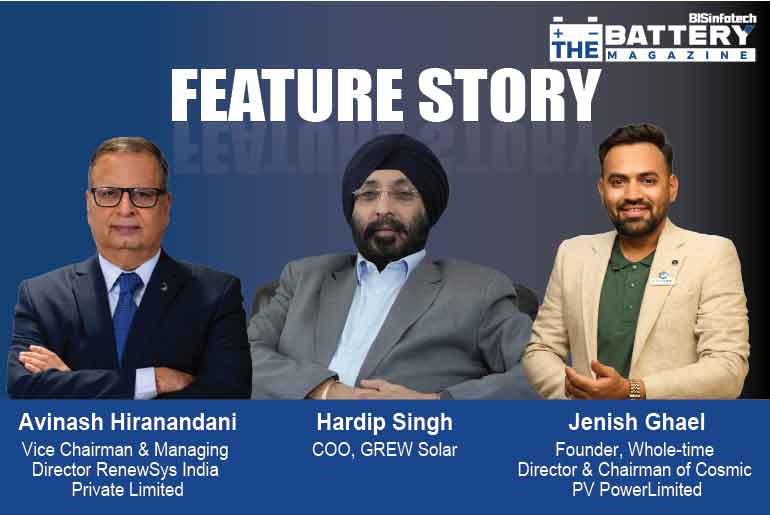
Avinash Hiranandani, Vice Chairman & Managing Director, RenewSys India Private Limited, said, “TOPCon does not have an expiry date so much as a long runway. It is the platform on which India’s cell ecosystem is being built right now, and the investment case is strong. It leverages much of the existing equipment base and supply chain, which keeps capex per gigawatt manageable. It still has real headroom: edge passivation, laser-assisted firing, thinner wafers and lower silver consumption will keep improving efficiency and cost for several years. And India needs domestic cell capacity now, to meet ALMM List-II requirements and serve a market adding tens of gigawatts every year.
At RenewSys, the inclusion of our TOPCon cells in ALMM List-II reflects that priority. But scaling TOPCon and preparing for the next transition are not mutually exclusive. Manufacturers should design lines that can be upgraded, build strong in-house process and characterisation capability, and run a disciplined R&D track on tandem. The companies that lead the next transition will be those that learn deeply on today’s technology, because the process knowledge, quality systems and supply chains built on TOPCon are exactly what carry forward into the next architecture.
Hardip Singh, COO, GREW Solar, said, “The fact that TOPCon is currently in the lead does not indicate that the evolution of technology in solar has come to an end. In terms of manufacturing, there is still a considerable scope for working on TOPCon to get improvements in efficiency, yield, throughput, reliability and cost efficiency.
As long as improvements do lead to improved economics of the project, it seems reasonable to keep investing and growing the volume of business. At the same time manufacturers have to be ready for the upcoming technological transition, rather than waiting till it becomes commercially viable.
Due to the very rapid evolution of the solar industry, the investments in manufacturing must be flexible enough to accommodate future technologies. Therefore, the most reasonable approach will be to work in the two directions simultaneously. On the one hand, TOPCon must be improved as much as possible for the current market; on the other hand, the development of technologies for the future must also be continued.”
Jenish Ghael, Founder, Whole-time Director and Chairman of Cosmic PV Power Limited, said, “TOPCon is winning because it delivered a pragmatic upgrade path. With existing PERC lines retrofittable for ∼15-20% additional capex, it gave India and the world 23.5%+ efficiency without reinventing the factory. That is why it is the commercial workhorse today.
But every PV technology has an expiry curve. TOPCon is approaching its practical limit of ∼24.5% in mass production due to Auger recombination and contact losses. Continued investment is still rational for the next 2-3 years to sweat assets and improve BOM cost.
However, the industry must parallelly prepare for HJT and tandem. For India, the question is critical: if we only scale TOPCon, we will remain assemblers of yesterday’s technology. Real Atmanirbharta will come from investing in next-gen R&D, pilot lines for HJT and perovskite-silicon tandem today, even while TOPCon pays the bills.”
HJT: THE TECHNOLOGY THAT REFUSES TO DISAPPEAR
If TOPCon’s strength is industrial continuity, HJT makes a different argument: can the industry move beyond incremental improvement?
Heterojunction combines crystalline silicon with thin amorphous-silicon layers to improve passivation and reduce electrical losses. ITRPV puts commercial HJT and TOPCon modules at around 23.5% efficiency in 2025, while leading products have moved beyond that level. Tongwei reported a TÜV-certified 25.46% HJT module with 790.8 W in 2025.
HJT’s case therefore rests not only on efficiency, but also on temperature behaviour, bifacial response and the possibility of higher energy yield under suitable operating conditions.
• Temperature coefficient: about −0.26%/°C for HJT versus about −0.30%/°C for TOPCon.
• Median bifaciality: 86.2% for HJT versus 76.5% for TOPCon in Kiwa PVEL’s three-year dataset.
These characteristics can matter at high-temperature and high-albedo sites, where lower temperature losses and stronger rear-side response can contribute to energy yield. At the same time, Kiwa PVEL testing has identified UV-induced degradation as a technology-specific reliability concern for HJT and other n-type architectures, depending on cell design and encapsulation.
The bigger challenge is manufacturing economics. HJT has historically carried a higher silver burden than TOPCon, although copper-based metallisation and silver-reduction strategies are changing that equation. Tongwei, for example, has been developing silver-coated copper and copper-interconnection approaches for HJT manufacturing.
HJT also relies on low-temperature deposition, transparent conductive oxide layers and specialised metallisation. That makes equipment utilisation, throughput, yield and production cost central to its competitiveness.
That manufacturing gap remains significant, although HJT-based back-contact concepts are opening another route.
HJT can also serve as a silicon bottom cell in tandem architectures, although TOPCon is being developed for silicon tandems as well.
So the question is no longer simply whether HJT can deliver high efficiency.
Can it turn its temperature, bifacial and passivation advantages into a manufacturing and lifetime-energy advantage at scale?
THE EFFICIENCY TRAP: WHEN A HIGHER NUMBER IS NOT A BETTER ASSET
For years, solar technology was judged by one number: efficiency. More power from the same area means fewer modules, less land and potentially lower installation costs.
But modules spend decades outside the datasheet, exposed to heat, humidity, UV radiation and mechanical stress. That makes efficiency, temperature coefficient, bifaciality, degradation, reliability, energy yield and financing risk equally important.
IEA PVPS Task 13’s 2026 report, Photovoltaic Project Decisions: Quality, Performance, and Economic Value, treats technical and economic decisions together and finds that early quality assurance, due diligence and component testing can deliver benefits far exceeding their initial cost.
The number changes from laboratory to project. JinkoSolar reports a 27.02% certified TOPCon cell and 25.58% module, while ITRPV puts commercial TOPCon modules at around 23.5%. LONGi’s 35.5% tandem result is a certified laboratory cell, while Trina Solar’s independently verified tandem module reached 29.2% and 907 W across its full area.
Kiwa PVEL’s 2026 Scorecard lists 246 BOMs as Top Performers, but only five achieved Top Performer status across all seven reliability tests. None did so across both all-reliability tests and PAN performance.
Material efficiency is becoming equally important. Fraunhofer ISE demonstrated 24%-efficient M10 TOPCon cells using just 1.1 mg/W of silver, versus roughly 10–12 mg/W for conventional TOPCon metallisation, using nickel, copper and silver electroplating.
For developers and lenders, the calculation is therefore broader. Higher efficiency can reduce land and installation needs, but degradation, reliability, manufacturing maturity and field performance determine whether that efficiency becomes lifetime value.
A developer is not buying a laboratory record. A lender is financing kilowatt-hours over decades. India faces an additional challenge. Its first ALMM List-II for cells was introduced in 2025, giving newer domestic technologies a shorter operating history. The next benchmark may not be the highest-efficiency module, but the one that can prove its efficiency will continue delivering kilowatt-hours at acceptable cost and risk.
Would developers prioritise higher efficiency or proven reliability when lifetime yield, degradation, financing and project economics are considered?
Avinash Hiranandani, Vice Chairman & Managing Director, RenewSys India Private Limited, said, “Efficiency is a means, not the objective. Developers and lenders buy kilowatt-hours over 25 to 30 years, and what matters is levelised cost of energy. That depends on degradation, bifaciality, temperature coefficient, reliability and cost of capital as much as on nameplate efficiency.
A 25% module with five years of field history carries uncertainty that lenders will price in: a higher risk premium, conservative degradation assumptions and tougher warranty scrutiny. A 24% module with 15 years of proven performance often delivers lower LCOE simply because it is cheaper to finance and its yield is predictable. Higher efficiency does cut land, structure and installation costs, so it is valuable, but only once the degradation curve is trusted.
This is why independent reliability testing matters. Recognition of our DESERV modules as a Kiwa PVEL Top Performer means more to our customers than a headline efficiency number, because it speaks to real energy yield in the field. We also see that the bill of materials, particularly encapsulants and backsheets, is often where long-term reliability is won or lost. The answer is not efficiency or reliability. It is efficiency that has earned bankability.”
Hardip Singh, COO, GREW Solar, said, “A developer evaluates the amount of energy generated by a module over its life; efficiency is not considered in complete isolation. Though a module that is 30% efficient may be more attractive, the ultimate choice depends on the level of confidence that it will work throughout the duration of a project. Higher efficiency has unquestionable benefits, which include maximizing production on limited land, as well as possibly lowering balance-of-system costs, but these advantages must be offset by degradation, operating temperature, reliability and long-time field performance. This is why a module with slightly lower efficiency, but predictable degradation and proven reliability may be preferred as it ensures more confidence in energy generated during the life of a solar energy system than some high efficiency but unproven technology.”
Jenish Ghael, Founder, Whole-time Director and Chairman of Cosmic PV Power Limited, said, “No. In solar, bankability beats lab efficiency. A developer will almost always pick a 24% module with 15 years of field data over a 30% module with 5 years of history.
LCOE is decided by lifetime energy yield, not flash-test wattage. A 24% TOPCon with 0.4% annual degradation and proven PID/LID/LeTID performance will generate more kWh over 30 years than a 30% perovskite tandem degrading at 1% or failing at encapsulation.
For financiers, reliability data is currency. Efficiency without 10-year warranty claims data, IEC 63209 extended testing, and insurance backing is not bankable.
The real value of efficiency is when it comes with reliability. That is why TOPCon beat HJT initially – not because it was more efficient, but because it was efficient _enough_ and reliable enough.”
THE MODULE BENEATH THE CELL
The next generation of solar technology will not be decided by the cell alone. A higher-efficiency cell must survive decades of heat, humidity, UV radiation and mechanical stress inside the module. IEA PVPS research highlights the risks of new materials entering the market without sufficient long-term field data, particularly as modules become larger, thinner and more powerful. Encapsulants, backsheets, glass, interconnects and metallisation must therefore work as one system. Copper-based metallisation is also gaining importance as manufacturers seek to reduce silver use. The cell converts sunlight; the module determines how reliably that conversion survives.
PEROVSKITE: THE BIGGEST PROMISE HAS THE LONGEST ROAD
Perovskite has already crossed the first barrier: it is no longer a laboratory curiosity. It is now one of the most serious candidates for the next generation of photovoltaics.
But the harder part starts here.
In July 2026, LONGi announced a 35.5% perovskite-silicon tandem cell, certified by ESTI. More importantly, LONGi also reported 34.3% and 32.2% efficiencies on larger-area cells, alongside independently certified tandem modules at 31.4% and 29.4%. The progression shows the real challenge: moving efficiency from a small laboratory device towards useful manufacturing formats.
Fraunhofer ISE is now attacking that gap directly. Its Pero-Si-SCALE facility transfers tandem designs to industrial formats up to 210 × 210 mm, using scalable, high-throughput processes. Its tandem cells have already exceeded 33% efficiency at laboratory scale.
The module brings another problem: heat, moisture and mechanical stress. Fraunhofer’s HoTSun project is developing low-temperature interconnection and encapsulation methods for tandem modules targeting more than 26% efficiency, alongside reliability testing.
Even manufacturing chemistry is changing, in August 2026, Fraunhofer and Freiburg researchers demonstrated a solvent-free perovskite-silicon tandem process, aimed at improving scalability. The question is no longer whether perovskite can reach extraordinary efficiency.
It is whether that efficiency can become repeatable manufacturing, durable modules and bankable energy for decades.
The record is already here. The proof is not.
TANDEM: WHEN INDIA STARTS BUILDING THE NEXT ARCHITECTURE
The global tandem race has moved beyond the question of whether silicon can break through its conventional efficiency ceiling.
In July 2026, LONGi announced a 35.5% certified two-terminal perovskite-silicon tandem cell. More importantly for industrialisation, it reported 34.3% efficiency on a 261 cm² cell and 32.2% on a 274 cm² cell, alongside tandem modules reaching 31.4% and 29.4%. The progression from laboratory cells to larger-area devices and modules shows where the real race is moving: scale, not just records.
India is beginning to build its own position in that race. At IIT Bombay’s National Centre for Photovoltaic Research and Education (NCPRE), researchers are developing perovskite-silicon tandems, including four-terminal architectures. NCPRE reports a 30.18% 4-T tandem efficiency, currently under communication for publication; its previously reported 29.14% 4-T result has been published.
The ambition goes beyond efficiency. NCPRE’s Phase III programme is designed to help Indian industry evaluate global tandem technologies and adapt them to different silicon bottom-cell architectures. MNRE is also funding a ₹83.19 crore Scale-up of Perovskite Tandem Solar Cells project, with ₹45.74 crore as its MNRE share.
In 2026, NCPRE also established a 6,300-square-foot TANDEM laboratory, while its incubated venture ART-PV India is working towards commercial-scale silicon-perovskite tandem manufacturing.
But the distance between a high-efficiency cell and a bankable module remains substantial. For the global industry, the challenge is scale. For India, it is scale plus technology ownership. The opportunity is therefore bigger than simply adopting the next solar architecture.
Can India move from learning the next solar technology to developing, adapting and eventually manufacturing it?
Could TOPCon and HJT become stepping stones to perovskite-silicon tandems, and what are the biggest barriers to making tandem technology bankable at scale?
Avinash Hiranandani, Vice Chairman & Managing Director, RenewSys India Private Limited, said, “Yes, and that is the most likely path. Silicon is not going away; it is becoming the bottom cell. Both HJT and TOPCon can serve that role, with HJT’s low-temperature processing offering a natural fit. Certified tandem efficiencies above 34% prove the physics works. The challenge is everything after the lab.
The key barriers are:
• Stability: perovskites are sensitive to moisture, heat and light, and have yet to demonstrate 25-year durability.
• Scale-up: uniform deposition on full-size wafers at high throughput and yield.
• Encapsulation: tandem needs new barrier materials, edge seals and encapsulants, so materials suppliers will matter as much as cell makers.
• Bankability: test standards must evolve to capture perovskite-specific degradation, and lenders need field data.
• Sustainability: lead management and end-of-life recycling must be designed in from the start.I expect early commercial tandem volumes towards the end of this decade and bankable mass-market adoption in the early 2030s. For India, the opportunity is to co-develop, not just assemble, through materials science, pilot lines and collaboration between industry, IITs and national laboratories.”
Hardip Singh, COO, GREW Solar, said, “TOPCon and HJT may become crucial facilitators of perovskite-silicon tandem structures. The evolution of solar technologies rarely implies an absolute replacement of one manufacturing ecosystem by another; the previous generation technology achievements may provide a solid ground for the following generations. Advances in passivation, contact engineering, surface treatment and process control will therefore be beneficial for the tandem manufacturing process.
The main barriers for tandems at the moment extend beyond laboratory efficiency. The technology must show durability in real conditions, stable production, good encapsulation, and financially viable costs. Bankability is also essential, since developers and financiers need enough practical information to evaluate the future performance and risks. The real breakthrough will be achieved when tandem technologies will connect high efficiency with reliability, scalability and cost effectiveness.”
Jenish Ghael, Founder, Whole-time Director and Chairman of Cosmic PV Power Limited, said, “Absolutely. The solar module of the next decade will not be pure TOPCon or pure HJT – it will be a perovskite-silicon tandem built on a TOPCon or HJT bottom cell.
TOPCon and HJT are not dead ends; they are ideal bottom cells for tandems. HJT, with its low-temperature process and excellent passivation, is structurally a better host for perovskite top cells.
The barriers to bankability are well known:
- Perovskite stability against moisture, heat and UV – we need 25-year encapsulation proven in field.
- Lead management and environmental compliance.
- Scalable, pinhole-free deposition at GW scale with high yield.
- Lack of standardised testing protocols for tandems.
Once these are solved, we move from ∼24% to 28-30%+ in same glass area. For India, the opportunity is to leapfrog – instead of fighting China on TOPCon cost, we should co-develop tandem IP and own the next architecture.”
THE WILDCARD: BACK-CONTACT CHANGES THE QUESTION
The next solar architecture may not replace silicon. It may rearrange it.
Back-contact designs move electrical contacts away from the front surface, reducing shading and opening another route to higher efficiency. More importantly, the technology is converging with today’s dominant platforms rather than developing in isolation.
In 2026, Nature Energy reported a 26.34% certified full-size bifacial TOPCon cell and a 32.73% certified perovskite/TOPCon tandem, demonstrating how advances in TOPCon contact engineering can feed directly into tandem architectures.
India is exploring the same architectural frontier. At IIT Bombay’s NCPRE, researchers have modelled multi-structure TOPCon designs, including monofacial and bifacial configurations, with an advanced bifacial structure reaching a simulated 26.7% efficiency. Meanwhile, India’s National Institute of Solar Energy (NISE) is focused on performance, reliability, engineering, measurement and characterisation of PV technologies, including outdoor testing and industry collaboration.
That changes the technology question. TOPCon can evolve. HJT can evolve. Both can potentially become platforms for back-contact and tandem designs.
It is which architecture gives manufacturers the best route to higher efficiency without losing manufacturing economics, reliability and bankability.
INDIA’S MANUFACTURING MOMENT: FROM CAPACITY TO TECHNOLOGY OWNERSHIP
India is adding solar manufacturing capacity rapidly. But the more consequential question is what technology sits behind those factories. NCPRE has identified a fundamental gap: India’s emerging cell industry has historically depended heavily on imported raw materials and 100% imported technology. Its research programme is now aimed at indigenising leading cell architectures while developing new processes and materials, including silver-lean metallisation and nickel-copper contacts.
That shift is already visible in practice. NCPRE’s 2026 manufacturing programme covered TOPCon production, LECO, Ag-lean pastes and TOPCon patent analysis, moving beyond cell design into process know-how.
MNRE is also funding this transition: NCPRE Phase III has a ₹40.92-crore project, while its perovskite-tandem scale-up programme carries ₹83.19 crore in project cost.
A factory can manufacture a cell. Technology ownership means being able to improve the process, reduce material dependence and develop the next architecture. That is the capability India now has to build alongside gigawatts.
THE MATERIALS RACE BEHIND THE NEXT SOLAR MODULE
The next solar race will not be fought only over efficiency. It will also be fought over what each additional watt consumes.
Silver is already a pressure point. Fraunhofer ISE demonstrated a 24% M10 TOPCon cell using an electroplated nickel-copper-silver metallisation process that reduced silver consumption to 1.1 mg/W, compared with roughly 10–12 mg/W for conventional TOPCon.
But the resource question goes beyond silver. A September 2026 IEA PVPS material-flow study found that technology choices, material efficiency and substitution could significantly affect future demand for silver, indium, tin and other materials. It estimates that silver recovered from end-of-life PV modules could potentially supply 30–45% of cumulative PV-sector silver demand between 2025 and 2050.
Inside the module, the same trade-off is emerging. Thinner wafers and glass can reduce material use, but IEA PVPS research highlights new reliability concerns, including thin-glass breakage, encapsulant degradation and new failure mechanisms in TOPCon and HJT.
And at the other end of the life cycle, design itself is becoming part of the recycling equation. Mechanical recycling remains the dominant commercial route for crystalline-silicon modules, while thermal and chemical processes can recover silicon, silver and other materials at higher purity.
So the next module must solve three problems at once:
convert more sunlight, consume fewer critical materials, and return more of those materials at end of life.
THE 2030 SOLAR MODULE MAY NOT HAVE ONE FACE
The next decade may not produce a single winner in solar technology. It may produce a technology stack.
TOPCon has the manufacturing scale and supply-chain momentum to remain deeply embedded in the market. HJT continues to compete through efficiency, temperature behaviour and bifacial performance. Back-contact architectures offer another route to higher efficiency, while perovskite-silicon tandem is pushing beyond the conventional silicon efficiency ceiling.
Silicon still accounts for around 98% of global PV production, but the technology race is increasingly shifting from replacing silicon to improving how it is engineered, manufactured and combined with other technologies.
That means the eventual technology mix will depend on more than laboratory efficiency. Cost, throughput, reliability, material consumption, degradation and field evidence will determine which architectures can move beyond the laboratory.
IEA PVPS Task 13’s 2026–2029 work highlights a critical gap: many emerging technologies still lack sufficient long-term field data, while new combinations of materials and architectures can introduce degradation mechanisms that are not yet fully understood.
The 2030 module may therefore still contain silicon. It may use TOPCon, move its contacts to the rear, or incorporate a perovskite top cell.
The next solar revolution may not replace one technology with another. It may combine the technologies that can prove they survive commercial reality.
THE MODULE AFTER THE MODULE
The solar industry’s next decade will not be decided by a single efficiency record. It will be decided by what survives the journey from laboratory to factory, factory to project, and project to decades of operation.
TOPCon has shown how manufacturing compatibility, scale and cost can matter as much as efficiency. HJT offers another route through temperature behaviour, bifacial performance and architecture. Back-contact designs are extending silicon further, while perovskite-silicon tandem is pushing beyond the conventional efficiency ceiling.
But as these technologies converge, the real test is becoming harder: Can higher performance survive commercial reality?
There is also a resource constraint. IEA PVPS estimates that recovered silver from future end-of-life PV modules could potentially supply 30–45% of cumulative PV-sector silver demand between 2025 and 2050. The same analysis shows that technology choices and material substitution will significantly influence future demand for silver, indium and other materials.
So the next module must deliver more electricity, use fewer critical materials, last longer, cost less and become easier to recover at the end of its life.
That changes the question.
The future will not belong simply to the cell with the highest number on a laboratory chart. It will belong to the architecture that can turn that number into reliable energy, competitive economics and bankable performance at scale.
For India, the opportunity is larger still.
The country is building the factories needed for the next solar cycle. But as TOPCon evolves, HJT competes, back-contact architectures mature and tandem moves towards industrialisation, manufacturing the finished module will be only one part of the opportunity.
Will India manufacture the next generation of solar modules — or help create the technology that defines them?
That may ultimately be the real measure of India’s place in the next solar era.
 Electrify your feed! Click here to join our Whatsapp group and to get the latest updates, expert insights, and innovations driving India’s energy storage revolution.