Around the world, car makers and battery makers are working harder to get solid-state electric vehicle (EV) batteries on the market. Many people think that this technology is the “holy grail” of EV battery innovation because it could make batteries with higher energy density, faster charging, better safety, and longer driving range than regular lithium-ion batteries.
Solid-state batteries have worked well in labs and small-scale projects, but making them on a large scale has been hard. But recent events make it seem like commercialization might happen sooner than planned.
FAW Installs Industry’s First Lithium-Rich Semi-Solid Battery
On February 10, China’s FAW Group announced it had installed the “industry’s first” lithium-rich manganese semi-solid-state EV battery in a vehicle.
The battery was developed by FAW’s subsidiary, China Automotive New Energy Battery Technology Co Ltd, in partnership with a research team led by Academician Chen Jun at Nankai University.
Key specifications include:
- Cell energy density exceeding 500 Wh/kg
- Total battery pack capacity of 142 kWh
- CLTC driving range of over 1,000 km (620 miles)
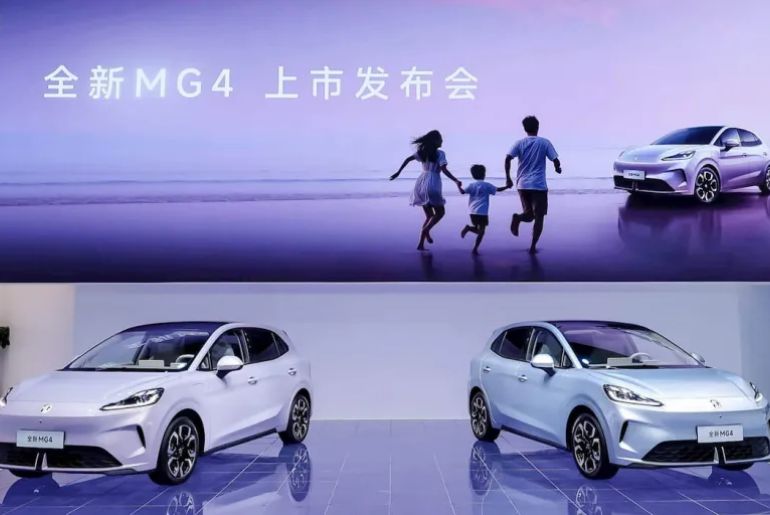
This milestone follows SAIC Motor’s claim in December that it delivered “the world’s first mass-produced semi-solid-state” EV, the new MG4.
Industry Momentum Builds
Several major global automakers and battery companies including Toyota, BYD, CATL, Factorial Energy, Volkswagen, Mercedes-Benz, and BMW are advancing sulfide-based solid-state battery technologies, which are considered safer and more efficient.
SNE Research says that in 2025, CATL and BYD together used more than 55% of all EV batteries in the world. This shows how strong China’s position is in the industry.
Chinese news site Cailian Press said that BYD plans to start making solid-state batteries on a small scale in 2027, after making a number of technical “breakthroughs” in battery life and charging. More widespread use is expected later.
Industry projections suggest:
- Small-scale production could begin in 2027–2028
- Higher-end models may adopt the technology first
- Mass production may start around 2030
Real-World Testing Underway
Mercedes-Benz recently tested a modified EQS with solid-state batteries and found that it could drive for 1,205 km (750 miles). Factorial Energy, which is based in the US and works with Hyundai and Stellantis, provided the cells.
In partnership with Karma Automotive, Factorial recently started the first commercial solid-state battery program in the US.
As new ideas come up, people are starting to see solid-state batteries as a game-changing step in the future of electric cars.
 Electrify your feed! Click here to join our Whatsapp group and to get the latest updates, expert insights, and innovations driving India’s energy storage revolution.