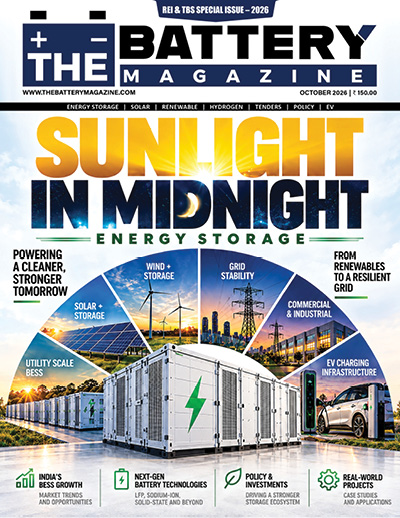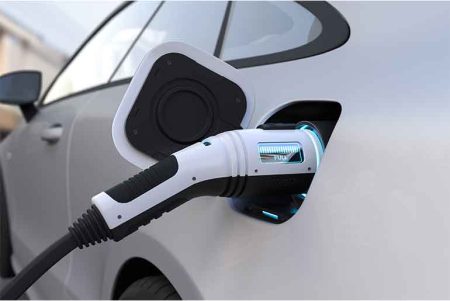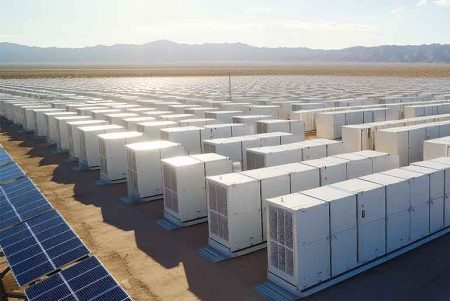
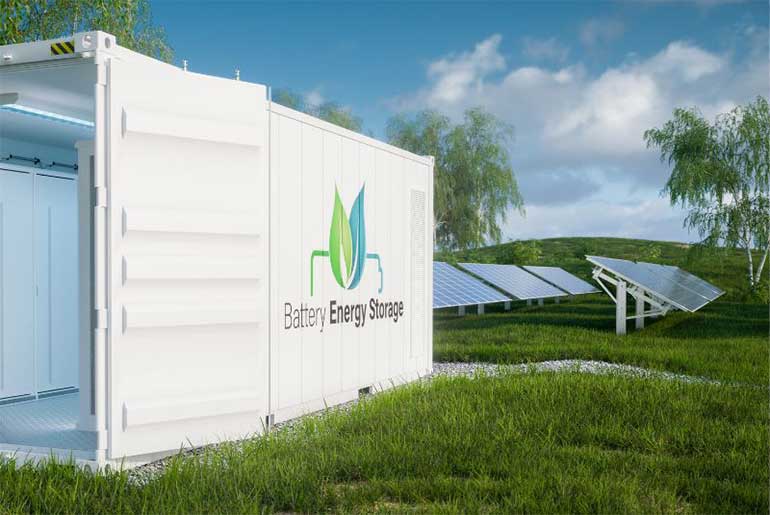
The Minister of State for Power, Shri Shripad Yesso Naik, submitted a written report in the Lok Sabha stated that to tackle renewable energy intermittency and maintain grid stability, the Government of India has implemented a range of policy, regulatory, demand-side, and supply-side measures to promote energy-storage technologies, including Battery Energy Storage Systems (BESS) and Pumped Storage Projects (PSPs).
Drawing on international best practices, energy storage in India is being positioned to provide ancillary services such as frequency control, voltage regulation, peak shifting, congestion management, and black-start support. Under the Central Electricity Regulatory Commission (Ancillary Services) Regulations, 2022, storage systems are eligible to provide Secondary and Tertiary Reserve Ancillary Services, supporting real-time grid stability. Renewable Energy Management Centres (REMCs) and Automatic Generation Control (AGC) are being used to monitor, forecast, and balance renewable supply.
The Central Electricity Authority (CEA) estimates that India will require 336 GWh of energy storage by 2029-30 and 411 GWh by 2031-32 for reliable renewable integration. Guidelines for Preparation of Resource Adequacy Plans (RAP) issued in June 2023 integrate storage into planning frameworks to ensure generation, storage, and demand-responsive resources meet peak demand.
Key Measures:
Policy & Regulatory: Electricity Rules amended (Dec 2022) to recognise ESS; ESS included in the Harmonised Master List of Infrastructure (Oct 2022); National Framework for Promotion of ESS issued (Sep 2023); Draft CEA Regulations for BESS safety and technical standards (2025).
Demand-Side: ISTS charge waivers for BESS/PSP projects till June 2028; storage-based resources allowed to provide ancillary services (Jan 2022); Tariff-Based Competitive Bidding guidelines for BESS procurement (Mar 2022); diesel generator users mandated to adopt cleaner storage solutions; BESS electricity permitted in High-Price Day-Ahead Market (Mar 2023); two VGF schemes launched (Mar 2024 & Jun 2025) to support ~43 GWh BESS deployment.
Supply-Side & Manufacturing: PLI scheme of ₹18,100 crore for 50 GWh Advanced Chemistry Cell manufacturing, 10 GWh earmarked for grid storage; grants for pumped storage projects; separate grid connectivity for non-solar hours; statutory concurrence of CEA waived for closed-loop PSPs; ESS development, ownership, and operation permitted by consumers; CEA advisory recommends co-locating ESS with solar capacity of at least 10% for two hours.
 Electrify your feed! Click here to join our Whatsapp group and to get the latest updates, expert insights, and innovations driving India’s energy storage revolution.