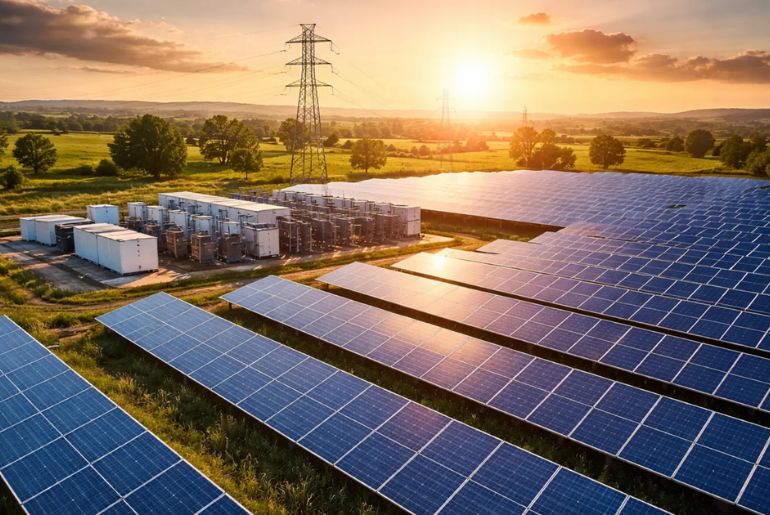
Grid Controller of India Limited (Grid-India) has proposed expanding India’s grid frequency control mechanisms to include solar power projects, battery energy storage systems (BESS), and pumped storage plants, marking a significant step toward improving grid flexibility and reliability as renewable energy penetration accelerates.
The proposal, issued through a consultation paper, recommends integrating these technologies into the Automatic Generation Control (AGC) and Secondary Reserve Ancillary Services (SRAS) frameworks systems traditionally dominated by conventional thermal and hydro generators.
Expanding Frequency Control Beyond Conventional Assets
AGC plays a critical role in maintaining grid frequency by automatically adjusting power generation in response to real-time demand fluctuations. SRAS complements this by providing reserve capacity to stabilize the grid during sudden imbalances.
Grid-India noted that with India rapidly adding variable renewable energy, existing frequency control mechanisms must evolve to reflect the changing generation mix. The proposed framework seeks to allow solar projects paired with storage, standalone BESS, and pumped storage facilities to actively participate in grid balancing services.
According to the consultation paper, these resources can respond quickly to frequency deviations, making them well-suited to support grid operations, especially during peak demand periods and renewable intermittency events.
Technical and Market Participation Framework
Under the proposal, eligible renewable and storage assets would be required to meet defined technical, communication, and control standards to ensure seamless integration with grid operations. Grid-India also highlighted the need for clear operational protocols to enable accurate dispatch, monitoring, and performance evaluation.
The move is expected to unlock new revenue streams for renewable and storage developers by enabling participation in ancillary services markets, while simultaneously strengthening grid resilience.
Supporting India’s Energy Transition Goals
The proposal aligns with India’s broader power sector reforms aimed at accommodating higher shares of clean energy while maintaining system security. As solar and storage capacity continues to grow, leveraging these assets for frequency regulation is seen as essential to reducing reliance on inflexible thermal generation.
Grid-India has invited stakeholders including generators, system operators, utilities, and market participants to submit feedback on the consultation paper before finalizing the framework.
If implemented, the initiative could mark a structural shift in India’s grid operations, positioning renewables and storage as active contributors to system stability rather than passive energy suppliers.
 Electrify your feed! Click here to join our Whatsapp group and to get the latest updates, expert insights, and innovations driving India’s energy storage revolution.