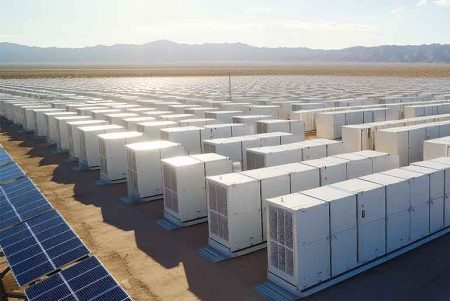
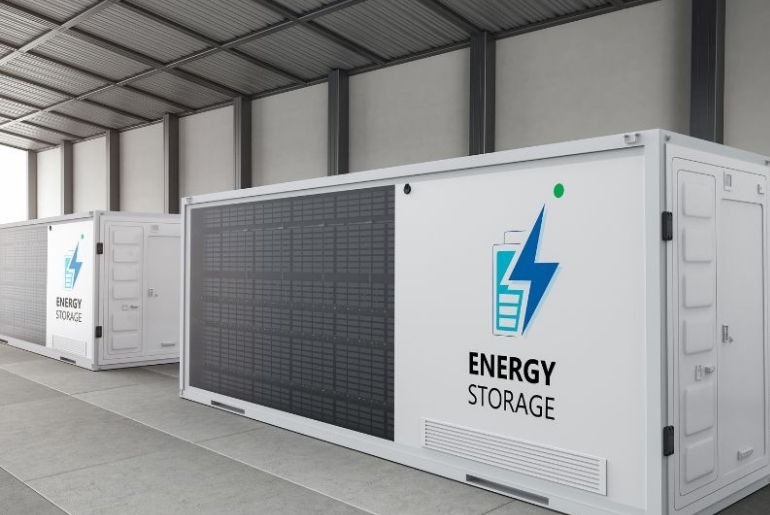
Hardi Hydro Energy has secured a major contract after winning an auction conducted by SJVN Limited to develop a standalone Battery Energy Storage System (BESS) project in Haryana. The company will set up a 250 MW/500 MWh battery storage facility at the Panipat Thermal Power Station. The project was awarded at a tariff of ₹1.97 lakh per MW per month.
Project Details and Tender Requirements
The tender for this battery storage project was issued in December 2025. It required bidders to submit proposals for at least 250 MW/500 MWh capacity. The project will be built near the 220 kV substation connected to the Haryana Vidyut Prasaran Nigam Limited (HVPNL) transmission network, within the premises of the 1,360 MW Panipat Thermal Power Station.
The project is eligible for viability gap funding support of up to ₹18 lakh per MWh. The developer must complete the project within 18 months from the award date. Additionally, the selected company must provide operation and maintenance services for a period of 12 years.
Land and Infrastructure Arrangements
Land for the project will be identified and allocated by Uttar Haryana Bijli Vitran Nigam Limited (UHBVNL). The land will be provided on a lease or right-to-use basis through an agreement, with facilitation support from SJVN.
Hardi Hydro Energy’s responsibilities include installing the battery storage systems, managing charging and discharging operations based on electricity demand, building the required transmission infrastructure, and securing all necessary approvals and clearances. The system must also be designed to connect with the state transmission network located near the 220 kV substation.
Operational and Performance Requirements
The battery storage system will draw electricity from UHBVNL for charging and supply power back to the grid according to instructions from the state load dispatch centre. The batteries must be charged using renewable energy sources.
The project developer must ensure that the battery system is available for at least two operational cycles daily. It must also maintain a minimum monthly system availability of 95 percent, ensuring reliable performance and grid support.
This project is expected to strengthen energy storage capacity and support renewable energy integration in Haryana’s power network.
 Electrify your feed! Click here to join our Whatsapp group and to get the latest updates, expert insights, and innovations driving India’s energy storage revolution.