Close Menu
The Battery MagazineThe Battery Magazine
  • Just In
  • Batteries
    • Battery Manufacturing (BESS)
    • Battery Materials & Chemistries
    • Battery Recycling
    • C&I Storage
  • Solar
  • Renewable energy
    • Wind Energy
    • Hydropower
    • Green Hydrogen
    • Bioenergy
  • Tenders
    • Energy Storage
    • Solar Energy
    • Wind Energy
  • Policy
    • Storage
    • Solar
    • Wind
    • EV
    • Transmission
  • EV
    • EV Batteries
    • EV Charging Infrastructure
    • Electric Mobility Trends
  • Grid
    • Transmission & Distribution
    • Grid Infrastructure
    • Power Generation
    • Power Equipments
  • Exclusive
    • Cover Story
    • Watt Matters
    • Perspective
    • Articles
  • More
    • E-Mag
    • Events
    • Contact Us
Facebook LinkedIn WhatsApp
The Battery MagazineThe Battery Magazine
  • Just In
  • Batteries
    • Battery Manufacturing (BESS)
    • Battery Materials & Chemistries
    • Battery Recycling
    • C&I Storage
  • Solar
  • Renewable energy
    • Wind Energy
    • Hydropower
    • Green Hydrogen
    • Bioenergy
  • Tenders
    • Energy Storage
    • Solar Energy
    • Wind Energy
  • Policy
    • Storage
    • Solar
    • Wind
    • EV
    • Transmission
  • EV
    • EV Batteries
    • EV Charging Infrastructure
    • Electric Mobility Trends
  • Grid
    • Transmission & Distribution
    • Grid Infrastructure
    • Power Generation
    • Power Equipments
  • Exclusive
    • Cover Story
    • Watt Matters
    • Perspective
    • Articles
  • More
    • E-Mag
    • Events
    • Contact Us
LinkedIn Facebook WhatsApp YouTube
The Battery MagazineThe Battery Magazine
Home » EV & Automotive » Huawei Patents EV Battery Offering 3,000 km Range with 5-Minute Charging
EV & Automotive

Huawei Patents EV Battery Offering 3,000 km Range with 5-Minute Charging

Shweta KumariBy Shweta KumariJuly 16, 20253 Mins Read
Facebook Twitter LinkedIn WhatsApp
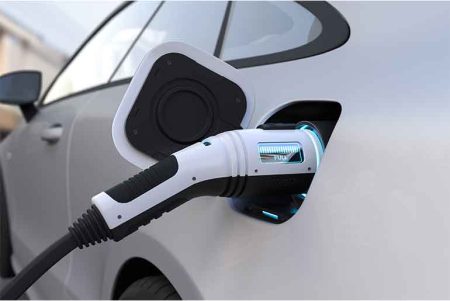
Chinese tech giant Huawei has filed a patent for a next-generation solid-state electric vehicle (EV) battery that claims to offer an unprecedented driving range of over 3,000 kilometres on a single charge and can be fully recharged in just five minutes.

Chinese tech giant Huawei has filed a patent for a next-generation solid-state electric vehicle (EV) battery that claims to offer an unprecedented driving range of over 3,000 kilometres on a single charge and can be fully recharged in just five minutes.

According to details revealed in the patent, the breakthrough lies in the use of a nitrogen-doped sulphide electrolyte, which allows for a significant increase in energy density—between 400 to 500 watt-hours per kilogram (Wh/kg)—a two to three-fold leap compared to conventional lithium-ion batteries currently in use.

Huawei states that this innovation overcomes two of the most critical challenges that have long hindered solid-state battery development: instability at the lithium interface and hazardous side reactions. The nitrogen-doping method, as outlined in the patent, helps stabilize these reactions, improving both performance and safety.

If commercialized, this would place Huawei’s battery technology well ahead of existing offerings in the EV market. The company claims the battery can deliver a full 0–100% charge within five minutes, offering a seamless and fast-charging experience for future EVs.

However, industry experts remain cautiously optimistic. While the specifications in the patent are promising, analysts warn that mass production of such a battery is not feasible in the immediate future due to several barriers. Key among them is the high production cost—sulphide electrolytes alone are currently priced at over $1,400 per kilowatt-hour (₹1.2 lakh)—making it economically impractical for wide-scale use.

Moreover, charging infrastructure in most countries, including China, is currently inadequate to support ultra-fast charging at the scale and speed proposed. Grid integration and cooling requirements for such rapid energy transfer pose significant technical hurdles.

While Huawei does not manufacture EV batteries at present, it has been heavily investing in battery material research and intellectual property, signalling its long-term ambitions in the EV ecosystem. The company’s new patent aligns with its broader strategy to expand its presence in the electric mobility and energy storage sectors, especially as global demand for EVs surges.

It’s also worth noting that the 3,000+ km range is based on the CLTC (China Light-Duty Vehicle Test Cycle), a local testing standard known to yield higher range numbers compared to global standards. Under the more conservative EPA (Environmental Protection Agency) test cycle used in the U.S., this figure is estimated to be closer to 2,000 kilometres—still significantly higher than current EV ranges.

Huawei’s solid-state battery patent comes at a time when global automakers and battery manufacturers—such as Toyota, CATL, and Samsung—are racing to achieve similar breakthroughs, with commercial rollout of solid-state batteries expected within the next 2–5 years.

For now, Huawei’s announcement marks a significant step forward in the EV battery space, but questions around cost, scalability, and infrastructure compatibility will determine how quickly these innovations can move from lab to road.

whatsapp icon Electrify your feed! Click here to join our Whatsapp group and to get the latest updates, expert insights, and innovations driving India’s energy storage revolution.
Battery Innovation electric vehicle range EV technology fast-charging battery solid state battery
Shweta Kumari
  • Website
  • LinkedIn

Sub-editor by profession. Love for words and storytelling, where every word narrates a story. Shaping stories in a world powered by electrons—where lithium meets logic, and every spark tells a tale of innovation, sustainability, and our electrified future.

Keep Reading

NavPrakriti and IIT Kharagpur

NavPrakriti and IIT Kharagpur Partner to Advance Battery Recycling and Critical Mineral Recovery

Advait Energy Secures 150 MW/300 MWh BESS Project from GUVNL

Advait Energy Secures 150 MW/300 MWh BESS Project from GUVNL

SJVN Flags

SJVN Flags Renewable Power Demand Gap Amid Rising Capacity Additions

Comments are closed.

Renewable energy
PIP Partners with Fourier to Deploy Hydrogen-Powered Energy Storage System in Gujarat

PIP Partners with Fourier to Deploy Hydrogen-Powered Energy Storage System in Gujarat

June 4, 2026
IIT Guwahati

IIT Guwahati Develops Perovskite Technology Achieving 25.73% Solar Cell Efficiency

June 4, 2026
India’s Clean Energy Sector

India’s Clean Energy Workforce Grows by 6.6 Lakh, Rooftop Solar Leads Job Creation

June 4, 2026
SJVN Flags

SJVN Flags Renewable Power Demand Gap Amid Rising Capacity Additions

June 4, 2026
Batteries
NavPrakriti and IIT Kharagpur

NavPrakriti and IIT Kharagpur Partner to Advance Battery Recycling and Critical Mineral Recovery

June 4, 2026
Advait Energy Secures 150 MW/300 MWh BESS Project from GUVNL

Advait Energy Secures 150 MW/300 MWh BESS Project from GUVNL

June 4, 2026
cylib and Vianode

cylib and Vianode Partner to Advance Recycled Graphite for EV Batteries

June 4, 2026
Trina Storage

Trina Storage Wins 160 MWh Ultra-High Voltage Battery Project in Japan’s Kyushu Region

June 3, 2026

Subscribe for Updates

Get the latest news about energy storage in your inbox.

    © 2026 Thebatterymagazine.com.
    • Home
    • About Us
    • Contact Us
    • Privacy Policy
    • Terms of Service

    Type above and press Enter to search. Press Esc to cancel.