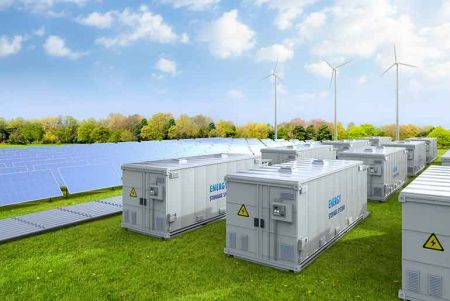
India is preparing for a massive expansion of its energy storage infrastructure, with total investments estimated at nearly ₹4.78 lakh crore by 2031-32 to support the country’s growing renewable energy capacity and enhance grid reliability. The planned investments cover both Battery Energy Storage Systems (BESS) and Pumped Storage Plants (PSPs), which are expected to play a crucial role in balancing intermittent renewable power generation.
According to the government’s latest update based on the National Electricity Plan (Generation) notified in May 2023, India’s requirement for Battery Energy Storage Systems (BESS) is projected to increase from 8.68 GW/34 GWh by 2026-27 to 47.24 GW/236 GWh by 2031-32. Meeting this target is expected to require an investment of approximately ₹3.49 lakh crore.
In parallel, the country plans to significantly expand its Pumped Storage Plant (PSP) capacity. The requirement is estimated to rise from 7.45 GW/47 GWh by 2026-27 to 26.69 GW/175 GWh by 2031-32, with investments of around ₹1.29 lakh crore. Together, the planned BESS and PSP deployments will take India’s total energy storage capacity requirement to 73.93 GW by FY32.
The government highlighted that energy storage has become a key pillar of India’s clean energy transition. The NITI Aayog’s Sectoral Insights: Power (Volume 7) report, released in February 2026, identified energy storage as a critical technology for addressing renewable energy variability, improving grid flexibility and ensuring reliable electricity supply as solar and wind capacity continue to grow.
To accelerate deployment, the government has introduced a series of policy, regulatory and financial measures aimed at both developers and manufacturers.
Among the key incentives is the waiver of Inter-State Transmission System (ISTS) charges for eligible storage projects. BESS projects commissioned by June 2025 were granted a 100% ISTS charge waiver, followed by a phased annual reduction of 25%. The benefit has since been extended to co-located BESS projects commissioned up to June 2028, while PSP projects with construction contracts awarded before June 2028 are also eligible for the transmission charge waiver.
On the regulatory front, the Central Electricity Regulatory Commission (CERC) has enabled energy storage resources to participate in ancillary services, allowing BESS and PSP projects to provide secondary and tertiary reserves that support real-time grid balancing. The government has also notified Tariff-Based Competitive Bidding (TBCB) guidelines for procuring storage projects, creating a transparent framework for utilities to procure energy storage capacity.
Further strengthening market participation, energy storage systems have been allowed to trade in India’s High-Price Day-Ahead Market, enabling operators to respond to peak demand periods and benefit from dynamic electricity pricing.
To improve project viability, the government is extending Viability Gap Funding (VGF) support for the development of 43.8 GWh of battery energy storage capacity across the country.
On the manufacturing side, the Production-Linked Incentive (PLI) scheme for Advanced Chemistry Cell (ACC) manufacturing aims to establish 50 GWh of domestic manufacturing capacity, including 10 GWh dedicated to grid-scale stationary energy storage applications. In addition, consumers have been permitted to develop, own, lease or operate energy storage systems, supported by newly introduced technical standards and safety regulations for BESS deployment.
With ambitious storage targets, supportive policy reforms and increasing domestic manufacturing capacity, India is positioning energy storage as a cornerstone of its renewable energy strategy while creating significant opportunities across the battery value chain.
 Electrify your feed! Click here to join our Whatsapp group and to get the latest updates, expert insights, and innovations driving India’s energy storage revolution.