According to a new report by the India Energy & Climate Centre (IECC), India has achieved a major clean energy milestone—with 53% of its installed power capacity now non-fossil, the country has reached this target five years ahead of schedule.
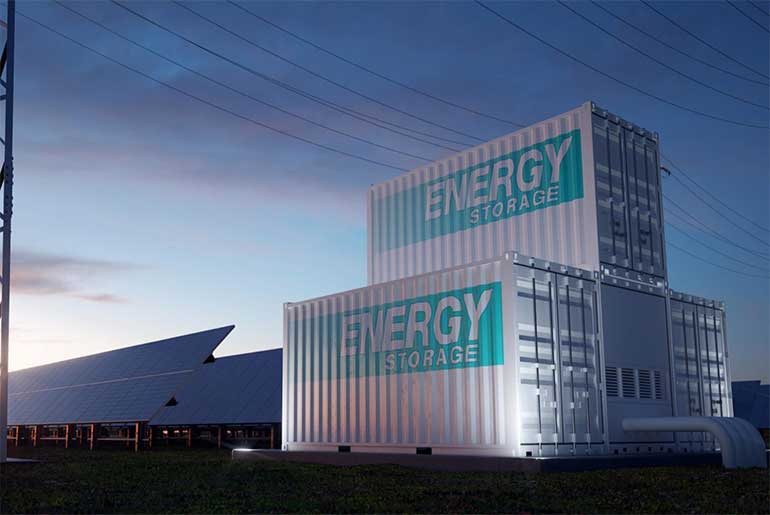
The report emphasizes that the next crucial step is to scale up energy storage at an unprecedented rate, as India moves toward its clean energy goals at the lowest possible cost. This expansion is vital not only to meet the surging energy demand—projected to grow by nearly 50%—but also to stabilize electricity prices and ensure reliable, round-the-clock clean power.
IECC underscores the need for bold policy and market action to support this transition and secure India’s low-cost, independent energy future.
This will necessitate a $40-50 billion (Rs 3-4 trillion) investment in storage by 2032, according to a new study by the India Energy & Climate Centre and an article on advancesomspot on August 26.
The report, Strategic Pathways for Energy Storage in India Through 2032, states that it will demand an additional $380 billion (Rs 30 trillion) in new investments in both power generation and grid infrastructure to reach a clean energy capacity of 500 GW in 2030 and over 600 GW in 2032 the most cost-effective pathway to reach India.
The benefits, however, will accrue in the form of savings to the consumers, as they will save almost around upto 7 billion dollars (Rs 60,000 crore) annually in electrical power bills, as estimated by the report.
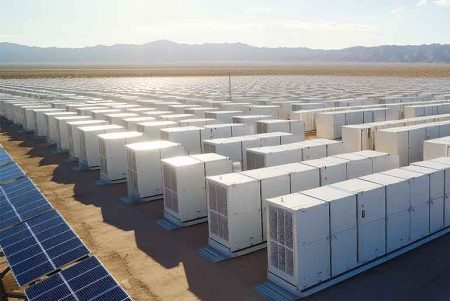
In India, an elimination of the energy burden means 61 GW (218 GWh) of energy storage consumption in the timespan between 2030 and 2032, compared to just 6 GW of energy storage today, mostly as pumped hydro.
“We’re already about halfway to our 500 GW target,” said Nikit Abhyankar, lead author of the study and Co-Faculty Director of IECC. “The next step is to scale energy storage at unprecedented speed to make clean power available around the clock. This will require $40-50 billion (Rs 3-4 trillion) of investment in storage by 2032, but the payoff is enormous: consumers could save nearly $7 billion (Rs 60,000 crore) every year in power costs. To get there, India will need bold policy and market action.”
This analysis demonstrates that the combination of clean power and storage is now the most cost-effective method of satisfying demand. Battery costs declined by 65 percent since 2021, which means that solar and storage projects can produce firm power when it is needed most, with costs at just Rs3-Rs3.5/kWh with a construction period of just 18-24 months, which is much cheaper and faster than any thermal power plant.
The 2-hour battery installation is likely to prevail through 2027, when they will be used to sustain peak energy periods at night.
The approximate regions that will experience battery storage locations will include those with a high amount of solar capacity, large load centres and states with low amounts of peaking capacity, including Gujarat, Rajasthan, Maharashtra, Uttar Pradesh, Andhra Pradesh and Telangana.
Existing and under-construction thermal power plants, combined with hydropower, nuclear, and energy storage capacity, could secure electricity demand reliably in every hour of every year in every state, with 456 GW and 524 GW installed RE capacity in 2030 and 2032, respectively (excluding large hydro).
Numerous new pump hydro projects are also coming within a similarly competitive price. Due to this, the average DISCOM’s power procurement cost could reduce in real terms by 2032, given storage targets are fulfilled, the report read.
“Energy storage is at the core of India’s clean energy vision. It’s the backbone of a flexible, resilient power system that can handle peak loads, harness the full potential of renewables, and support grid stability,” Srikant Nagulapalli, additional secretary of the ministry of power and director general of the Power Foundation of India, said, adding that “this study offers practical, affordable ways to roll out storage and provides the clarity needed to help India move faster and smarter toward our shared goals.”
The Research
Our research also indicates that with energy storage deployed alongside the grid, the system can be reliable until 2032 with peak power demands handled and the flexibility required to balance the variable generation of solar and wind power available. The currently operating and those under construction thermal power plants will provide the base load and back up the system when renewable generation has a deficit in generation.
Yet by 2032, 50 GW-70 GW of thermal capacity (25-30 percent of the current fleet) is projected to operate at less than a 30 percent utilization rate (plant load factor), increasing stranded assets.
The study further notes
The study further notes that a rapid scale-up could only be performed with the right policy, regulatory and market frameworks, which will include storage requirements for discoms, incentives for co-location projects, clarity on revenue stacking market rules and domestic manufacturing support. It observes that, already, India is developing a battery manufacturing base, currently projecting 200+ GWh capacity by 2030. With the support of the Production-Linked Incentive (PLI) scheme or viability gap funding (VGF), battery recycling and critical mineral sourcing, this manufacturing initiative would be key to addressing the country storage requirements and enhancing energy autonomy and clean technology leadership.
“We have proven we can scale renewables,” Abhyankar added. “Now the challenge is grid flexibility. Energy storage is how we achieve it—and how India secures a reliable, low-cost, and independent energy future.”
 Electrify your feed! Click here to join our Whatsapp group and to get the latest updates, expert insights, and innovations driving India’s energy storage revolution.