The Government of India has outlined an ambitious roadmap to strengthen the country’s electricity infrastructure, with plans to significantly expand the national transmission network, accelerate battery energy storage deployment, modernise the power grid, and enhance cybersecurity to support rising electricity demand and renewable energy integration.
In two updates presented in Parliament, the Ministry of Power highlighted progress under the National Electricity Plan (Transmission), 2024, which charts the country’s transmission requirements for the 2023–2032 period. The plan has been designed to accommodate increasing electricity demand driven by electric mobility, data centres, industrial expansion and rapid renewable energy capacity additions.
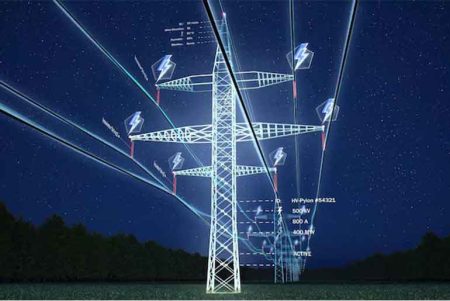
According to the plan, India’s transmission network is projected to expand from 5.09 lakh circuit kilometres (ckm) as of June 2026 to 6.48 lakh ckm by 2032. During the same period, the country’s transformation capacity is expected to increase from 1,478 GVA to 2,345 GVA, while inter-regional transmission capacity will rise from 120 GW to 168 GW, enabling greater power transfer across regions and supporting reliable integration of renewable energy.
The government said substantial progress has already been made in strengthening the grid. Between FY2023-24 and FY2025-26, India added 35,172 circuit kilometres of transmission lines and 270,174 MVA of transformation capacity at 220 kV and above, enhancing the country’s ability to transmit electricity from generation centres to demand hubs.
For the energy storage sector, the update highlights the growing role of Battery Energy Storage Systems (BESS) in maintaining grid reliability. As of June 30, 2026, India had installed 2,927.85 MW / 8,660.20 MWh of BESS capacity for projects larger than 1 MWh. The ministry said battery storage is becoming an important component of the country’s power infrastructure by supporting renewable energy integration, improving grid flexibility, managing peak demand and enhancing overall system stability.
The government is also continuing efforts to modernise the electricity grid through the deployment of advanced technologies. These include Static Synchronous Compensators (STATCOMs), Synchronous Condensers (SynCONs) and other Flexible AC Transmission System (FACTS) devices to improve voltage stability and strengthen the transmission network. In addition, Regional Energy Management Centres (REMCs), Automatic Generation Control (AGC) and ancillary services are being deployed to facilitate renewable energy forecasting, frequency regulation and real-time grid balancing.
On the distribution side, the Ministry noted that the Central Electricity Authority (CEA) has prepared a long-term perspective plan to strengthen distribution infrastructure. By 2030, substation capacity at the 66/33/22 kV level is expected to increase from 605 GVA to 711 GVA, while distribution transformer capacity will rise from 895 GVA to 1,135 GVA. Further expansion is planned by 2035, alongside significant growth in 11 kV feeder networks and low-tension (LT) distribution lines.
These investments are being supported through the Revamped Distribution Sector Scheme (RDSS), under which projects worth ₹1.53 lakh crore have been sanctioned for loss reduction infrastructure and ₹1.31 lakh crore for smart metering across the country. The scheme aims to improve operational efficiency and financial sustainability of distribution utilities while enabling greater digitalisation of the power sector.
The government also emphasised the importance of cybersecurity as India’s power system becomes increasingly digital. It highlighted the establishment of Computer Security Incident Response Team–Power (CSIRT-Power) in April 2023 to coordinate cybersecurity incident response across the electricity sector. Other initiatives include the creation of Security Operations Centres (SOC) and Network Operations Centres (NOC) under the Power System Development Fund, along with regular vulnerability assessments and cybersecurity training in collaboration with institutions such as the Indian Institutes of Technology (IITs), Rashtriya Raksha University (RRU) and the National Critical Information Infrastructure Protection Centre (NCIIPC).
To improve grid resilience against natural disasters, the government is implementing recommendations from the Task Force on Cyclone Resilient Electricity Infrastructure, including digitalisation of power assets, deployment of distributed energy resources, use of drones for transmission line inspections, emergency restoration systems, mobile substations and underground transmission corridors in vulnerable coastal regions.
The Ministry also highlighted several milestones achieved by the power sector in recent years. India added a record 64,695 MW of generation capacity during FY2025-26, including 50,905 MW from renewable energy sources excluding large hydro. On July 29, 2025, renewable energy met a record 51.5% of the country’s electricity demand of 203 GW. During the same period, the national energy shortage declined to zero, while India achieved its COP26 commitment of sourcing 50% of installed electricity capacity from non-fossil fuel sources five years ahead of the 2030 target.
The latest roadmap underscores the government’s strategy of combining transmission expansion, battery energy storage deployment, smart grid technologies and distribution upgrades to build a more resilient, flexible and future-ready electricity system capable of supporting India’s clean energy transition and long-term economic growth.
 Electrify your feed! Click here to join our Whatsapp group and to get the latest updates, expert insights, and innovations driving India’s energy storage revolution.