
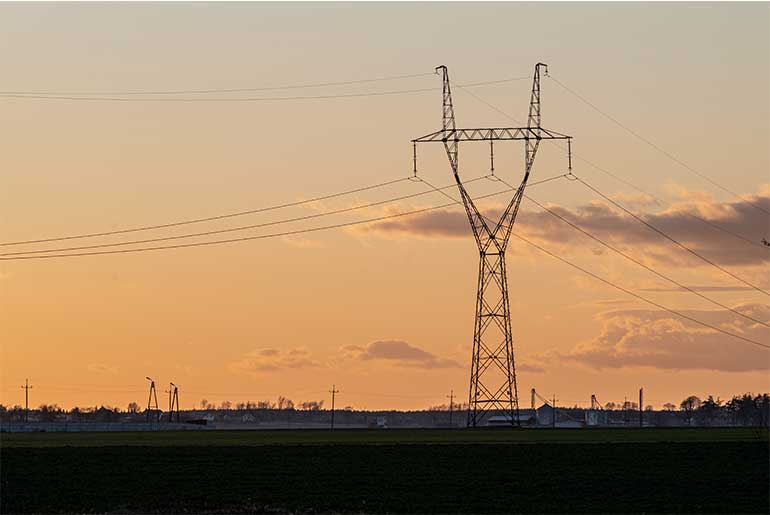
India is moving to reduce its dependence on foreign technology for electricity-grid control systems, with a new roadmap aimed at developing and deploying indigenous Supervisory Control and Data Acquisition (SCADA) systems by 2029.
The initiative follows directions from the Prime Minister’s sectoral review and the Ministry of Power, to strengthen energy security, cybersecurity and technological self-reliance across the power sector.
A specialised committee led by the Central Electricity Authority (CEA) was established in December 2025 to develop a roadmap for the phased indigenisation of SCADA, Energy Management Systems (EMS) and Distribution Management Systems (DMS).
SCADA platforms are critical to monitoring and controlling electricity networks and support the operation of India’s integrated power grid. However, the country has historically depended on proprietary systems supplied by overseas original equipment manufacturers.
The committee identified several challenges associated with this dependence, including vendor lock-in, inconsistent system architectures, limited interoperability and difficulties in implementing cybersecurity updates across different platforms.
According to the committee, software currently accounts for about 25% of SCADA system costs, while hardware represents nearly 75%. Despite the significant hardware component, domestic content in grid SCADA systems remains below 20%, highlighting the scope for greater local manufacturing and technology development.
The proposed roadmap covers the 2026–27 to 2028–29 financial years.
During 2026–27, the focus will be on domestic development of core data acquisition systems, front-end processors, historian databases and basic communication protocols such as ICCP.
The second phase, planned for 2027–28, will target more advanced grid applications, including State Estimators, Automatic Generation Control, Optimal Power Flow and Dynamic Security Assessment.
By 2028–29, the programme is expected to address more complex applications, including outage scheduling, dispatcher training simulators and specialised transmission-monitoring systems.
The roadmap also calls for greater domestic sourcing of servers, workstations, storage systems and NavIC-based time-synchronisation equipment. Telecom networking components would be developed in line with broader indigenisation policies issued by the Ministry of Electronics and Information Technology and the Department of Telecommunications.
The committee has recommended creating a National SCADA Mission or dedicated working group under the Ministry of Power to coordinate implementation. Potential development models include a nomination-based approach involving organisations such as C-DAC or a consortium led by Power Grid Corporation of India and Grid-India.
A government-funded testing platform has also been proposed to assess cybersecurity and validate indigenous systems. Real-time pilot projects at Load Despatch Centres could provide additional field testing before wider deployment.
Grid-India is expected to establish a dedicated technical team to oversee long-term implementation, upgrades and maintenance, supported through grants or the Power System Development Fund.
The committee concluded that India possesses sufficient domestic research and development capabilities to achieve SCADA indigenisation within the proposed 2026–29 timeline, provided adequate funding, testing infrastructure and institutional support are made available.
For India’s broader clean-energy transition, indigenous grid-control technology could become increasingly important as renewable generation, battery energy storage and distributed energy resources expand across the power network.
 Electrify your feed! Click here to join our Whatsapp group and to get the latest updates, expert insights, and innovations driving India’s energy storage revolution.