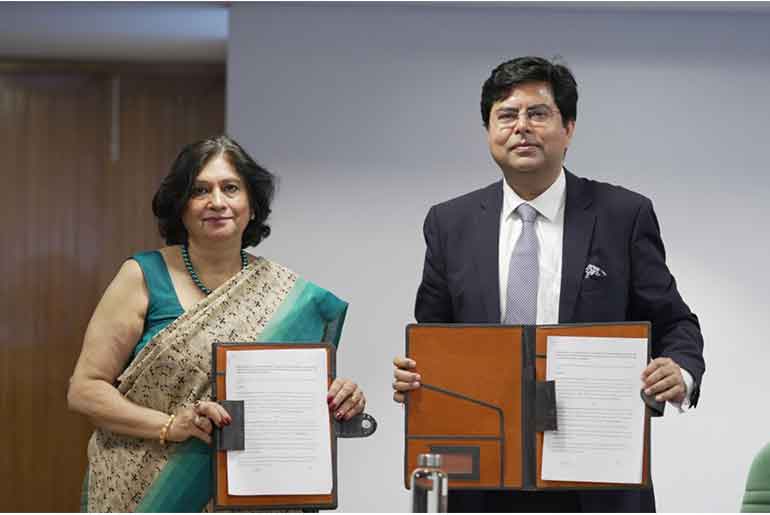
The Energy and Resources Institute (TERI) and TKIL Industries have signed a Memorandum of Understanding (MoU) to establish a strategic partnership focused on research, implementation and policy advocacy in sustainability, corporate social responsibility (CSR) and advanced green technologies.
The MoU was signed by Dr Vibha Dhawan, Director General of TERI, and Vivek Bhatia, Managing Director of TKIL Industries, at TERI’s India Habitat Centre (IHC) office. Senior representatives from both organisations attended the signing ceremony, including Dr Dipankar Saharia, Executive Director (Special Projects), TERI; Dr Amit Kumar Thakur, Director, TERI; Arup Mullick, Associate Director, TERI; and Aditya Singh, General Manager (Sales), TKIL Industries.
During the meeting, representatives from both organisations discussed the opportunities and challenges associated with scaling up hydrogen adoption in India. The discussions highlighted the importance of developing a robust hydrogen ecosystem through pilot projects, infrastructure development, market creation and collaborative research.
The organisations also emphasised the need for innovation, cost competitiveness and the evaluation of different hydrogen production and deployment pathways to support India’s long-term energy transition goals. These efforts are expected to help identify potential areas for collaboration in advancing hydrogen technologies and strengthening the supporting ecosystem.
As part of the engagement, Rashmi Murali, Fellow at TERI, presented an overview of the ongoing CSR project and the proposed TERI–TKIL collaboration framework. The presentation outlined opportunities for joint initiatives across clean energy, sustainable agriculture, green technologies, policy engagement and community-led sustainability programmes.
The partnership aims to bring together research capabilities and industry expertise to support the development and implementation of sustainability-focused solutions. Through collaborative projects and policy engagement, the two organisations intend to explore approaches that can contribute to environmental sustainability and the adoption of advanced green technologies.
The collaboration comes amid India’s broader efforts to accelerate its energy transition, expand the use of cleaner energy sources and develop emerging technologies such as hydrogen. Research, infrastructure development and industry participation are important components of these efforts, particularly in improving the commercial viability and adoption of new energy solutions.
 Electrify your feed! Click here to join our Whatsapp group and to get the latest updates, expert insights, and innovations driving India’s energy storage revolution.