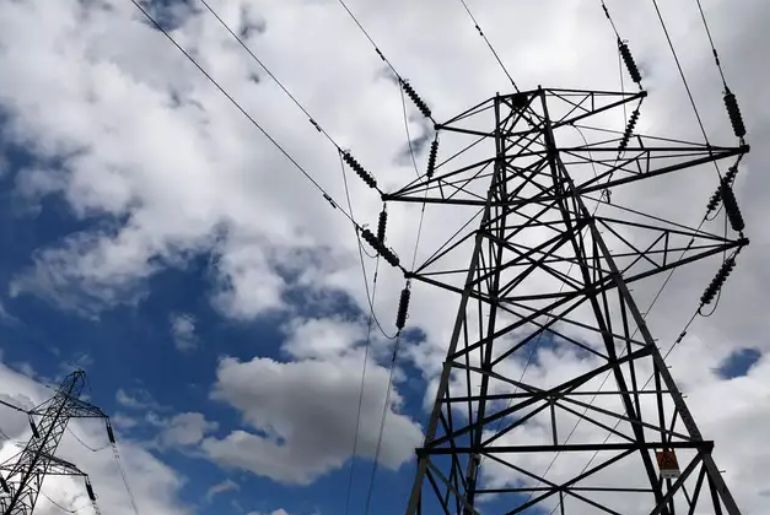
India has achieved a massive breakthrough in its energy infrastructure. On Thursday, the Ministry of Power announced that the national electricity transmission network has officially crossed the 5 lakh circuit kilometer (ckm) mark.
This milestone confirms India’s position as home to the world’s largest synchronous national grid, capable of carrying high-voltage energy of 220 kilovolts and above. Alongside this, the nation’s total transformation capacity has reached a staggering 1,407 gigavolt amperes (GVA).
Rajasthan Solar Power Drives the Record
The record-breaking feat was achieved on January 14, 2026, with the commissioning of a new 628 ckm transmission line. This 765 kV line connects the Bhadla-II and Sikar-II substations in Rajasthan.
This specific project is a game-changer for green energy. It will allow the “evacuation” or transport of an additional 1,100 MW of renewable power from major solar hubs like Bhadla, Ramgarh, and Fatehgarh, bringing clean energy from the desert to the rest of the country.
A Decade of Rapid Growth
Since April 2014, India has transformed its power map. The transmission network has grown by 71.6%, adding over 2 lakh kilometers of new lines and nearly doubling its transformation capacity.
The Ministry of Power highlighted the success of the “One Nation, One Grid, One Frequency” vision. Inter-regional power transfer capacity has now jumped to 1,20,340 MW, ensuring that electricity can flow seamlessly from power-surplus states to areas with high demand, keeping the lights on nationwide.
Future Goals: 500 GW by 2030
The government isn’t stopping here. To meet the goal of 500 GW of non-fossil fuel power by 2030, the network must keep expanding. Currently, projects are underway to add:
- 40,000 ckm of inter-state lines.
- 27,500 ckm of intra-state (within state) lines.
- 533 GVA of total new transformation capacity.
The Ministry of Power stated:
“The milestone of 5,00,000 ckm of transmission lines reflects the government’s sustained efforts towards ensuring a reliable, affordable, and secure electricity supply across the country while supporting rapid growth in renewable energy integration.”
By building this “highway for electricity,” India is ensuring that its transition to green energy is backed by a robust and modern delivery system.
 Electrify your feed! Click here to join our Whatsapp group and to get the latest updates, expert insights, and innovations driving India’s energy storage revolution.