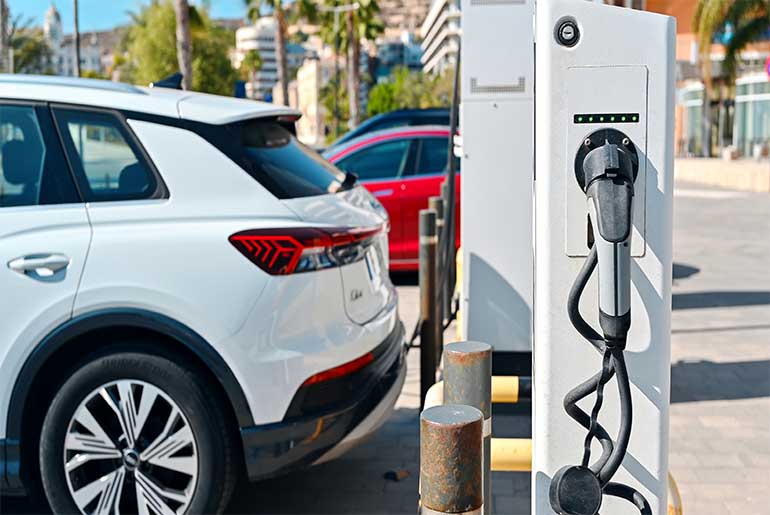
Karnataka has strengthened its position as a major hub for electric mobility in India, ranking second among States in the country in terms of installed electric vehicle (EV) charging stations.
According to data released by the Ministry of Heavy Industries, Karnataka had 6,805 EV charging stations as of July 29, 2026. The State trails Maharashtra, which has the highest number of charging stations at 6,985. Karnataka’s tally is only 180 stations lower than Maharashtra’s and accounts for nearly 13% of the 52,718 EV charging stations installed across India.
The data was shared by the Ministry of Heavy Industries in response to an unstarred question in the Rajya Sabha on August 7, 2026. The figures highlight the rapid expansion of charging infrastructure as India continues to promote electric mobility and reduce dependence on conventional fuels.
Karnataka has a significantly larger EV charging network compared with other major southern States.
Tamil Nadu has 3,839 charging stations, while Telangana has 3,739 and Kerala has 3,399. Andhra Pradesh has 1,976 charging stations, whereas Goa has 314.
The substantial gap between Karnataka and its neighbouring States underlines the State’s growing importance in India’s EV ecosystem. Bengaluru, which has emerged as a major centre for electric vehicle manufacturers, startups and mobility companies, is also contributing to the development of the State’s EV infrastructure.
At the national level, Uttar Pradesh ranks third with 4,493 EV charging stations, following Maharashtra and Karnataka.
Tamil Nadu, Telangana and Kerala follow Uttar Pradesh, while Rajasthan has 2,827 charging stations. The State-wise data shows considerable differences in charging infrastructure across India.
Several northeastern States and smaller Union Territories have fewer than 100 charging stations, indicating that the availability of EV charging infrastructure remains uneven across different parts of the country.
The Ministry of Heavy Industries clarified that centralised data on the number of fast- and slow-charging stations is not maintained.
The Ministry also stated that establishing EV charging stations is an unlicensed activity. Private entities can therefore set up charging stations, provided they comply with the Ministry of Power’s guidelines issued on September 17, 2024.
The expansion of charging infrastructure is considered a key requirement for wider EV adoption in India. A larger and more accessible charging network can help address range-related concerns among consumers and support the growing number of electric two-wheelers, three-wheelers, passenger vehicles and commercial EVs on Indian roads.
With 6,805 charging stations, Karnataka now accounts for one of the largest shares of India’s public EV charging infrastructure. Its position just behind Maharashtra reflects the State’s growing role in supporting India’s transition towards electric mobility.
 Electrify your feed! Click here to join our Whatsapp group and to get the latest updates, expert insights, and innovations driving India’s energy storage revolution.