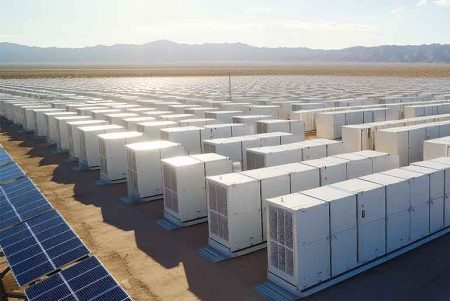
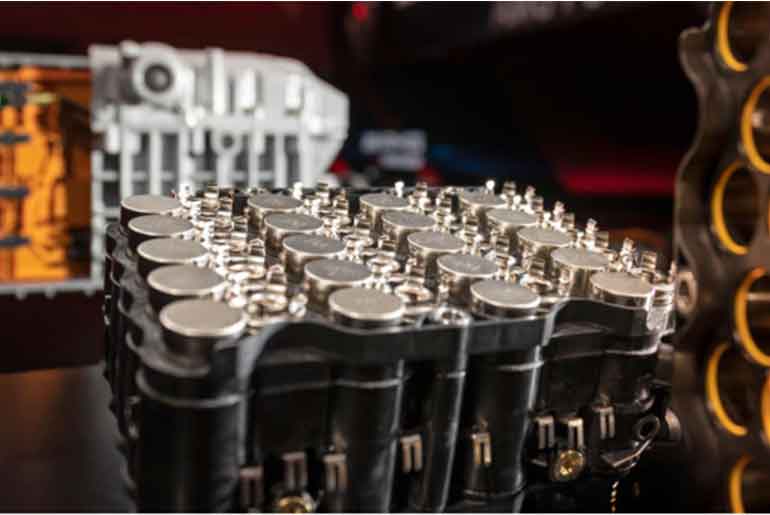
Minister of State for Heavy Industries, Bhupathiraju Srinivasa Varma, submitted a written reply in the Rajya Sabha stated that The Ministry of Heavy Industries is implementing the Production Linked Incentive (PLI) scheme under the “National Programme on Advanced Chemistry Cell (ACC) Battery Storage.” The scheme, which was approved in May 2021, has a total financial outlay of ₹18,100 crore. It aims to establish 50 GWh of domestic Advanced Chemistry Cell manufacturing capacity in India to strengthen the country’s battery manufacturing ecosystem and reduce dependence on imports.
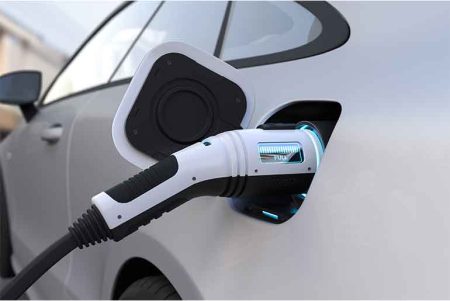
Out of the total target, 40 GWh capacity has been awarded to four beneficiary companies. This capacity is end-use agnostic and can be used for multiple applications, including electric vehicles (EVs).
As reported by the beneficiary firms, a cumulative investment of ₹3,237 crore has been made under the scheme, generating employment for 1,118 people as of December 31, 2025.
Capacity Awarded and Installed
The beneficiary-wise details are as follows:
• ACC Energy Storage Pvt. Ltd. – 5 GWh awarded, 0 GWh installed
• Ola Cell Technologies Pvt. Ltd. – 20 GWh awarded, 1 GWh installed
• Reliance New Energy Battery Storage Ltd. – 5 GWh awarded, 0 GWh installed
• Reliance New Energy Battery Ltd. – 10 GWh awarded, 0 GWh installed
In total, 40 GWh has been awarded, while 1 GWh has been installed so far.
Operational Challenges
The beneficiary firms are facing operational and implementation challenges due to several factors, including:
- Limited availability of technology
- Shortage of skilled manpower
- Dependence on imported critical equipment and machinery
- Lack of domestic availability of upstream components such as Cathode Active Materials (CAM), Anode Active Materials (AAM), and electrolytes
Supporting EV and Battery Ecosystem
To boost electric vehicle adoption, the Ministry of Heavy Industries is also implementing multiple schemes, including PLI-Auto, PLI ACC, PM E-DRIVE, PM e-Bus Sewa-Payment Security Mechanism (PSM), and the Scheme for Promotion of Manufacturing of Electric Passenger Cars in India (SPMEPCI).
For battery recycling and circularity, the Ministry of Environment, Forest and Climate Change notified the Battery Waste Management Rules, 2022 on August 24, 2022. These rules cover EV, portable, automotive, and industrial batteries.
Additionally, the Ministry of Mines is implementing the National Critical Mineral Mission (NCMM), approved on January 29, 2025, to secure long-term supply of critical minerals. An incentive scheme for critical mineral recycling was also launched on October 2, 2025.
 Electrify your feed! Click here to join our Whatsapp group and to get the latest updates, expert insights, and innovations driving India’s energy storage revolution.