NavPrakriti announces partnership with 150+ battery manufacturers to build a nationwide network for recycling, refurbishing, and collecting end-of-life lithium-ion batteries over three years.
The initiative will support India’s Extended Producer Responsibility (EPR) framework by enabling organized battery collection and recycling across sectors including electric vehicles, consumer electronics, telecom, and industrial applications.
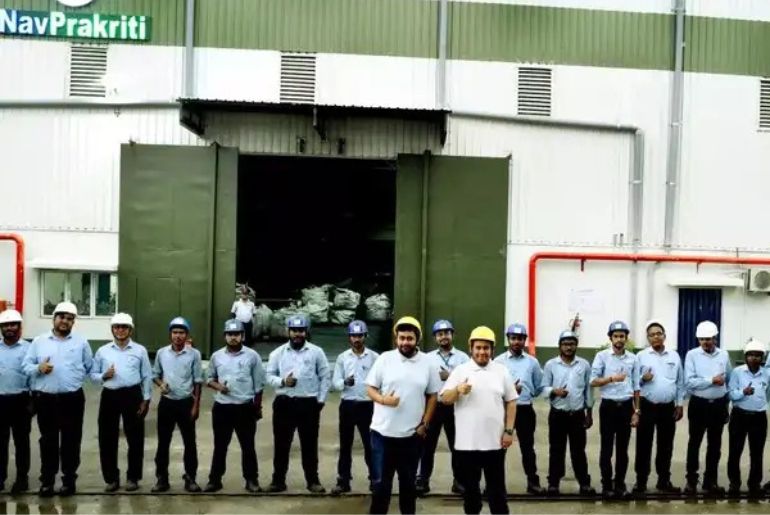
NavPrakriti recently began operations at what it calls eastern India’s first advanced lithium-ion battery recycling facility. The plant has a current capacity of 1,000 tonnes of used batteries per month, with potential to double as demand grows. The facility recovers aluminium and copper from used batteries and produces intermediate products rich in nickel, cobalt, manganese, and lithium.
India’s lithium-ion battery demand is projected to rise sharply, from around 4 gigawatt-hours (GWh) in 2023 to nearly 139 GWh by 2035, driven by electric vehicle adoption and deployment of battery energy storage systems to support renewable power. The growth in lithium battery use has also raised concerns over waste management. In 2022, lithium-ion batteries accounted for roughly 700,000 tonnes of the 1.6 million tonnes of e-waste generated in India, while only 40% of total e-waste was recycled, highlighting gaps in infrastructure.
In response, the government introduced the Battery Waste Management Rules (BWMR) in 2022, mandating EPR and requiring producers to ensure battery collection and recycling through authorized recyclers. The Central Pollution Control Board (CPCB) operates a digital EPR portal to track compliance and issue EPR credits.
“Our aim is to help set benchmarks for responsible battery recycling aligned with India’s circular economy goals,” said Akhilesh Bagaria, founder of NavPrakriti. “Partnerships with manufacturers and OEMs are critical to scaling compliant recycling and material recovery.”
Aligned with the National Critical Mineral Mission, NavPrakriti plans to expand into hydrometallurgical refining, battery-grade material recovery, and second-life battery applications as regulations tighten from 2026. The company’s current operations already cover batteries from consumer electronics, telecom networks, and industrial applications.
 Electrify your feed! Click here to join our Whatsapp group and to get the latest updates, expert insights, and innovations driving India’s energy storage revolution.