

With the rapid onset of electric vehicles that India, as a nation, is headed towards, it would not be incorrect to point out how a significant chunk of the population has witnessed what an unregulated battery can do under certain circumstances.
Most of us would have come across the news of an electric car or any other type of electric vehicle (EV) catching on fire, either due to improper operational practices unfit for them, or by simple negligence near the end of life.
With the nation moving towards a more battery-dependent future in all sectors ranging from transport to telecom, it begs us to ask the question: Where will the used battery cells end up, and in what condition?
India depends solely on imported battery cells to fuel its demand for stored power. And while we are on our way to learning how and where to utilise battery power, we are yet to address one looming oversight.
Our country, culturally, has often been referred to as the land of ‘make the best of it,’ even if that means cutting a few corners. While that lends us Indians a very admirable spirit, it also has its downsides.
With the rapidly increasing amounts of e-waste, especially as the country paces towards electrification, we are overlooking the omnipresent problem of discarding used batteries. While refurbishing and recycling companies are present in the industry, it is a highly unregulated field, especially when dealing with something as volatile as lithium cell battery packs.
While the government put in place Battery Waste Management Rules (BMWR) in 2022, the lack of proper infrastructure and reverse logistics mechanisms means proprietors are faced with a major challenge, keeping the establishment of a safe and formal sector far from reality.
Traditionally, lead-acid batteries do not pose as big a threat as the new up-and-coming chemistries of batteries, such as the ever-present lithium-ion and the Sodium or solid-state batteries. Moreover, the industry has grown accustomed to how to properly dispose of a Lead-acid battery, given the chemistry has been in use for decades now.
This is where the government needs to come up with reforms and guidelines as to how the waste is going to be dealt with, ranging from guidelines on how to transport, safely store, and diagnose end-of-life batteries. Strict adherence is also required once these guidelines are in place to ensure a safe and formal process.
Lithium, being one of many rare earth elements used in upcoming battery packs of all sizes, recycling and repurposing is the way to go, especially if we were to decrease our dependence on foreign-sourced cells. This is where the concept of a second-life battery comes in.
What is a second-life battery?
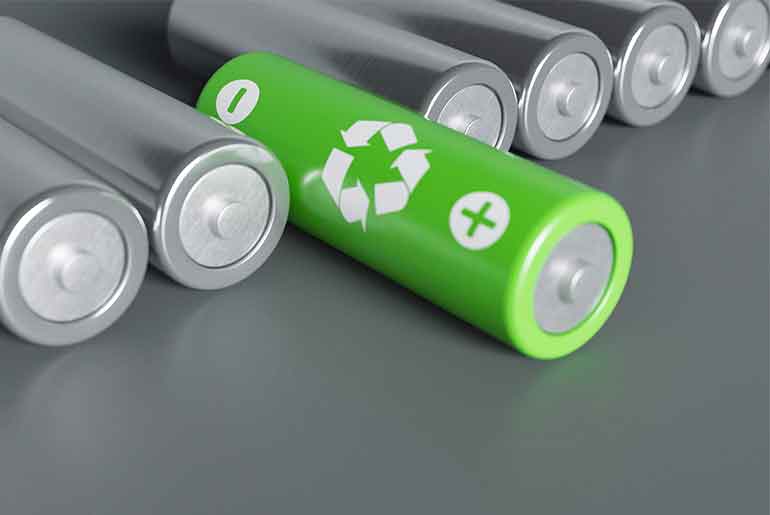
Now, what is a second-life battery, I hear you ask. Basically, end-of-life battery packs are broken down to the cell and BMS level by organisations to check key aspects of the cells. If they pass certain tests, these cells are then repurposed to make what we could essentially call ‘second-hand batteries.’
While that might sound derogatory to some, this process is the way to reduce our dependence on foreign cell imports, while also reducing e-waste and helping environmental concerns.
Now, this refurbishing industry is a highly unregulated space. It is a matter of time before some organisations decide to cut corners and compromise on safety to appease our price-sensitive market. And that is exactly where government policy needs to step in.
With clear instructions on how to proceed, we could not only streamline the industry but also regulate it and hold people accountable if a mishap occurs.
Gaurav Dolwani, CEO, Lico Materials, whom we had the pleasure of talking to during The Battery Show India 2025, spoke candidly on what he, as an entrepreneur, thinks of the market conditions and the lack of overall regulation.
“The collection of batteries in India is not ideal. It’s fragmented, it’s unsafe, and it’s sometimes kept in very hazardous ways. Currently, we don’t have safe transportation guidelines for used lithium-ion batteries yet, but we have been working with the CPCB, and we hope they come out soon.”
Adding further context on not only how transportation guidelines but policy changes the government needs to make to promote an already rapidly growing industry, Mr. Dolwani added,
“We want guidelines on refurbishing. Our worry always is that if there are refurbishers out there who do not follow safety in the pursuit of achieving a lower cost, it is going to cost somebody, and that is going to be the end user. Let’s have battery standards for second life.”
We Indians have a habit of persevering through everything thrown at us. And while we might be new to the scene of electrification throughout the country, the future lies with the same, and hence, we need to pull up our socks and take the challenge head-on.
 Electrify your feed! Click here to join our Whatsapp group and to get the latest updates, expert insights, and innovations driving India’s energy storage revolution.