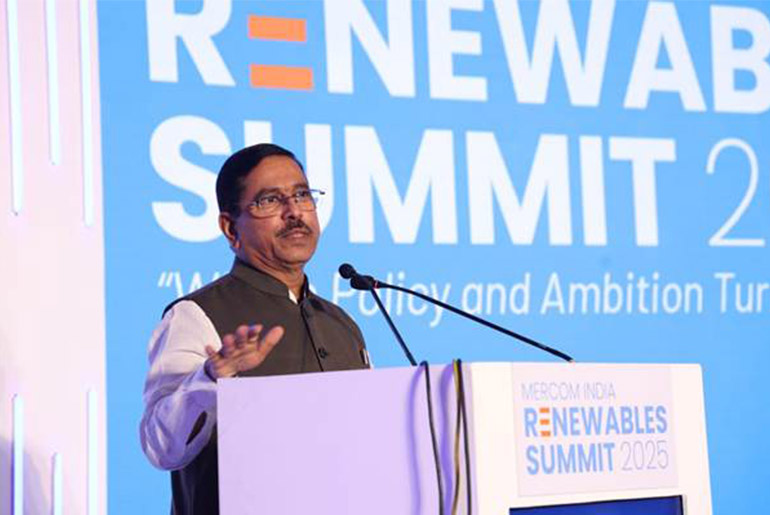
India stands at the cusp of a transformative energy revolution, underpinned by a strong political will, strategic reforms, and a vision to achieve a sustainable future. In a landmark address at the Mercom India Renewables Summit in New Delhi, Union Minister for New & Renewable Energy, Shri Pralhad Joshi, outlined the five key pillars propelling India toward its clean energy milestones. These include strengthened Power Purchase Agreements (PPAs), robust grid and storage systems, enhanced domestic manufacturing, land-use optimization, and improved access to finance.
This comprehensive framework reflects the government’s determination to not only meet but exceed its Nationally Determined Contributions (NDCs). As India races toward its 2030 target of 500 GW of non-fossil capacity, the five-pillar strategy acts as both a guiding compass and an accelerant.
1. Strengthened Power Purchase Agreements (PPAs): The Cornerstone of Renewable Trust
At the core of any renewable energy strategy lies the credibility of contracts. Strengthened PPAs provide long-term security for investors and developers, ensuring a consistent revenue stream and encouraging more aggressive capital deployment. Minister Joshi emphasized that robust PPAs are now integral to India’s transition, offering bankable assurances that reduce project risk and facilitate large-scale adoption of clean energy.
By enhancing transparency, standardizing terms, and reducing disputes, India aims to foster a business environment conducive to long-term investment. The government is also exploring innovative contract structures like hybrid PPAs to cater to multi-source energy portfolios involving solar, wind, and storage.
2. Grid and Storage Systems: The Backbone of Energy Stability
Renewable energy, by nature, is intermittent. This makes storage a vital component of grid reliability. India has already launched a ₹5,400 crore Viability Gap Funding (VGF) scheme aimed at catalyzing the deployment of 30 GWh of Battery Energy Storage Systems (BESS), projected to attract ₹33,000 crore in private investment.
These storage systems not only stabilize fluctuations but also allow energy to be used during peak demand hours, improving overall grid efficiency. Moreover, India has formulated a national transmission plan to evacuate 500 GW of non-fossil capacity by 2030. This coordinated effort between the Ministry of Power, Central Electricity Authority (CEA), Central Transmission Utility (CTU), and POWERGRID is a blueprint for seamless energy flow across regions.
3. Domestic Manufacturing: Aatmanirbhar Bharat in Action
To reduce dependency on imports and build resilience, India is scaling up domestic manufacturing in solar and wind sectors. The government’s ₹24,000 crore Production Linked Incentive (PLI) scheme has emerged as a key enabler in this journey. The initiative supports the creation of end-to-end manufacturing ecosystems for solar PV modules, cells, and other critical components.
Minister Joshi also announced the expansion of the Approved List of Models and Manufacturers (ALMM) and the upcoming List-II for solar PV cells, effective from June 2026. These initiatives ensure that only verified and high-quality components are deployed, thereby improving system reliability while promoting domestic industry.
4. Land-Use Optimization: Creativity on Every Acre
Land constraints have often been cited as an obstacle to renewable deployment. The government is addressing this with new models of land use. Floating solar installations on water bodies, canal-top solar projects, and agrivoltaics (green energy in conjunction with agriculture) demonstrate what can be done.
Land constraints have often been accompanied by geographical isolation, which can be particularly important in the development of clean energy projects. Interestingly, there is a push to develop projects in remote and tribal areas of the country. This push to develop clean energy projects, will not only address land constraints but will also support inclusive growth, and benefit previously excluded communities by giving them energy access and economic opportunity.
5. Access to Finance: Creating Accessible Actions at Scale
Clean energy solutions require large upfront investment. India is making strides to increasingly ensure that the finance is accessible and affordable, as illustrated with the Viability Gap Funding (VGF) scheme. Under the PM Surya Ghar: Muft Bijli Yojana, India has a rooftop solar program that has taken over 58.7 lakh applications, and documented 17.2 lakh installations.
For a household, rooftop solar represents an opportunity to gain energy self-reliance, and, at scale, the scheme will benefit the country by reducing stress on peak load. There is a push to develop a financing ecosystem for MSMEs and startups engaged in clean tech innovations, and when the market strength of these grassroots clean energy enterprises is promoted, it can become a self-fulfilling initiative.
Real-Time Impact: Data Speaks louder than words
India is at over 50% of its 2030 Nationally Determined Contribution (NDC) target by getting over 50% of its installed electricity capacity from non-fossil sources- five years earlier than planned. The current renewable energy capacity totals 245 GW, solar and wind make up 116 GW and 52 GW respectively.
According to a recent study by the International Renewable Energy Agency (IRENA), India’s renewable energy efforts in 2024 alone helped the country save approximately ₹4 lakh crore by reducing fossil fuel imports and pollution-related costs. This includes $14.9 billion in fossil fuel savings, 410.9 million tonnes of CO₂ avoided, and $31.7 billion in health and air pollution benefits.
Green Hydrogen: The Fuel of Tomorrow
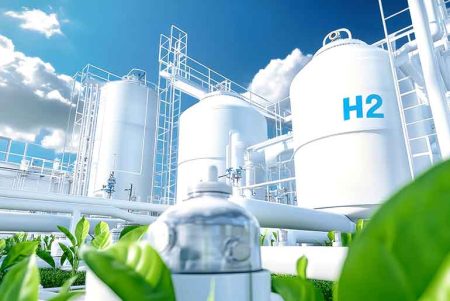
India’s clean energy story cannot be told without India having a National Green Hydrogen Mission. With an outlay of ₹19,744 crore, the aim is to make India a global green hydrogen hub, the government has already allocated 3,000 MW of electrolyser capacity and sanctioned over 8.6 lakh tonnes per annum of green hydrogen production.
The mission compliments the five-pillar approach by providing a decarbonization pathway for hard-to-abate sectors like steel, cement, and heavy transport while generating new economic opportunities.
Innovation, MSMEs, and Startups: Promoting Grassroots
Since innovation must be essential to scaling clean energy, the Ministry is empowering the startup and MSME ecosystem in developing affordable and scalable solutions. They are contributing in many ways, such as the adoption of solar microgrids, AI-based energy management systems, etc.
The government is also backing floating solar, canal-top projects and rural-based projects to make certain power can get delivered for the last mile. These projects serve local energy needs, but also foster community resilience and support inclusive growth in other areas as well.
Conclusion: A Blueprint for the World
India’s clean energy strategy, based on five pillars, is not merely a domestic policy, but could become a benchmark for other emerging economies traversing perhaps the most complex transition in our human story involving energy. The fact that India publishes a five- pillar clean energy approach; balancing the environment, the financial viability of the export, and social inclusion, is establishing India in a unique leadership role, speaking for the Global Clean Energy Movement.
With the visionary policies, enshrined infrastructure, and enabled stakeholders, 500 GW of non-fossil capacity by 2030 is not just achievable , its underway. The future is green, and India is powering it with purpose, precision, and passion.
 Electrify your feed! Click here to join our Whatsapp group and to get the latest updates, expert insights, and innovations driving India’s energy storage revolution.