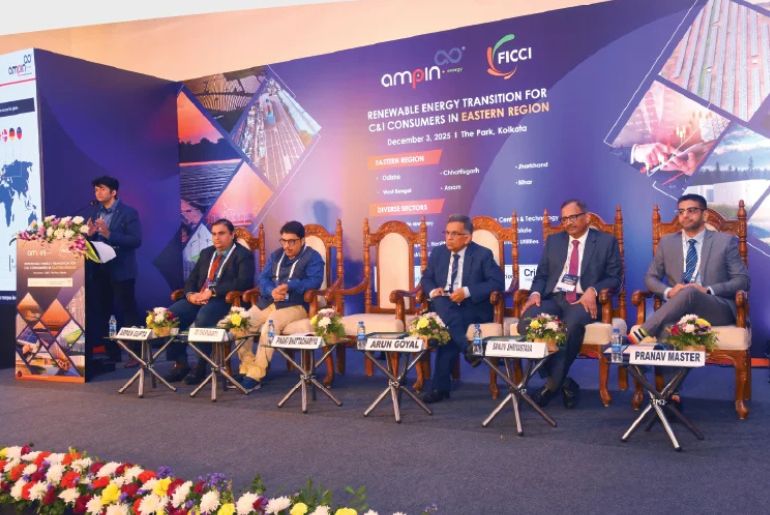
Renewable energy is rapidly emerging as a key driver of India’s industrial competitiveness, energy security, and sustainable economic growth, according to industry leaders and policymakers who gathered at the conference on “Renewable Energy Transition for Commercial & Industrial Consumers in the Northern Region” held in New Delhi on June 10, 2026. The event was organized by the Federation of Indian Chambers of Commerce & Industry in partnership with AMPIN Energy Transition, with CRISIL and Sumitomo Corporation serving as knowledge partners.
Addressing the conference, Ghanshyam Prasad, Chairperson of the Central Electricity Authority, highlighted India’s impressive renewable energy growth trajectory. He noted that the country has already surpassed annual renewable energy additions of 50 GW and is well-positioned to achieve 60–70 GW additions annually in the coming years. He emphasized the importance of ensuring grid readiness, connectivity, and reliable integration while maintaining the financial sustainability of distribution companies.
S. K. Chatterjee, Chief (Regulatory Affairs) at the Central Electricity Regulatory Commission, underscored the significant role of commercial and industrial (C&I) consumers in the country’s energy transition. He pointed out that the segment accounts for nearly half of India’s electricity consumption and stressed the need for demand response mechanisms, energy efficiency measures, distributed energy resources, and virtual power plants to build a more resilient and flexible power system.
Providing the industry perspective, Pinaki Bhattacharyya said India’s renewable energy transition is being driven by a combination of economics, supportive policies, and energy security objectives. He noted that industrial and commercial consumers are currently achieving energy cost savings of 20–40 percent through renewable power adoption, making clean energy both environmentally and economically attractive.
Delivering the keynote address, Bhupinder Singh Bhalla emphasized that India has moved beyond demonstrating the viability of renewable energy and is now focused on large-scale integration across the industrial and power sectors. He said the country’s energy transition must simultaneously deliver sustainability, affordability, reliability, and energy security.
Representing the Government of Punjab, Basant Garg highlighted the role of progressive state policies in accelerating renewable energy adoption. He cited measures such as simplified rooftop solar approvals, virtual net metering, and enhanced renewable energy limits aimed at encouraging greater participation from industries and consumers.
Industry leaders also stressed the importance of balancing renewable energy growth with grid stability and utility viability. During discussions on harmonizing energy transition goals with policy implementation, experts emphasized that renewable energy developers, consumers, and distribution companies must all remain financially sustainable to ensure a successful transition.
The conference concluded with discussions on innovative procurement models, RE100 commitments, energy storage, policy incentives, and emerging technologies that can accelerate renewable energy adoption across the northern region. Participants agreed that the C&I sector will play a pivotal role in helping India achieve its clean energy ambitions while powering the next phase of green economic growth.
 Electrify your feed! Click here to join our Whatsapp group and to get the latest updates, expert insights, and innovations driving India’s energy storage revolution.