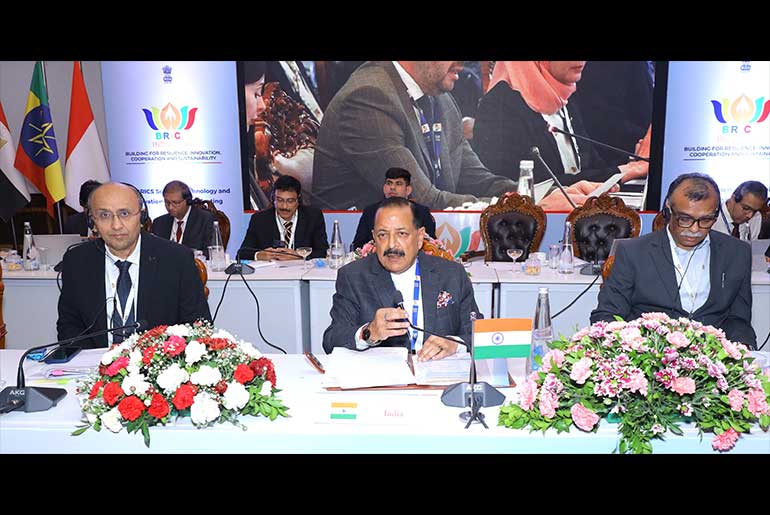
The 14th BRICS Science, Technology and Innovation (STI) Ministerial Meeting began in Chennai with Union Minister of State (Independent Charge) for Science and Technology and Earth Sciences, Dr. Jitendra Singh, calling for greater international cooperation in emerging technologies and innovation.
Addressing delegates from BRICS member countries, Dr. Jitendra Singh highlighted India’s 2026 BRICS Presidency theme, “Building for Resilience, Innovation, Cooperation and Sustainability.” He said the theme reflects the need for science and technology to support inclusive growth, sustainable development and stronger partnerships among nations.
The Minister pointed to the rapid development of technologies including Artificial Intelligence, quantum technologies, advanced materials, biotechnology, photonics, geospatial technologies and high-performance computing. According to him, these technologies are creating new opportunities while also increasing the need for international collaboration to ensure innovation remains accessible, affordable, trusted and sustainable.
Focus on Research, Startups and Innovation
Dr. Jitendra Singh said BRICS, with its large pool of scientific talent and expanding research capabilities, can play an important role in developing a cooperative and future-oriented innovation ecosystem.
BRICS STI cooperation has expanded to include research partnerships, innovation collaboration, young scientist exchanges, research infrastructure and thematic working groups. During India’s presidency, the country is undertaking a review of BRICS STI priorities to align cooperation with emerging technology areas and the development needs of member nations.
The Minister invited BRICS partners to explore practical opportunities for collaboration in frontier research, innovation financing, talent mobility, research infrastructure sharing, startup partnerships and capacity building.
Relevance for Battery and Energy Storage
The emphasis on advanced materials, research infrastructure and startup collaboration is particularly relevant to the emerging battery and energy-storage ecosystem. Innovation in materials, manufacturing technologies and related deep-tech applications is becoming increasingly important for improving battery performance, cost, safety and sustainability.
Greater cooperation between research institutions, industry and technology startups could help accelerate the transition of emerging technologies from laboratory research to commercial applications. For the battery sector, such partnerships can support the development and deployment of next-generation energy-storage technologies.
Dr. Jitendra Singh also highlighted several Indian initiatives, including the National Quantum Mission, National Supercomputing Mission, BioE3 Policy, National Geospatial Policy and the country’s expanding Digital Public Infrastructure ecosystem. These initiatives, he said, reflect an approach in which technological innovation is ultimately aimed at improving lives, strengthening societal resilience and supporting sustainable economic development.
The Chennai meeting is expected to further strengthen cooperation among BRICS nations in science, technology and innovation. For India’s clean-energy and battery industries, stronger international collaboration in advanced research, materials, financing and technology commercialisation could contribute to the development of a more resilient and competitive technology ecosystem.
 Electrify your feed! Click here to join our Whatsapp group and to get the latest updates, expert insights, and innovations driving India’s energy storage revolution.