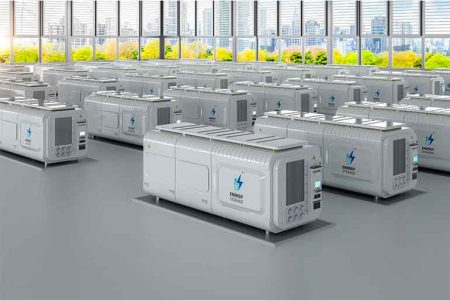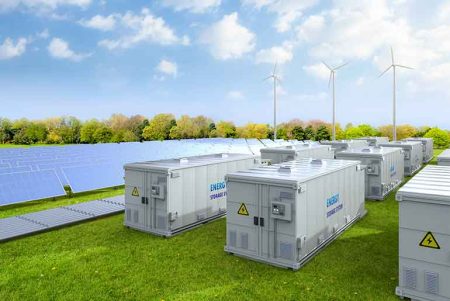

In an era where the race toward decarbonization is intensifying, energy storage is no longer a supporting actor—it’s fast becoming the backbone of future-ready power systems. At the heart of this transformation is AmpereHour Energy, a company that’s redefining how energy storage is imagined, built, and integrated in India and beyond.
At the forefront of this movement is Ayush Misra, Co-Founder & CEO of AmpereHour Energy, whose approach to full-stack energy storage solutions is turning industry heads. From proprietary software like ELINA to hardware modularity, project execution, and global ambitions—Misra’s vision bridges technology and impact.
In an insightful conversation with Shweta Kumari, Sub-Editor at The Battery Magazine, Ayush opened up about AmpereHour’s innovation journey, India’s evolving BESS ecosystem, and the company’s commitment to sustainability and localization. He also shared sharp perspectives on grid resilience, AI in energy orchestration, and the future of multi-chemistry storage systems.
Let’s delve into this thought-provoking exchange to discover how AmpereHour is powering India’s energy transition—one intelligent battery system at a time.
1. AmpereHour Energy positions itself as a full-stack energy storage solutions provider. How does this integrated approach differentiate you in India’s rapidly evolving BESS ecosystem?
At AmpereHour, we believe that energy storage is not just about batteries—it’s about orchestration. Our full-stack approach spans hardware, software, and project execution. By owning the entire stack—from a proprietary EMS like ‘ELINA’ to BESS containerization, EPC, and lifecycle services—we can offer customized, reliable, and scalable solutions. This integration not only reduces friction for our clients but also ensures real-time adaptability across applications, whether for utilities, Independent Power Producers, Developers, large enterprises, or microgrid builders.
2. Your proprietary ELINA Energy Management Software seems to be a game-changer. Could you walk us through how ELINA optimizes battery performance across diverse grid conditions and applications?
ELINA is the digital brain of our BESS solutions. Built with a first-principles approach, it monitors, predicts, and manages battery performance dynamically. It takes into account variables like SoC, SoH, thermal behavior, load patterns, and market signals to optimize dispatch. Whether it’s frequency regulation, peak shaving, or time-of-use arbitrage, ELINA adapts in real time to deliver maximum value and lifespan—across both behind-the-meter and front-of-the-meter setups.
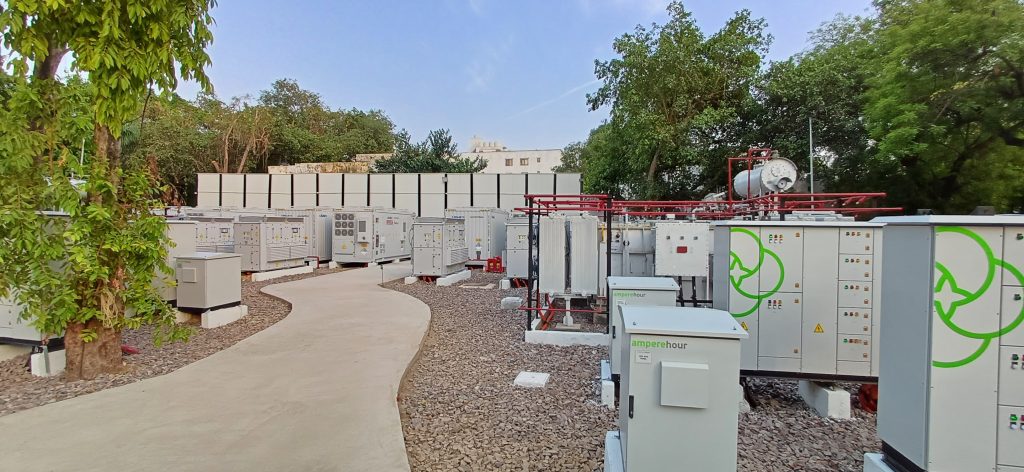
3. India’s peak power demand is hitting record highs. How can modular BESS like yours help utilities and C&I players manage grid reliability and peak shaving more efficiently?
The beauty of modular BESS lies in flexibility. For utilities, our systems offer fast-ramping support, frequency regulation, and peak load management without the delays of conventional grid upgrades. For C&I users, they unlock peak shaving, DG offset, and backup during outages. With India’s growing renewables share, modular BESS can bridge intermittency and flatten demand curves, enabling a smoother, more resilient power ecosystem.
4. Given your background in lithium-ion battery tech and energy systems, how do you assess the current state of battery innovation in India, particularly in terms of localization and R&D?
We’re at a pivotal inflection point. The ecosystem is maturing—from cell chemistries and pack designs to thermal management and software layers. However, deep localization still requires more investment in core R&D and gigafactory-scale cell manufacturing. At AmpereHour, we’re actively collaborating with research institutes and component suppliers to localize critical components while ensuring system-level innovation that’s robust, safe, and India-climate ready.
5. AmpereHour’s solutions support both grid-connected and off-grid environments. Which segment do you see growing faster in the next 3–5 years and why?
While off-grid BESS will continue to grow—especially in rural electrification and telecom—the real acceleration will come from grid-connected systems. With increase renewable penetration, DISCOM reforms, time-of-day tariffs, and ancillary services being unlocked, energy storage will be instrumental for grid stability. C&I users, too, are seeking decarbonized, economical power. That’s where we see massive demand for hybrid solar+BESS and standalone systems that offer both commercial viability and energy independence.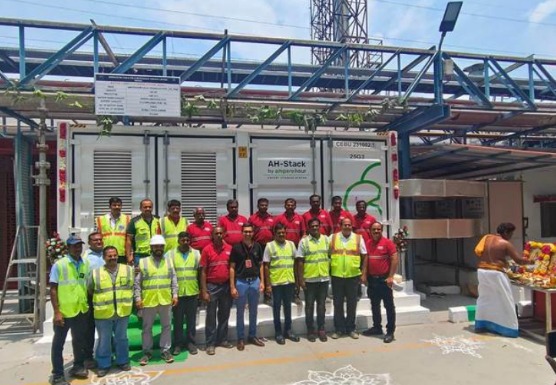
6. From EPC to software integration, AmpereHour offers turnkey BESS deployments. How do you ensure long-term reliability and performance optimization for your clients post-installation?
Our philosophy is: design for performance, engineer for longevity. Post-installation, we offer AMC and remote O&M powered by ELINA. Through real-time monitoring and control, predictive analytics, and performance benchmarking, we detect anomalies early, optimize charge/discharge strategies, and extend battery life. We also conduct quarterly performance audits and continuously update ELINA to incorporate new learnings from field data.
7. As a clean-tech leader, what are your thoughts on India’s energy storage roadmap, especially in the context of the National Energy Storage Mission and recent government tenders?
The recent policy tailwinds are very encouraging. The National Energy Storage Mission signals clear intent, and viability gap funding, storage mandates, and tender mechanisms are steps in the right direction. For a renewable-rich grid, storage is no longer optional. What’s crucial now is clarity on revenue streams for storage services—like capacity markets and ancillary services—to de-risk investments and catalyze faster deployments.
8. With new chemistries like LFP, sodium-ion, and hybrid systems gaining traction, how is AmpereHour adapting its solutions to stay ahead in the energy storage technology curve?
We’re chemistry-agnostic but performance-obsessed. While LFP remains the current workhorse for its safety and cost balance, we’re closely evaluating sodium-ion and solid-state for specific use cases. Our platform is designed to be modular—so integrating new chemistries or hybridizing packs with advanced BMS and ELINA is seamless. We’re also actively prototyping multi-chemistry systems where different chemistries can co-operate based on load profiles and ambient conditions.
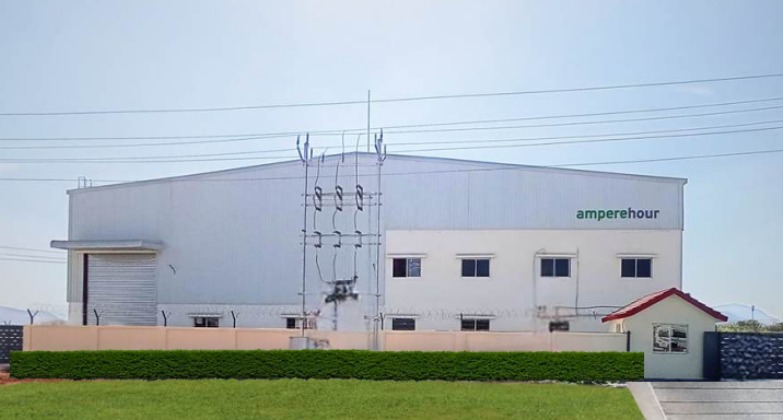
9. Your journey from CleanMax Solar to AmpereHour reflects a consistent commitment to sustainability. What key leadership lessons have shaped your mission at AmpereHour Energy?
One of the biggest lessons is that technology must be anchored in operational simplicity. Whether at CleanMax or AmpereHour, the goal has always been to democratize access to clean energy. Leadership also means building resilient teams, investing in long-term relationships, and keeping customer trust at the core. Sustainability isn’t just a product feature—it’s a culture of doing more with less and being future-ready.
10. Finally, what is your long-term vision for AmpereHour Energy in India’s green transition? Are there any global ambitions or strategic partnerships on the horizon that you can share?
Our long-term vision is to make energy storage as ubiquitous and seamless as telecom. We’re building towards becoming India’s most trusted energy storage integrator, with a platform that can scale across the entire power value chain, from generation to consumption. On the global front, our solutions have been deployed in US, UAE, Oman, Belgium, Nigeria, and Gabon, and we have ongoing projects in Belgium and Djibouti. This demonstrates the global appetite for our technology and our ambition is to build world-class Energy technology out of India.
 Electrify your feed! Click here to join our Whatsapp group and to get the latest updates, expert insights, and innovations driving India’s energy storage revolution.