
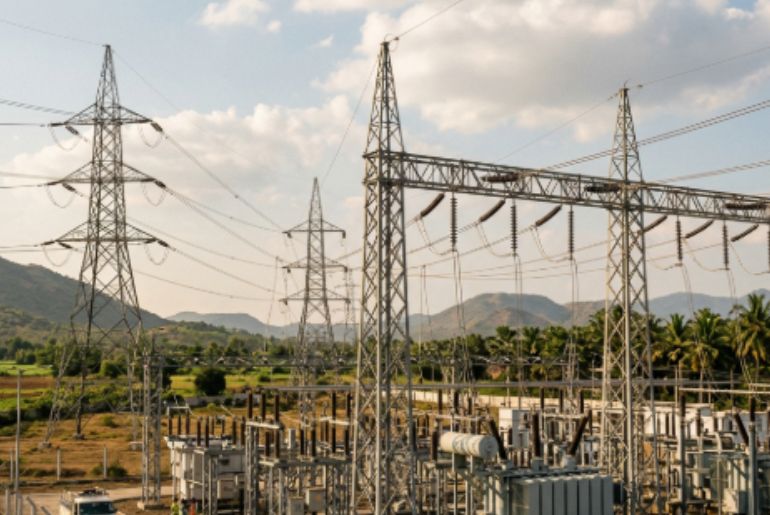
Tamil Nadu is planning a major expansion of its power transmission and distribution infrastructure with the establishment of 231 new substations at an estimated cost of ₹15,032 crore. The initiative is aimed at strengthening the state’s electricity network, improving power reliability, and meeting the growing demand from households, industries, and emerging sectors.
The development is part of Tamil Nadu’s broader strategy to modernise its power infrastructure and enhance the capacity of the state grid. The proposed substations will help improve voltage management, reduce transmission constraints, and ensure a smoother electricity supply across different regions.
Tamil Nadu has been witnessing steady growth in electricity consumption due to industrial expansion, urban development, and increasing electrification across sectors. The demand for reliable power has also increased with the growth of manufacturing, electric mobility, data centres, and other energy-intensive industries.
The planned investment in new substations is expected to play an important role in supporting the state’s economic growth by providing stronger electricity infrastructure. Improved transmission capacity will help industries access dependable power while reducing stress on existing substations and networks.
The project also aligns with Tamil Nadu’s renewable energy expansion plans. The state is among India’s leading renewable energy markets, particularly in wind and solar power generation. As renewable energy capacity continues to grow, additional transmission infrastructure is required to evacuate clean power efficiently and maintain grid stability.
The new substations will support better integration of renewable energy into the electricity network and help manage fluctuations associated with solar and wind generation. Strengthening the grid is considered essential for achieving long-term clean energy and sustainability goals.
The infrastructure development will also contribute to improving electricity supply quality for consumers by reducing outages and enhancing operational efficiency. Modern substations equipped with advanced technologies can improve monitoring, control, and response capabilities within the power network.
Tamil Nadu’s power sector has been focusing on capacity expansion, network upgrades, and infrastructure development to meet future energy requirements. The ₹15,032 crore investment in 231 substations reflects the state’s commitment to creating a stronger and more resilient electricity system.
The expansion is expected to benefit multiple sectors, including residential consumers, commercial establishments, industries, and renewable energy developers. By increasing transmission and distribution capacity, Tamil Nadu aims to build a power network capable of supporting future demand and energy transition initiatives.
 Electrify your feed! Click here to join our Whatsapp group and to get the latest updates, expert insights, and innovations driving India’s energy storage revolution.