As homes across the world adopt residential energy storage batteries to store solar energy and reduce reliance on the grid, proper maintenance becomes crucial for ensuring efficiency, safety, and long lifespan. A well-maintained battery not only helps homeowners save on electricity bills but also ensures uninterrupted power supply during outages. However, many users unknowingly make mistakes that can shorten the lifespan of these expensive systems. In this article, we will look at the Top 5 Do’s and Don’ts for maintaining residential energy storage batteries, while providing helpful advice for homeowners who want to maximize their investment.
Why Battery Maintenance is Important
Residential energy storage batteries—lithium ion, lead-acid, or advanced chemistries—are an important investment in our sustainable future. Like any equipment, they need to be maintained. Simply using the battery does not mean it does not need to be maintained. Over time batteries can lose efficiency, decrease how much energy they are able to store, or even fail prematurely without proper maintenance. If you follow simple battery maintenance do’s and don’ts, you can maximize your battery’s performance, safety and longevity.
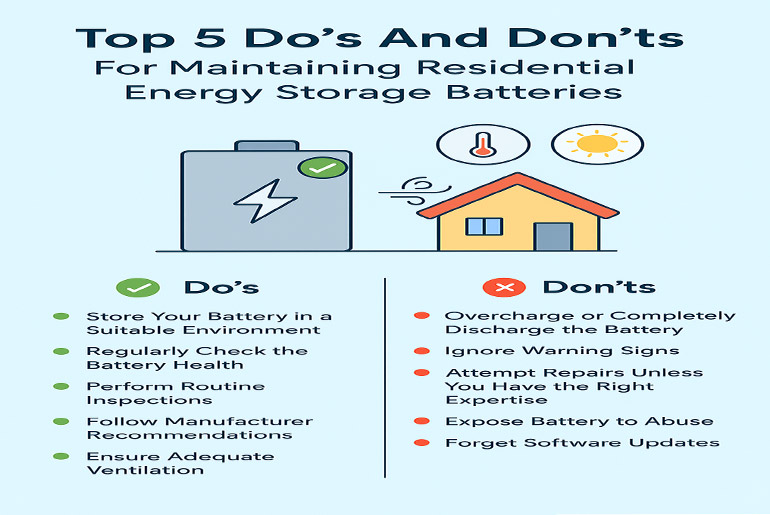
Top 5 Do’s to Maintain Residential Energy Storage Batteries
1. Do Store Your Battery in a Suitable Environment
The best performance for residential batteries occurs in a clean, dry area with moderate temperature. Your lithium-ion batteries cannot handle extreme heat well; just like they will not behave optimally in too cold weather. Therefore, you should typically have it installed in an area of moderate temperature all the time; basements, garages, and utility rooms tend to be good choices.
- Tip: Be sure to keep the area free of dust and don’t place your battery in direct sunlight or near heating—the last thing a battery needs is heat!
2. Do Regularly Check the Battery Health
Most modern residential batteries come with smart monitoring systems or apps to show you how the battery is performing, including statistics on charge cycles and battery health. Looking at the battery performance regularly can help identify issues early, such as charging behavior anomalies or lower capacity.
- Tip: Consider setting a monthly reminder to check your battery dashboard on their application. If you notice any performance issues, don’t delay in discussing these with your installer or service provider.
3. Do Perform Routine Inspections
Visual inspections can assist with a lot of things and can help you catch problems. Notice loose wires, terminal corrosion, odd sounds. With modular systems, check that all connections are tight.
- Tip: Remember to always switch off the system before a physical inspection of a part of it. Safety.
4. Do Follow Manufacturer Routine Recommendations
Every battery brand has a unique checklist of care that should be followed. This checklist can consist of charging limits to charging frequency and/or maintenance intervals. By following the guides of the original equipment manufacturer, you are unlikely to void the manufacturer’s warranty or damage the system.
- Tip: Keep the user manual nearby, and pen down important maintenance schedules.
5. Do Ensure Adequate Ventilation
Some battery types, such as lead acid batteries, emit gases which entail adequate ventilation in order to avoid build-up of potentially hazardous gases. Even with lithium-ion batteries! Adequate airflow will help avoid the overheating of batteries and provide the system with the operational performance it was designed to provide.
- Tip: Install the battery in a space with cross ventilation and avoid blocking air vents.
Top 5 Don’ts for Maintaining Residential Energy Storage Batteries
1. Don’t Overcharge or Completely Discharge the Battery.
A common mistake is overcharging your battery or fully depleting it. Most systems come with protections, but repeated deep discharges will shorten your batteries life.
- Tip: Keep your battery state of charge between 20% and another 80% for longevity.
2. Don’t Ignore Warning Signs
Unusual sounds, swelling, high temp, or unexpected loss of back-up power are all indicators of trouble. If you brush them off, they often signal bigger problems you’ll eventually pay for. If these indicators show up, you have a safety issue.
- Tip: Call a technician immediately if you see anything odd.
3. Don’t Attempt Repairs Unless You Have the Right Expertise
Batteries can store a lot of energy, and tampering with them without expertise could lead to shocks or even fire. Don’t take apart any internal components, and never touch any of the firmware.
- Tip: Always use certified technicians for repairs, re-charge or upgrade.
4. Don’t Expose Battery to Abuse
Rain, dust, humidity, and direct sunlight can drastically impact battery health. Even outdoor batteries should have locks protective cover.
- Tip: If your system is outside, consider using a weather-proof housing for added protection.
5. Do not forget software updates
Many modern energy storage systems have software that controls charging cycles and performance. Missing updates can result in missing out on performance enhancements or safety patches.
- Tip: connect your system, if possible, to Wi-Fi, and let it update automatically.
Final Thoughts
The maintenance of residential energy storage batteries is not complicated, only consistent. By with these top 5 do’s and don’ts, homeowners can help ensure their battery systems will provide optimal performance for years to come. Everything, from monitoring the health of the battery, to avoiding deep discharge or extreme environments, all add up and are vital to maintaining a battery’s longevity.
Ultimately, proper maintenance can preserve your wallet, improve your safety, and support your goal to live sustainably and independently with energy.
 Electrify your feed! Click here to join our Whatsapp group and to get the latest updates, expert insights, and innovations driving India’s energy storage revolution.