

Demand for electricity is rising globally, alongside a growing shift towards renewable energy sources, particularly solar and wind power. However, these sources are weather-dependent, as solar panels generate electricity only during daylight hours, while wind turbines require sufficient wind to operate. This is where Battery Energy Storage Systems (BESS) play a crucial role by storing excess renewable electricity when generation is high and supplying it when generation falls or demand increases, ensuring a more reliable and continuous power supply.
This is the problem we face: how do we supply electricity when renewable generation is low but demand is high?
Battery Energy Storage Systems (BESS) are the answer. They store electricity when it’s available and then release it when it’s required. BESS is now a significant part of the global energy landscape. They enable the use of renewables, improve grid reliability and allow for better demand management.
What is BESS?
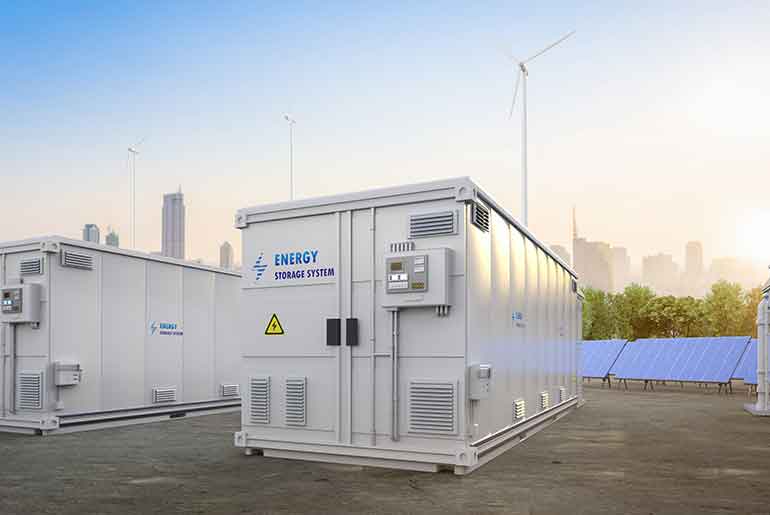
BESS stands for Battery Energy Storage System. It’s a technology which stores electrical energy in batteries for later use.
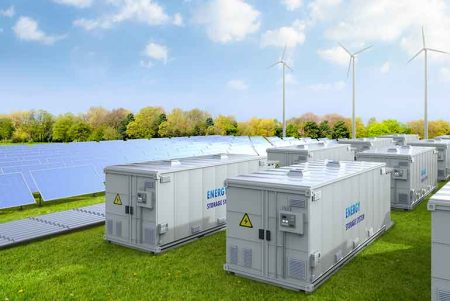
In essence BESS is just a big battery. It takes power from a range of sources (solar panels, wind farms, the grid etc) and stores it. That stored power can then be used at peak demand, during a power cut or when the amount of renewable generation is low.
Unlike the small batteries you’d find in a mobile phone or a laptop, BESS (battery Energy Storage Systems) are capable of storing huge amounts of electricity. They’re used in residential, commercial, industrial and large scale power projects.
How Does BESS Work?
A battery energy storage system works in three stages: charging, storing and discharging.
1. Charging: The system takes electricity from either renewable sources or the power grid and converts it into the form appropriate for battery storage.
2. Storing: The battery stores the electricity as chemical energy. A Battery Management System (BMS) monitors the voltage, temperature and charge levels to ensure it’s operating safely.
3. Discharging: when the electricity is required the stored energy is converted back into electrical power and supplied to the homes, businesses and the grid.
A Power Conversion System (PCS) is the bit that actually does the AC/DC conversion. The Energy Management System (EMS) is the bit that manages the energy flow and decides when the battery should be charging and when it should be discharging.
Major Components of BESS
A Bess installation comprises a number of components.
– Battery cells: these are the individual units which store the energy via a chemical reaction. You then have modules made up of cells and battery packs.
– Battery Management System (BMS): Monitors battery health, temperature, voltage and current. Also helps to prevent the battery operating in an unsafe condition.
– Power Conversion System (PCS) – converts the electricity from AC to DC during charging and from DC to AC during discharging.
– Energy Management System (EMS): This manages the flow of energy and improves the performance of the system as a whole.
– Thermal Management System: cooling and ventilation to maintain the battery at a suitable temperature.
– Safety systems: sensors, alarms and fire protection equipment all help to reduce the risk of overheating and fire.
Types of Batteries Used in BESS
Different battery technologies are used in energy storage systems.
Lithium ion batteries are by far the most widely deployed battery technology in modern BESS projects. They have a high energy density, good efficiency and a long cycle life. LFP (Lithium Iron Phosphate) batteries are becoming increasingly popular due to their thermal stability and safety.
Lead acid batteries: these are the old technology, very well established. They’re cheap but have a much lower energy density and a much shorter cycle life than the lithium ion batteries.
Sodium ion batteries (these are the other alternative to lithium ion): sodium is so much more abundant. That could be a way of reducing our reliance on certain critical minerals.
Flow batteries store the energy in liquid electrolytes which are stored in external tanks. They’re ideal for long duration storage and for large scale energy projects.
Applications of BESS
BESS is used in a variety of industries and energy applications.
– Renewable energy: it takes the surplus of solar and wind and stores it for use when generation is low.
– Grid stability: it responds rapidly to changes in supply and demand.
– Peak load management: it dumps the stored electricity during the peak demand periods and thus reduces the load on the grid.
– Backup power: hospitals, data centres and industry can use BESS during a power cut.
– EV Charging: It enables charging stations to provide additional power when multiple EVS are charging at the same time.
– Residential: Homes can use solar panels in conjunction with battery storage to reduce their reliance on the grid.
Major Companies in the BESS Industry
A number of global companies are also investing in battery manufacturing, energy storage technology and large scale BESS projects.
CATL (Contemporary Amperex Technology Co. Ltd) and BYD are the two major battery manufacturers with a very significant presence in the energy storage space. Tesla Energy have their own battery storage products (the Megapack being the prime example for large scale). Fluence Energy are into energy storage and software. Sungrow and Wärtsilä are also in the game.
In India the game is being played by Tata Power, Adani Energy Solutions, Reliance Industries, Exide Industries and Amara Raja Energy & Mobility all of whom are involved in various parts of the battery and energy storage ecosystem. They are all involved in energy storage projects, battery manufacturing and the various related technologies.
Benefits and Challenges of BESS
BESS provides a number of benefits to the energy sector. It improves the use of renewables, it supports grid stability and it can provide backup power. It can also reduce peak demand and in some cases help to lower the cost of electricity depending on the project and the tariff structure.
However the technology is not without its problems. The upfront installation costs are a significant issue. Battery performance degrades with age and usage. There are also safety issues, there is a requirement for recycling and it is dependent on a number of raw materials (lithium, nickel and graphite).
Future of BESS in India
India is ramping up its renewable energy capacity and that in turn is driving the need for reliable storage. The generation from solar and wind is variable throughout the day so BESS is a key enabler in terms of balancing supply and demand.
Government support, domestic battery manufacturing and large scale storage projects are all creating new opportunities. The companies are looking at next gen battery technologies and new energy storage solutions to meet the demand that’s coming down the track.
As battery costs become more competitive and the technology improves, BESS is going to be a major player in India’s clean energy transition.
Conclusion
Battery energy storage systems are increasingly becoming an important part of modern electricity networks. They’re used to store renewable energy, balance the load and improve the reliability of the power supply.
Despite the ongoing challenges of cost, battery degradation, safety and recycling, the technology is continually evolving and opening up new opportunities.
As the world moves towards cleaner energy, BESS will be essential in building a more reliable, flexible and sustainable power system.
 Electrify your feed! Click here to join our Whatsapp group and to get the latest updates, expert insights, and innovations driving India’s energy storage revolution.