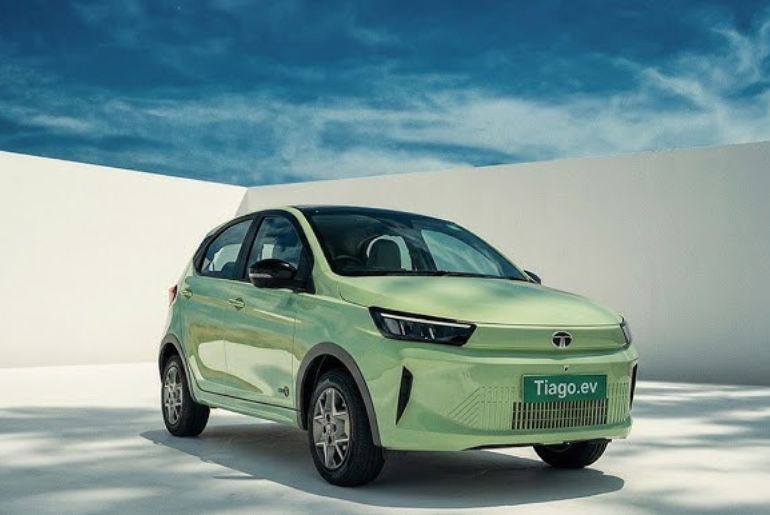
The Tiago EV facelifted is expected to arrive with larger battery pack options compared to the current 19.2kWh and 24kWh units, potentially offering improved driving range.
The updated model is also likely to feature several new technologies, including a 360-degree camera, dual wireless chargers, a 10.25-inch infotainment system, and up to six airbags.
Tata Motors has confirmed that the refreshed Tiago EV will launch on 28 May as the company looks to further strengthen its position in the affordable electric hatchback segment.
Battery Upgrade Aligned With Tata’s EV Strategy
The 2026 Tiago EV facelift is expected to receive larger battery packs than the current 19.2kWh and 24kWh options, reflecting Tata Motors’ broader EV strategy seen in models like the Punch EV. By integrating multiple powertrain components into a lighter and more compact unit, Tata could improve efficiency while freeing up additional space within the vehicle. This approach is likely to enhance driving range and overall practicality for daily use.
Feature upgrades enhance appeal
The facelift will add segment-first features like a 360-degree camera, along with dual wireless phone chargers, a larger 10.25-inch infotainment display, and up to six airbags. Interior updates include a dual-tone dashboard, a refreshed steering wheel with illuminated EV branding, and improved connectivity options. These additions aim to boost the Tiago EV’s premium feel while retaining affordability. Pricing strategy and BaaS option
Prices may see a slight revision, but Tata could also introduce a battery-as-a-service (BaaS) scheme to lower upfront costs, as implemented in the Punch EV. This would allow customers to access higher-range variants without bearing the full battery cost at purchase. The approach could strengthen Tata’s market position against rivals like the Citroen eC3 and MG Comet EV.
Future scenarios for Tata’s EV market play
If the Tiago EV facelift launches with higher capacity batteries and competitive pricing, it could set a new benchmark in the entry EV segment, prompting competitors to enhance their offerings. Alternatively, pairing the upgrade with BaaS could expand accessibility, attracting budget-conscious buyers. Both outcomes align with Tata’s pattern of leveraging platform efficiencies to deliver higher value without sacrificing affordability.
 Electrify your feed! Click here to join our Whatsapp group and to get the latest updates, expert insights, and innovations driving India’s energy storage revolution.