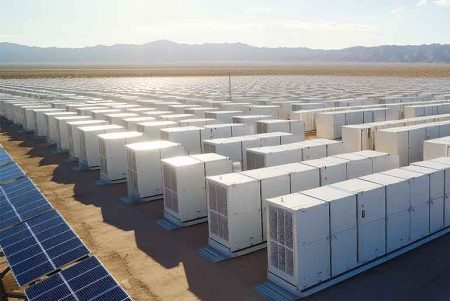
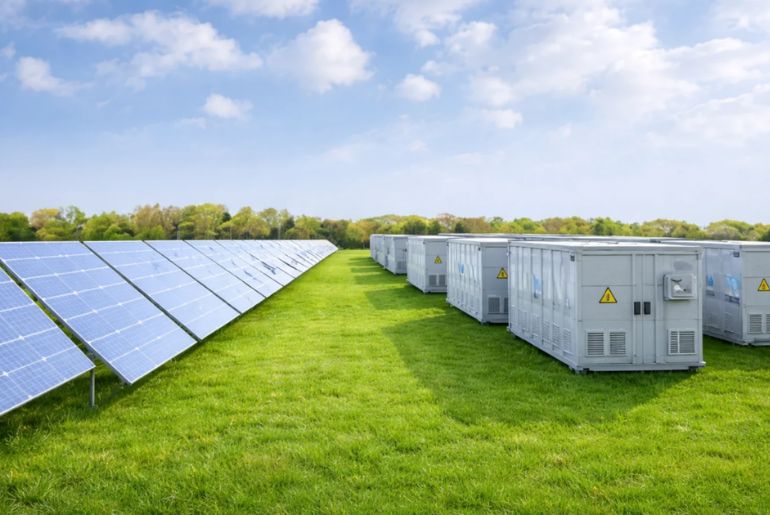
ACME Solar Holdings Limited has announced the successful commissioning of the fourth phase of its Battery Energy Storage System (BESS) project in Rajasthan. The project is being developed through its wholly owned subsidiary, ACME Sun Power Private Limited, as part of a large utility-scale energy storage initiative.
The new phase adds 33.333 MW/160.48 MWh of capacity to the project, bringing the total planned capacity to 300 MW/1409.34 MWh. The facility is in Village Badi Sid in Tehsil Bap, which is in the Phalodi and Jodhpur districts of Rajasthan. The Commercial Operation Date (COD) for this phase is set for April 3, 2026.
Cumulative Operational Capacity Reaches 133 MW
ACME Sun Power has reached a total commissioned capacity of 133.336 MW/641.980 MWh under the project with the addition of Phase IV. This milestone shows that the company has a planned rollout strategy that focuses on phased commissioning to make large storage infrastructure work better.
Phased Execution Driving Large-Scale Deployment
ACME Solar is still using a tranche-based execution model for all of its renewable and storage projects. The company said in March 2026 that its subsidiaries had partially commissioned both solar and BESS assets in Gujarat and Rajasthan.
The company had previously ordered 142.67 MW/481.49 MWh of BESS capacity under Phase I as part of its larger development pipeline. This was part of a planned portfolio of 585 MW/2,011.24 MWh across its Special Purpose Vehicles (SPVs).
Consistent Progress Through Sequential Milestones
The latest commissioning of the project follows a series of project updates issued on March 6, March 12, and March 31, 2026, demonstrating a consistent and milestone-driven approach to project execution.
The phased expansion of Rajasthan BESS shows that ACME Solar is serious about improving the infrastructure for energy storage, which is important for dealing with the unpredictability of renewable energy and keeping the grid stable. As India speeds up its switch to clean energy, big BESS projects like this one are expected to be very important for making power systems that are reliable and flexible.
 Electrify your feed! Click here to join our Whatsapp group and to get the latest updates, expert insights, and innovations driving India’s energy storage revolution.