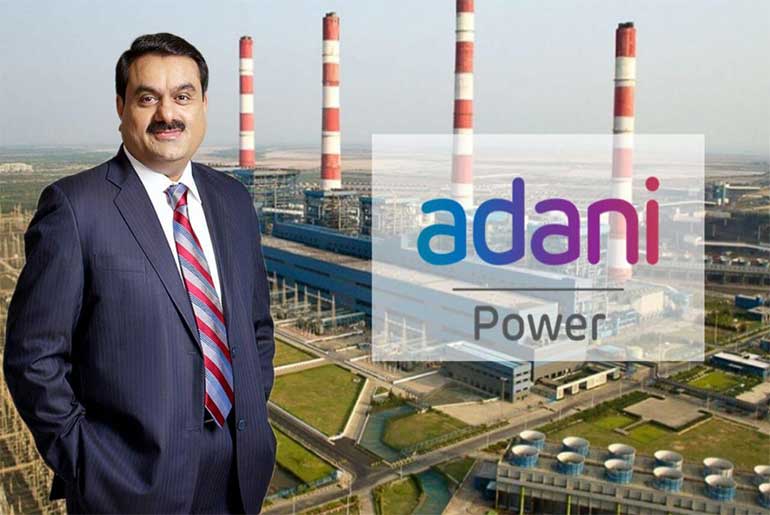
In a major boost to India’s north-eastern power landscape, the Adani Group has announced investments worth ₹63,000 crore in Assam across two large-scale energy projects — a 3,200 MW ultra-super-critical thermal power plant and two pumped-storage projects totalling 2,700 MW. This announcement, made on 14 November 2025, marks one of the largest private-sector energy investments in the region.
Adani Power Ltd. (APL) will lead the thermal power project with an investment of around ₹48,000 crore. This will be a 3,200 MW greenfield plant, developed under the Design, Build, Finance, Own and Operate (DBFOO) model. The project will be rolled out in phases, with commercial operations expected to begin by December 2030. APL secured the project after emerging as the lowest bidder, offering a tariff of ₹6.30 per kWh. Coal linkage for the plant has been provided under the Government of India’s SHAKTI policy, ensuring long-term fuel security.
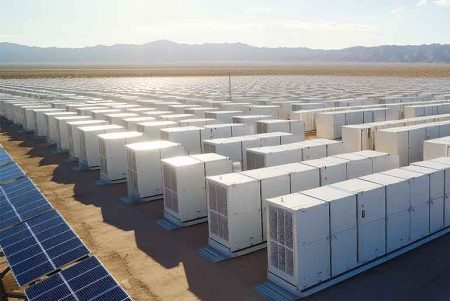
On the renewable-aligned front, Adani Green Energy Ltd. (AGEL) will invest approximately ₹15,000 crore to set up two pumped-storage power plants (PSPs) with a combined capacity of 2,700 MW. These PSPs play a critical role in energy storage by functioning as long-duration “water batteries” that can store renewable energy during off-peak periods and release it during high demand. AGEL has already received a Letter of Award (LoA) from Assam for 500 MW of energy-storage capacity, signalling the state’s larger plan to integrate storage into its future grid roadmap.
Beyond power generation, the investment promises significant socio-economic impact. The thermal plant alone is expected to create 20,000 to 25,000 jobs during construction and around 3,500 direct jobs during operations, alongside thousands of indirect opportunities across logistics, services and supply-chain activities. Officials familiar with the projects have described this investment as a turning point for Assam’s industrial growth, positioning the state as a potential energy hub in the North-East.
The pumped-storage projects are equally important for Assam’s energy future. As India continues adding large volumes of solar and wind capacity, states are looking for ways to stabilise the grid. Pumped storage — which can deliver multi-hour discharge — is increasingly being recognised as a dependable alternative to battery storage for bulk applications.
Industry reports also note that APL had earlier emerged as the lowest bidder in Assam’s tender for 3.2 GW of coal-based power supply, aligning with this new project announcement. This continuity underscores the state’s need for firm baseload capacity to address growing demand and ensure reliable power for households, businesses and future industries.
However, the dual nature of the investment — combining coal-based power with pumped storage — raises broader questions about balancing energy security with decarbonisation. While the thermal plant ensures stable supply, the pumped-storage units support renewable integration and grid flexibility. It reflects a hybrid approach many Indian states are now adopting: combining conventional power for stability with storage-backed renewables for the future.
Overall, the Adani Group’s ₹63,000 crore investment stands as a significant milestone for Assam. If executed as planned, it could reshape the state’s power infrastructure, generate large-scale employment and contribute to India’s broader ambitions of building a resilient, future-ready grid.
 Electrify your feed! Click here to join our Whatsapp group and to get the latest updates, expert insights, and innovations driving India’s energy storage revolution.