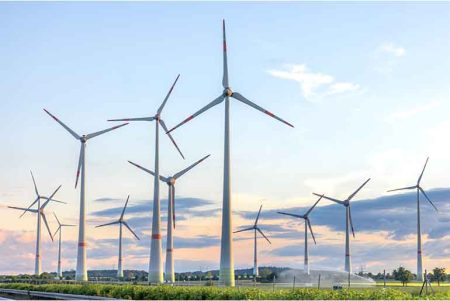
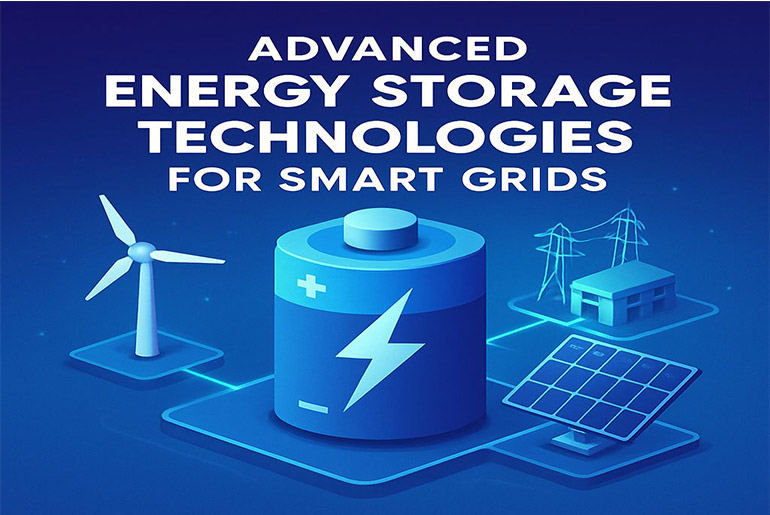
As the global energy landscape shifts toward renewables, the traditional electricity grid faces new challenges. With increasing dependence on intermittent sources like solar and wind, ensuring reliability and stability is paramount. Smart grids have emerged as the modern solution—digitally enabled, responsive, and efficient. However, smart grids require an equally smart energy storage backbone to manage variability, balance supply and demand, and support decentralized power systems. According to the International Energy Agency (IEA), energy storage capacity must expand by over 15-fold by 2030 to meet global climate goals. This article delves into the pivotal role advanced energy storage technologies are playing in this transition and how India and the world are preparing for a resilient, intelligent energy future.
Why Smart Grids Need Smart Storage
Smart grids incorporate digital technologies to manage electricity efficiently, dynamically matching supply and demand. However, their potential is limited without robust energy storage systems. Storage ensures:
- Load balancing: Smooths out demand peaks and troughs
- Frequency regulation: Keeps the grid’s frequency within operational limits
- Backup power: Provides energy during outages or low renewable generation
- Renewable integration: Stores excess energy from renewables for use when generation dips
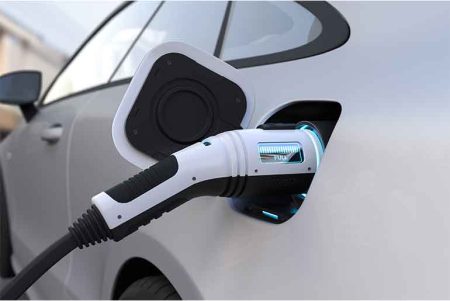
As grids evolve from centralized generation to decentralized, consumer-driven systems (e.g., rooftop solar, EVs), energy storage becomes essential in maintaining grid stability. Without it, the full benefits of smart grid technologies—like real-time energy pricing, dynamic load management, and demand response—cannot be realized.
Summary of Cutting-Edge Energy Storage Technologies
Today’s energy storage technology is moving beyond conventional lithium-ion approaches. Some notable technologies include the following:
- Lithium-Ion Batteries: Lithium-ion batteries (Li-ion) are prevalent in both consumer batteries and grid systems because of their relatively high energy density and costs are trending down. The performance of lithium-ion batteries is ideal for situations where you want to get electricity back quickly, typically short-duration storage.
- Solid-State Batteries: Solid-state batteries (SSB) are a potentially safer and more compact storage option with potentially more cycles than Li-ion and are expected to be commercially usable in the next few years.
- Flow Batteries (Vanadium, Zinc-Bromine): These technologies are good for long-duration (4+ hour duration) storage. They have great scalability and have a long cycle life, but the cost is currently higher.
- Compressed Air Energy Storage: Compressed Air Energy Storage (CAES) uses surplus electricity from off-peak periods to compress and afterwards store the compressed air in chambers, then unleashing the compressed air to generate electricity. The CAES is viable for larger systems that will require long durations.
- Liquid Air Energy Storage: Liquid Air Energy Storage (LAES) is another new technology that uses air as a cooled liquid to provide high-capacity long-duration electricity with zero emissions.
- Gravity-Based Storage: A new generation of gravitational energy storage (e.g.,Energy Vault) is promising for very large applications when you have suitable geography to do gravity-based storage.
- Green Hydrogen: An emerging technology to convert excessive or surplus electricity into hydrogen gas using electrolysis. The Green Hydrogen can be put into stored storage or density liquid and reconverted back into electricity or used in various replacement sectors.
Comparative studies by BloombergNEF indicate that while Li-ion batteries are projected to dominate in the short term, flow batteries and hydrogen will gain traction in applications requiring extended discharge durations.
Integration of Energy Storage in India
India’s aspirational clean energy objectives—or 500 GW of non-fossil fuel capacity by 2030, among others—depend on significant storage deployment. Here are some underpinning government initiatives and development in the area:
- National Electricity Plan (2023-27): promoting the integration of Battery Energy Storage Systems (BESS) to support grid operations;
- PLI Scheme for Advanced Chemistry Cell (ACC) Manufacturing: with Rs 18,100 crore incentivized to improve domestic battery production
- Ministry of Power’s Energy Storage Roadmap: aims to deploy large-scale BESS in proximity to load centers;
- SECI & NTPC tenders: multiple tender announcements for GWh-scale storage projects, including India’s first standalone BESS tender, announced in Ladakh.
Major Indian players such as Reliance New Energy, Amara Raja, Tata Chemicals, and Exide Energy are investing heavily in gigafactories for lithium and other chemistries.
Global Trends and Projections
Globally, the energy storage sector is experiencing rapid growth:
- BloombergNEF anticipates that the sector will be installing 500 GW / 1,500 GWh of storage capacity by 2030, which is a 15x increase from 2022.
- Tesla Megapacks deployed in the USA and Australia are setting new metrics of success for modular, utility-scale energy storage.
- Germany is using home battery storage to develop decentralized energy reliability, usually in combination with rooftop solar.
- South Korea and China, in terms of reported storage capacity, are currently at the top per capital.
India is starting from a much lower base with less than 1 GWh of installed storage capacity, but is expected to hit 160 GWh of installed storage capacity by 2030 if targets are met.
Obstacles to Widespread Adoption
Although it has great potential, there are challenges that exist:
High capital expenditure: Particularly regarding developing technologies, such as flow batteries and hydrogen.
Raw material constraints: There is a reliance on imported lithium, cobalt and nickel.
Policy clarity: We need to clarify standard tariffs, incentives, and grid codes for storage.
Infrastructure challenges: Most grids exist that are not storage capable.
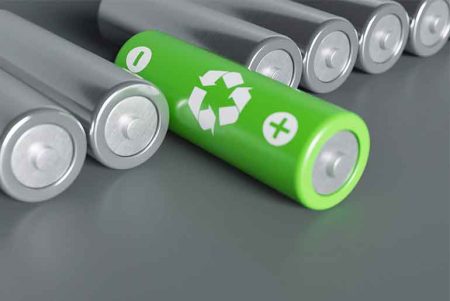
Environmental issues: There needs to be a regulatory framework for disposal and recycling of battery components.
The Future: A Vision for 2030 and Beyond
Energy storage is no longer an option, it is a fundamental building block in the transition to sustainable energy. The future will probably include:
– Energy storage systems that want to utilize AI and IoT to predict when it will be used and for optimization purposes.
– hybrid storage systems that incorporate multiple technologies (e.g., Li-ion+BESS).
– Microgrids and rural electrification with Solar + BESS.
Flexible regulatory frameworks and green financing to support R&D and deployment.
India’s energy future lies in embracing innovation while building resilient infrastructure. With proactive policymaking, domestic manufacturing, and global partnerships, advanced energy storage can enable a stable, low-carbon grid that powers not just homes, but the hopes of a sustainable nation.
 Electrify your feed! Click here to join our Whatsapp group and to get the latest updates, expert insights, and innovations driving India’s energy storage revolution.