


Artificial intelligence is transforming industries, businesses and consumer experiences, but its rapid adoption is creating a less visible challenge: an unprecedented demand for electricity. Behind every generative AI response, cloud-based application and machine learning model lies an energy-intensive network of servers, cooling systems and data centres. As India positions itself as a major digital infrastructure destination, the availability of reliable and sustainable electricity will become a decisive factor in its ability to compete globally.
India’s data centre industry is expanding rapidly, supported by cloud adoption, digital payments, enterprise digitalisation and growing AI workloads. According to a 2026 analysis by the Council on Energy, Environment and Water (CEEW), India’s installed data centre capacity has grown to approximately 1.5 GW and could reach 6.5 GW by 2030. The sector also attracted approximately US$95 billion in committed investments between 2019 and 2025.
This expansion will significantly increase electricity requirements, making energy infrastructure a strategic priority for data centre operators.
AI Is Changing the Energy Equation
Unlike conventional digital infrastructure, AI-focused data centres require substantial computing power to train and operate advanced models. High-performance processors generate considerable heat, requiring sophisticated cooling systems that consume additional electricity.
The International Energy Agency reported in April 2026 that global data centre electricity consumption increased by 17% in 2025, while consumption at AI-focused facilities grew even faster. Overall data centre electricity consumption is projected to double by 2030.
For India, this presents both an infrastructure challenge and an opportunity. As data centre capacity expands, operators will need to secure uninterrupted power while managing electricity costs and reducing their carbon footprint.
Why Solar Power Alone May Not Be Enough
Solar energy offers data centre operators an attractive route towards reducing dependence on conventional electricity. India has a growing renewable energy ecosystem, with solar installations across Rajasthan, Gujarat, Karnataka and other states providing opportunities for large-scale corporate power procurement.
However, solar generation is concentrated during daylight hours, whereas data centres operate continuously. AI workloads cannot simply stop when sunlight disappears, making round-the-clock renewable energy procurement increasingly important.
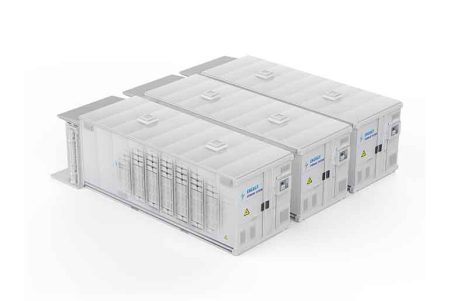
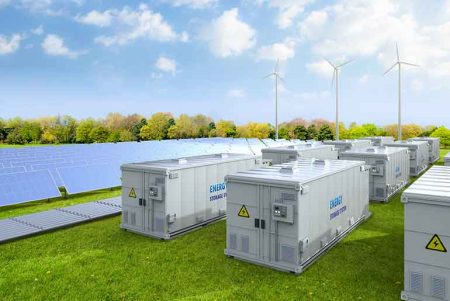
This is where battery energy storage systems become valuable. Batteries can store surplus solar electricity during the day and discharge it during evening and night-time demand. They can also provide backup support, manage sudden fluctuations in power requirements and improve the reliability of renewable energy supply.
Battery Storage as a Strategic Infrastructure Investment
For data centre operators, battery storage serves two distinct purposes. First, it supports renewable energy integration by reducing the mismatch between solar generation and electricity consumption. Second, it provides operational resilience by helping manage short-duration power interruptions and fluctuations.
Battery storage can also complement conventional backup infrastructure, although it must be engineered around the facility’s required backup duration and critical load.
Hybrid energy systems combining solar, grid electricity, battery storage and other dispatchable power sources could therefore become increasingly important for next-generation facilities.
The Opportunity for India’s Energy Sector
India’s projected data centre expansion creates opportunities for renewable energy developers, battery manufacturers, engineering companies and energy management technology providers.
The government estimates that India will require 47.24 GW of battery storage capacity by 2031-32, with an estimated investment requirement of approximately ₹3.49 lakh crore. This creates a substantial market for companies capable of delivering reliable, scalable storage solutions.
Data centre operators can also explore long-term renewable power purchase agreements, co-located solar and storage facilities, and intelligent energy management platforms.
Building a Sustainable Digital Future
The future of artificial intelligence will depend not only on computing capabilities but also on the availability of affordable, reliable and cleaner electricity.
India has an opportunity to build data centres that integrate renewable generation, battery storage and intelligent energy management from the design stage itself. The companies that approach energy as a core component of digital infrastructure rather than merely an operational expense will be better positioned to manage future demand.
Ultimately, the convergence of AI, solar power and battery storage could create a new investment category within India’s digital economy, connecting technological innovation with the country’s broader clean energy ambitions.
 Electrify your feed! Click here to join our Whatsapp group and to get the latest updates, expert insights, and innovations driving India’s energy storage revolution.