
Amara Raja Energy & Mobility plans to invest around ₹1,500–1,700 crore this financial year to push forward its lithium-ion battery cell manufacturing and battery energy storage system (BESS) projects, the company’s top executive said on Tuesday.
The lead-acid battery maker, through its new energy arm Amara Raja Advanced Technologies, is building a gigafactory in Telangana. The goal is to reach 16 GWh of cell manufacturing capacity in phases by 2030.
Y. Delli Babu, Chief Financial Officer, explained the split during the post-earnings call: “In the coming year, we would be spending about ₹400 crore on the lead-acid battery business. And around ₹1,100 crore to ₹1,200 crore of CAPEX in the new energy business.”
The Telangana plant is slated to start in Q1 FY28. Vikramadithya Gourineni, Executive Director – New Energy Business, added, “The first 2GWh line, Giga 1, is still on target to start production in June 2027.”
Boosting BESS
Based in Andhra Pradesh, Amara Raja is also ramping up its energy storage push as demand picks up. Gourineni noted, “While EV momentum remains steady, BESS has accelerated, especially driven by the renewable energy drive in India.”
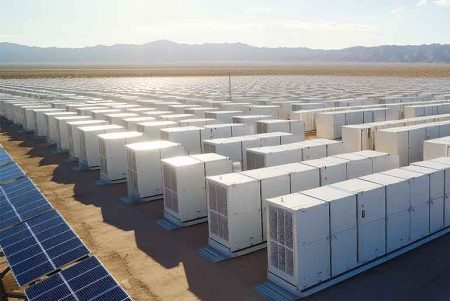
To meet this demand, the company is setting up a 5 GWh BESS integration facility at Divitipalli, with scope to scale to 10 GWh. Production is expected to begin by the end of 2026.
Management expects initial operating margins for BESS to be around 6–7%, with room to improve as volumes grow.
Going in-house on tech
Tighter rules on technology transfers from China have made Amara Raja’s lithium plant development more self-reliant.
Gourineni said the company faces “a little bit of limitations in terms of getting the engineers from China to come and help to actually commission the equipment.” While the base technology came through earlier cooperation, he added, “our own teams have been able to take quite a bit of hold on this program.”
The company is confident about handling its cylindrical 2170 battery programme in-house and with vendor support.
“This is the cylindrical 2170 programme as we’ve shared in the past, and we’re quite confident in our team’s ability to handle this technology smoothly and the ability for the equipment vendors also to support us,” Gourineni said.
Hybrids as a bridge
Speaking on India’s shift from ICE to EVs, Amara Raja said hybrids can help smooth the transition. Gourineni argued that “the thought that India can completely leapfrog from ICE to EV is not making so much sense at the moment.”
He pointed out that while cutting oil imports is important, replacing them entirely with batteries isn’t sustainable yet. Hybrids, he said, can help India gradually build domestic battery manufacturing, supply chains, and upstream materials.
 Electrify your feed! Click here to join our Whatsapp group and to get the latest updates, expert insights, and innovations driving India’s energy storage revolution.