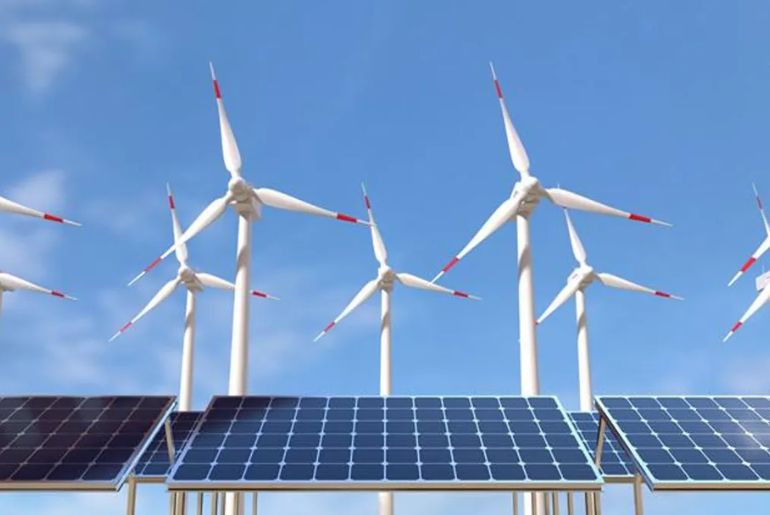
Green energy developer Avaada Group is in advanced discussions with several foreign lenders, including Standard Chartered and Sumitomo Mitsui Banking Corporation (SMBC), to secure approximately $700 million (about ₹6,500 crore) in project financing for a large solar‑wind hybrid project awarded by Sutlej Jal Vikas Nigam (SJVN).
People familiar with the negotiations, speaking on condition of anonymity, said the financing would be structured as a 20‑year loan, with terms currently being finalised. A likely repayment option at the end of five years is also under consideration to provide a repayment window for the borrower.
Consortium of Global Banks Under Consideration
In addition to Standard Chartered and SMBC, Mitsubishi UFJ Financial Group (MUFG) of Japan and DBS Bank of Singapore are expected to join the lending mix, sources said. Final agreements are anticipated to be concluded by early February 2026.
A representative for MUFG, DBS and Standard Chartered declined to comment, while neither SMBC nor Avaada responded to emailed requests for confirmation.
Project Backed by Long‑Term Power Sale Agreement
A senior person familiar with the process explained that “this is a project being implemented by Avaada where the power will be sold to SJVN through a power purchase agreement (PPA). It’s a long gestation project because of which the loan is a longer tenure. The structure of the loan is still being worked out and will be finalised in the next few days.”
Last year, SJVN awarded Avaada a portfolio of 1,410 MW renewable energy projects, which includes an 820 MW solar‑wind hybrid project backed by a 25‑year PPA, as well as a 590 MW interstate transmission‑connected renewable project on a build‑operate‑transfer basis, both structured with long‑term PPAs.
Financial Track Record and Credit Perspective
In 2023, Avaada secured financing for a 300 MW project from the Solar Energy Corporation of India (SECI), with MUFG and SMBC along with a European lender providing loans of ₹1,150 crore each at an interest rate of 8.40% per annum for five years.
Credit rating agency ICRA recently highlighted that while Avaada’s robust order book and demand outlook for local module and cell manufacturers are credit strengths, the company’s significant debt‑funded expansion plans may increase leverage and expose it to execution risks.
“The extent of the leverage and the company’s ability to maintain adequate liquidity and service debt obligations will remain a key credit monitorable,” ICRA said
 Electrify your feed! Click here to join our Whatsapp group and to get the latest updates, expert insights, and innovations driving India’s energy storage revolution.