
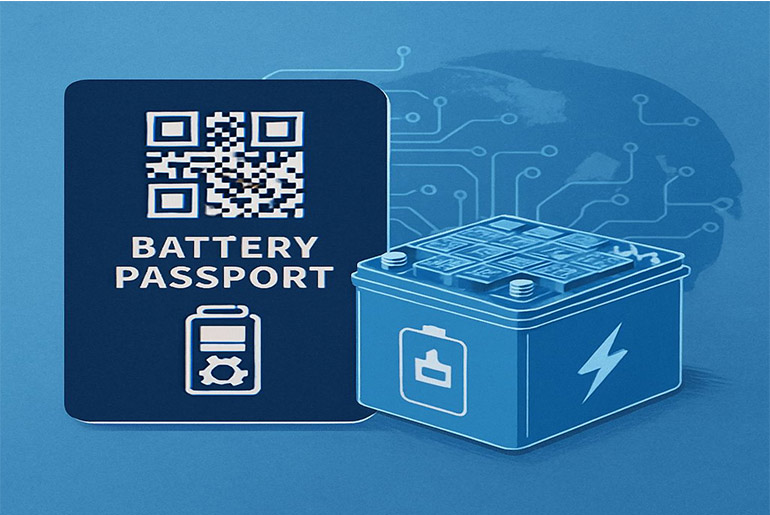
In 2025, the battery industry is on the cusp of a revolution—not driven only by lithium or cobalt or nickel, but data. As the world pivots to electric mobility and renewable energy, battery passports are set to become the digital birth, life, and death certificates of every energy cell made, bought, and sold. Led by the European Union’s Battery Regulation, a groundbreaking initiative to build traceability, transparency, and sustainability into battery production will have a significant, far-reaching impact.
Think of it as a “digital DNA”—a scannable and traceable passport that captures the lifecycle of the battery from raw material to recycling. Battery passports will move to transform the manufacture, sale, and resale of batteries as environmental scrutiny intensifies and supply chains become more complicated.
What Is a Battery Passport?
A battery passport is a digital record that contains detailed, standardized information about a battery. This includes:
- Materials origin and sourcing methods
- Manufacturing location and date
- Carbon footprint
- Battery chemistry and performance metrics
- Recyclability and second-life potential
These passports will be machine-readable, with commonly available QR codes or backed on blockchain-style platforms, which will be available to some regulators, recyclers, and even end-users. The new EU regulation will require this from February 2027, but groundwork is being built in 2025, which is a significant year for digital compliance.
Global Mandates and Policy Changes
The battery passport starts from the EU battery regulation (regulation 2023), which brings sustainability and transparent expectations to all industrial and EV batteries greater than 2 kWh sold within the EU. It states that:
- Each battery sold in the EU must have a battery passport by 2027.
- Manufacturers must disclose their carbon footprint data starting February 2025.
- Responsible sourcing of critical raw materials will be a key reporting metric.
India, China, South Korea, and the U.S.—as major battery exporters—must now align their manufacturing and traceability frameworks to stay competitive in the European market.
Some of the leading brands, such as Northvolt, CATL, and Tesla, are already out front investing in technological infrastructure to comply, while startup market entrants, such as Circulor and MineSpider, are developing blockchain-enabled platforms that can trace the supply chain all the way down to the mine itself.
Industry Readiness: Still a Work in Progress
While the idea is exciting, the implementation is riddled with challenges. Most manufacturers are still struggling with:
- Data standardization across international suppliers
- Real-time tracking of thousands of components
- Verifying the origin of raw materials like cobalt or lithium
- Interfacing with digital platforms that are still evolving
Smaller battery firms may struggle with the cost and technical know-how needed to integrate these systems, while larger conglomerates are leveraging partnerships with software firms, recyclers, and AI platforms to streamline the process.
However, the investment is worth it—not just for compliance, but for future-proofing business models in a climate-conscious economy.
More Than Compliance: The Strategic Advantage
Battery passports offer benefits far beyond regulatory fulfillment. They promise to:
- Enable predictive maintenance and performance tracking for EVs
- Enhance recycling efficiency by providing exact material compositions
- Support second-life use cases in grid storage or telecom
- Boost investor and customer confidence by ensuring responsible sourcing
- Improve carbon accounting and ESG reporting accuracy
They also open the door for automated warranty claims, performance audits, and even carbon credits trading, since lifecycle data will be digitally verifiable.
The Road Ahead
Battery passports are not just a digital evolution; they represent a fundamental change in intensity. As energy storage increasingly operates as the hub of electric vehicles, smart grids, and renewable power, traceability and transparency will be the foundation for ongoing momentum.
By embedding intelligence into the fabric of a battery, the industry is ensuring responsible advancement, ethical sourcing, and circularity.
As we look to 2025, the battery manufacturers that incorporate digital traceability today will be the leaders in the clean energy transition tomorrow.
 Electrify your feed! Click here to join our Whatsapp group and to get the latest updates, expert insights, and innovations driving India’s energy storage revolution.