The maiden edition of the Bharat Electricity Summit (BES) concluded successfully, bringing together policymakers, global experts, industry leaders, investors, and innovators to discuss the future of the power sector and accelerate the global clean energy transition. The Summit featured extensive deliberations, high-level bilateral meetings, and significant business engagements, reinforcing India’s growing leadership in the global energy landscape.
Strong Participation Reflects Global Significance
The Summit had a huge turnout, with more than 35,000 people visiting the exhibition, 28 states and union territories taking part, over 200 exhibitors (including more than 80 startups), 6,000 delegates, 300 speakers, and more than 100 conference sessions. This shows how big and important it was.
India Advancing Towards Clean Energy Goals
India is still moving toward its goal of 500 GW of non-fossil fuel capacity by 2030, and it has already reached more than 50% of that goal. India’s commitment to working together on energy issues around the world is shown by programs like “One Sun, One World, One Grid.”
Minister Highlights Summit Success and Sector Priorities
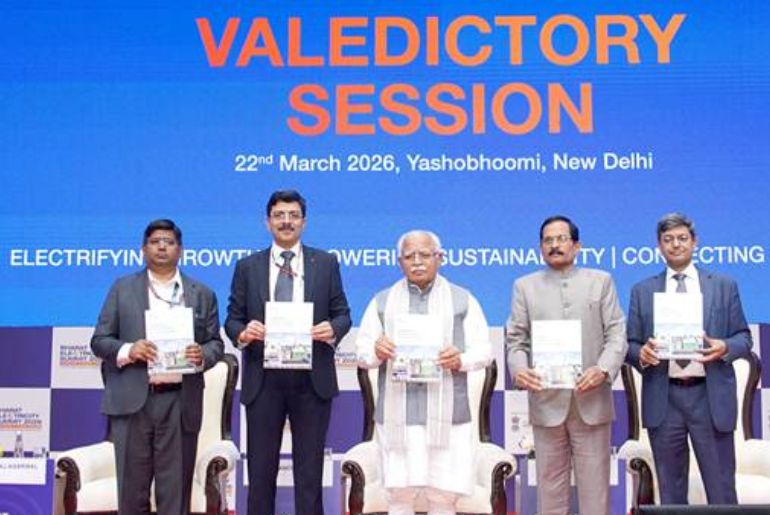
Shri Manohar Lal, the Union Power Minister, said in his valedictory speech that the Summit was a big success because so many people from different groups took part. He stressed that even though this was the first edition, there was more participation and meaningful conversation than ever before.
He stated, “the Summit was extremely successful and saw impressive participation from different stakeholders of the power sector.”
He also expressed satisfaction over the strong presence of startups, highlighting their role in driving innovation.
Referring to India’s long-term vision, he said achieving Viksit Bharat by 2047 requires reliable electricity access for all. He added that under the Saubhagya Yojana, electricity has reached every corner of the country.
He repeated Prime Minister Narendra Modi’s idea of “One Sun, One World, One Grid” for global cooperation, stressing the need for more renewable energy and sustainability. He also talked about having good talks with African countries, which shows that there are many chances for partnerships that will benefit both sides.
Focus on DISCOM Reforms and Future Planning
The Minister stressed the need to strengthen DISCOMs through reforms such as smart metering and cost-reflective tariffs. He added that utilities have shown willingness to improve operational and financial performance.
He also announced that the next edition of the Summit will be held in 2028 in Gandhinagar, Gujarat.
Key Insights from Policy Leadership
Minister of State for Power and MNRE, Shri Shripad Naik, said that India’s power sector is changing through a coordinated federal approach in which the national vision matches the execution at the state level.
He identified three key takeaways:
- States are becoming leaders in new ideas in renewable energy and policy change.
- Changes to distribution are picking up speed.
- The energy transition is coming together, bringing together renewable energy, storage, transmission, and digital systems.
Investment Pipeline and Storage Needs
Power Secretary Shri Pankaj Agarwal revealed that industry discussions indicate a potential capital expenditure pipeline of ₹32,000 crore in the power sector. He stressed the importance of system-level cost evaluation and rapid expansion of energy storage capacity.
Sector Growth and Key Metrics
India’s power sector continues to expand rapidly:
- The installed capacity is now over 520 GW.
- The transmission network has more than 5 lakh circuit kilometres.
- The amount of solar energy has grown from 2.8 GW in 2014 to more than 143 GW.
- By 2030, the need for electricity is expected to rise by more than 30%.
The government emphasized that while thermal power remains essential for grid stability, renewable energy will drive long-term sustainability supported by storage and grid modernization.
Ministerial Meeting Sets Priority Actions
A high-level meeting with States and UTs outlined key priorities:
- Improving DISCOM financial viability
- Implementing cost-reflective tariffs with targeted subsidies
- Accelerating smart meter deployment
- Securing future generation capacity
- Advancing nuclear energy for long-term energy security
Strategic Discussions Shape Future Roadmap
Key sessions focused on:
- Centre-State coordination for faster execution
- Green hydrogen and emerging fuels
- AI-driven grid systems and cybersecurity
- Expansion of nuclear energy
- Power markets and electrification
- Financing mechanisms for large-scale investments
- Energy storage growth, expected to increase fivefold by 2031–32
- Strengthening domestic manufacturing under “Make in India”
Experts noted that India’s energy transition may require investments exceeding USD 22 trillion by 2070.
Infrastructure and Market Developments
India plans major infrastructure expansion:
- Addition of over 1.37 lakh circuit km transmission lines by 2030
- Investments of around ₹9 lakh crore in transmission
- Pumped storage potential exceeding 200 GW
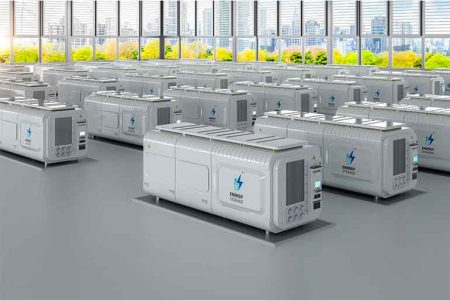
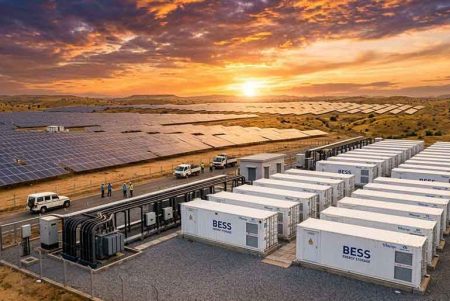
- Growing role of Battery Energy Storage Systems (BESS)
The launch of the Indian Carbon Market Portal marks a significant step towards advancing climate finance.
Digital Transformation Driving Change
The Summit made it clear that digitalisation is a key driver, with more and more use of AI, machine learning, and digital twins to make grid operations smarter. The idea of a “India Energy Stack” is to make energy systems that can work together. Smart meters and rooftop solar panels are making it possible for people to become “prosumers,” or active participants.
States Showcase Ambitious Plans
Several states presented future roadmaps:
- Gujarat targets 190 GW renewable capacity by 2047
- Andhra Pradesh plans investments exceeding ₹6 lakh crore
- Maharashtra expects demand to reach 280 TWh by 2030
- Bihar is focusing on storage and grid investments
- Delhi is advancing towards a high-renewable urban power system
Global Partnerships Strengthened
The Summit made it possible for countries like Malawi, Tajikistan, Mauritius, Kyrgyzstan, and Russia to work together, as well as institutions like Africa50. People talked about trading power across borders, working together on renewable energy, building infrastructure, and moving technology from one place to another.
The India-Africa Strategic Meet further strengthened cooperation in renewable energy, grid modernization, and last-mile connectivity.
Business Outcomes and Industry Engagement
The Summit recorded strong business activity:
- Over 1,200 buyer-seller meetings conducted
- Business enquiries worth more than ₹517 crore generated
Conclusion
The Bharat Electricity Summit 2026 has made a clear plan for India’s power sector, focusing on resilience, moving to clean energy, and becoming a global leader. The event reaffirmed India’s commitment to creating an energy ecosystem that is ready for the future, driven by technology, and open to investment. This will help both domestic growth and the energy needs of the Global South.
 Electrify your feed! Click here to join our Whatsapp group and to get the latest updates, expert insights, and innovations driving India’s energy storage revolution.