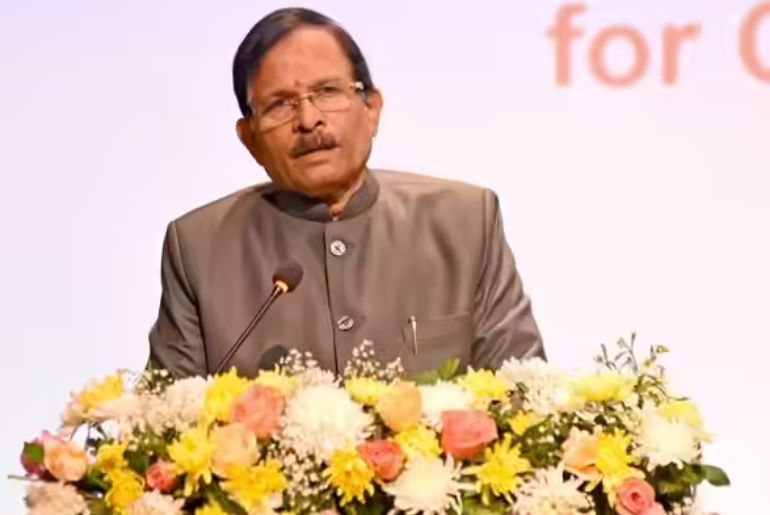
The Union Minister of State for New and Renewable Energy and Power on Tuesday underscored the critical role of bioenergy in India’s clean energy transition, with a special focus on decarbonising industrial process heat in the MSME sector. The Minister was delivering the keynote address at a national workshop on “Introduction and Adoption of Biomass for Green Steam and Heat Applications in MSMEs”, organised by the Ministry of New and Renewable Energy (MNRE) in collaboration with the German Agency for International Cooperation (GIZ) and Grant Thornton Bharat. On the occasion, the Minister also jointly released the report titled “Decarbonizing MSMEs: Use of Biomass for Green Steam and Heat Application”.
Highlighting India’s renewable energy progress over the past decade under the leadership of Prime Minister Narendra Modi, the Minister said bioenergy has evolved from a marginal contributor to a strategic pillar of the country’s clean energy journey. He noted that bioenergy today supports multiple national priorities, including energy security, rural livelihoods, waste management, pollution reduction and climate action.
Addressing Industrial Decarbonisation Challenges
The Minister pointed out that MSMEs account for nearly one-third of India’s manufacturing output and employ millions, yet a large share of their thermal energy demand for steam and heat is still met using fossil fuels such as coal, furnace oil and pet coke. Transitioning this segment to clean and renewable thermal energy, he said, is essential for achieving India’s decarbonisation goals.
He emphasised that biomass-based green steam and heat solutions offer a practical, scalable and India-specific pathway. India’s abundant agricultural residue, animal waste and municipal solid waste, he noted, provide a strong opportunity to convert waste into value, cut emissions and create additional income for farmers and rural entrepreneurs.
Policy Support and Roadmap for MSMEs
The Minister outlined the government’s integrated approach through initiatives such as the National Bioenergy Programme, SATAT and GOBARdhan, which promote biomass briquettes and pellets, non-bagasse-based cogeneration, decentralised solutions for MSMEs and linkages with the National Green Hydrogen Mission. He said the report released at the workshop offers a data-driven, sector-specific roadmap for adopting biomass-based green heat and steam across industries including textiles, food processing, chemicals, foundries and pharmaceuticals. It also highlights policy and market enablers such as biomass deployment obligations, standardised steam supply agreements, biomass exchanges and improved supply-chain coordination.
Collaboration and International Engagement
Stressing that technology alone cannot drive transformation, the Minister called for close collaboration across the value chain from farmers and FPOs to aggregators, logistics providers, boiler manufacturers, energy service companies, financiers and regulators. He said MSMEs need assurance on fuel availability, pricing stability, operational reliability and supportive policies.
Secretary, MNRE, Shri Santosh Kumar Sarangi, said biomass-based solutions from waste-to-energy and compressed biogas to decentralised biogas plants can be deployed nationwide, supporting livelihoods and decentralised energy access. He also highlighted the importance of strengthening supply chains, advancing R&D, promoting multi-fuel boilers and enhancing international cooperation, particularly with Germany, to accelerate adoption of biomass-based industrial heat solutions.
 Electrify your feed! Click here to join our Whatsapp group and to get the latest updates, expert insights, and innovations driving India’s energy storage revolution.