

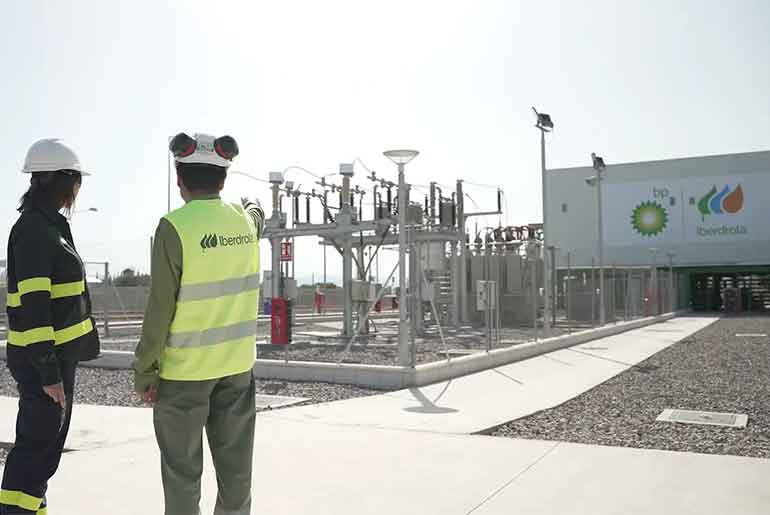
The facility at bp’s Castellón refinery is expected to produce 2,800 tonnes of green hydrogen annually and avoid around 23,000 tonnes of CO₂ emissions each year.
bp and Iberdrola have commenced operations at their 25 MW green hydrogen plant at bp’s Castellón refinery in Spain. The facility, developed through a 50:50 joint venture and operated by bp, is currently the largest operational green hydrogen plant in Spain.
The plant is expected to produce approximately 2,800 tonnes of green hydrogen annually, supporting the decarbonisation of industrial operations and reducing emissions from the refining sector. The project will replace a portion of the grey hydrogen currently used in the refinery’s operations with green hydrogen.
Iberdrola will supply 170 GWh of renewable electricity annually to the facility from its wind and solar farms in Spain under a power purchase agreement (PPA). This renewable power supply will support the plant’s hydrogen production using renewable energy.
Hydrogen plays an important role in the refining process at the Castellón facility. By replacing some of its conventional grey hydrogen consumption with green hydrogen, the refinery is expected to avoid approximately 23,000 tonnes of carbon dioxide (CO₂) emissions annually. The initiative is also expected to help reduce the refinery’s carbon-related costs.
Commenting on the development, Brenda Stout, SVP Refining, Terminals and Pipelines at bp, said the company’s European refineries play an important role in energy security by meeting customer demand for jet fuel, diesel and gasoline. She added that the start of operations at the green hydrogen facility, in partnership with Iberdrola, would further strengthen the competitiveness of the Castellón refinery.
Mario Ruiz-Tagle, CEO of Iberdrola España, highlighted that the project demonstrates how renewable electricity and innovation can improve industrial competitiveness, support job creation and strengthen energy independence while reducing emissions from industrial processes.
The project also involves the Instituto Tecnológico de la Energía (ITE) as a participant. It has received €15 million in funding through incentive programmes supporting innovation and knowledge development across the renewable hydrogen value chain. The funding is managed by Spain’s Institute for the Diversification and Saving of Energy (IDAE) and supported by the European Union’s NextGenerationEU programme under Spain’s Recovery, Transformation and Resilience Plan.
The commissioning of the 25 MW facility marks a development in Spain’s green hydrogen sector, demonstrating the potential for renewable hydrogen to replace fossil-based hydrogen in energy-intensive industrial applications.
 Electrify your feed! Click here to join our Whatsapp group and to get the latest updates, expert insights, and innovations driving India’s energy storage revolution.