

A Battery Energy Storage System (BESS) is comprised of a number of components all of which work together to store and deliver electricity. Some of the components are clearly there to store the energy, others are there to control the power, monitor the health of the battery and ensure safety.
Understanding those components is the key to understanding how a BESS works. From the battery cells right through to the energy management software, every component is there to enable the system to deliver reliable and efficient power.
1. Battery Cells and Battery Modules
Battery cells are the key elements of a BESS. They’re the bit that stores the energy in the form of chemical energy and then releases it when the electricity is required.
Several cells are connected together to make a module, multiple modules are then combined to make a module or rack (the unit which provides the required storage capacity).
Lithium ion batteries are the battery of choice in most of the modern BESS. LFP is a very common chemistry in these systems due to its long cycle life and good thermal stability. NMC is also used in a number of the energy storage applications.
2. Battery Management System (BMS)
The BMS (battery management system) monitors and protects the battery. It’s one of the absolutely key elements of a BESS.
The BMS monitors a range of key battery parameters (voltage, temperature, current) and also keeps a close eye on the State of Charge (SoC) which tells you how much energy is in the battery.
It helps to prevent overcharging, deep discharge and overheating. It can also balance the cell voltages to improve performance and battery life.
3. Power Conversion System (PCS)
The Power Conversion System (PCS) controls the flow of power from the battery to the grid and/or to the equipment connected to the grid.
Batteries store and supply energy in the form of Direct Current (DC). The bulk of homes, industry and the power grid use Alternating Current (AC).
The PCS converts AC to DC when charging the battery and DC to AC when discharging. It also manages the flow of power and is responsible for maintaining the required electrical conditions.
4. Energy Management System (EMS)
The Energy Management System (EMS) is the ‘brain’ of the BESS in that it’s the system which controls how and when the BESS stores and releases energy.
The EMS uses information on energy demand, electricity prices, renewable power generation and battery state to make its operating decisions.
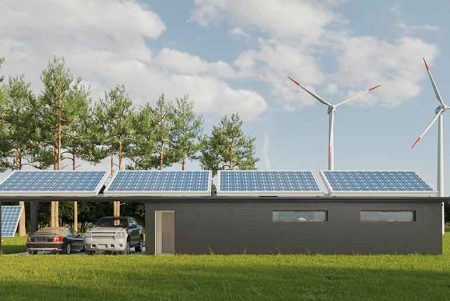
For example it can store the electricity when there’s solar or wind power available in surplus and then release that stored energy when demand is higher or when there’s insufficient renewable generation.
The EMS will improve energy efficiency and reduce running costs.
5. Thermal Management System
Battery temperature has a huge bearing on performance, safety and life. A Thermal Management System keeps the cells within their recommended temperature range.
BESS can be air cooled or liquid cooled. Air cooling uses fans and ventilation to remove the heat. Liquid cooling uses a circulating coolant to more effectively manage the temperature.
Correct temperature control will help to minimise the risk of overheating and will help to ensure stable system operation.
6. Fire Detection and Protection System
Safety is a major issue with large scale battery storage and there is a fire detection and protection system in place to detect any issues and deal with them.
It may incorporate smoke detectors, heat sensors, gas detection systems, alarms and fire suppression equipment.
Some battery failures can result in thermal runaway (where the heat generated as a result of the temperature rising leads to further heat generation). Early detection and the appropriate safety measures can make a huge difference in the likelihood of the fire spreading.
7. Power Distribution System
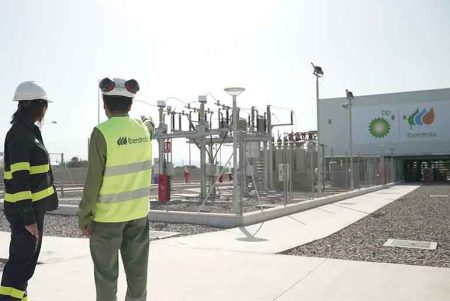
The Power Distribution System connects the battery units, the PCS, the grid and all the other electrical equipment.
It consists of cables, busbars, circuit breakers, transformers and switchgear. Those are the items that allow the safe transfer of the electricity and the management of the electrical connections.
Transformers can be used to step the voltage up or down as required by the grid or facility. Circuit breakers are used to protect the system in the event of an electrical fault.
8. Container and Enclosure
The vast majority of large BESS installations will make use of purpose built containers or enclosures to house the battery racks and associated equipment.
These enclosures protect the system from dust, rain and so on and provide space for the cooling, ventilation, monitoring and safety equipment.
Containerised BESS solutions are easier to transport and easier to install. They’re the solution of choice in a lot of the utility scale and commercial energy storage projects.
Why are the BESS components important?
All of the BESS components work together to provide safe and efficient energy storage. The cells store the energy, the BMS looks after the health of the battery, the PCS does the power conversion, the EMS manages the energy flow and the cooling and fire protection provide the required safety.
If one item fails then the performance and reliability of the whole system is shot.
Conclusion
A battery energy storage system is more than just a lot of batteries. It’s an integrated system which includes the electrical equipment, the monitoring systems, the software and the safety systems.
As the demand for renewables and for reliable electricity continues to grow, these are all going to be key enablers in the growth of the global energy storage industry. Better battery tech, better cooling and smarter energy management will all play their part in making BESS installations more efficient and more reliable.
 Electrify your feed! Click here to join our Whatsapp group and to get the latest updates, expert insights, and innovations driving India’s energy storage revolution.