


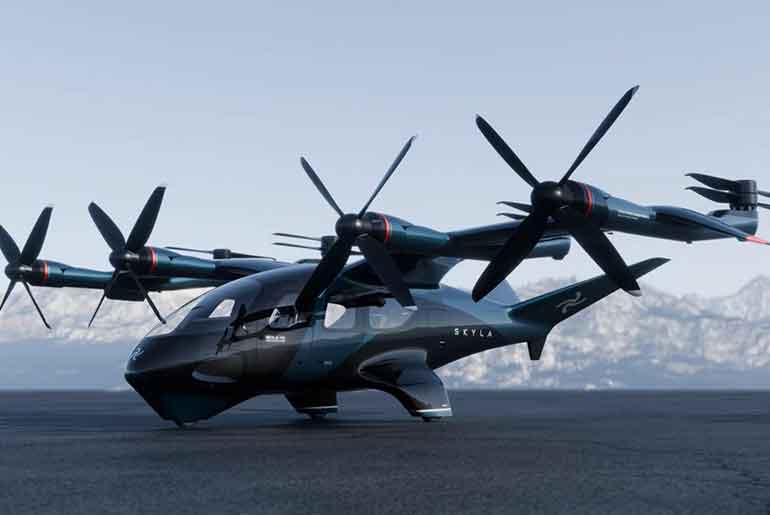
CATL has signed strategic and product cooperation agreements with Blue Vector to develop electric aviation technologies, including a customised aviation battery for the company’s SKYLA V30 electric vertical take-off and landing (eVTOL) aircraft. Under the agreement, CATL will serve as Blue Vector’s exclusive battery partner, with both companies working together to advance battery innovation and applications in electric aviation.
The collaboration focuses on developing power battery solutions suited to the demanding requirements of electric aircraft, where battery performance directly influences aircraft weight, flight range, operational efficiency and safety. Unlike electric road vehicles, eVTOL aircraft require higher levels of battery reliability, lightweight design and safety assurance, supported by extensive system integration, engineering validation and airworthiness certification.
CATL brings expertise in battery research and development, system safety engineering, manufacturing processes and quality management to the partnership. The company has developed a customised aviation power battery for Blue Vector’s SKYLA V30, supporting the aircraft’s electric propulsion requirements.
Blue Vector specialises in the development, manufacturing, sales and operational services of eVTOL aircraft. Its SKYLA V30 is a fully electric tiltrotor aircraft designed for passenger transportation, with the company advancing technologies related to aircraft design, propulsion system integration, flight control and software-defined aircraft architecture through engineering development and validation.
Beyond the SKYLA V30 programme, the companies will collaborate across technological innovation, research and development, industry standardisation, market expansion and operational applications. The partnership is expected to support broader development and commercialisation opportunities in electric aviation.
According to IT Home, Blue Vector’s SKYLA V30 is a 2.5-tonne, six-seat, all-electric passenger eVTOL featuring a tiltrotor configuration. The design combines vertical take-off and landing capabilities with the efficient cruising performance of a fixed-wing aircraft.
The aircraft is reported to offer a range of 260 kilometres and a maximum speed of 320 km/h. Its development reflects growing efforts to advance electric aircraft technologies for future passenger transportation applications.
The partnership highlights the expanding role of advanced battery technologies beyond electric vehicles, as manufacturers explore high-performance energy storage solutions for emerging electric aviation markets.
 Electrify your feed! Click here to join our Whatsapp group and to get the latest updates, expert insights, and innovations driving India’s energy storage revolution.