The Central Electricity Regulatory Commission (CERC) has released the draft Fifth Amendment to the CERC (Sharing of Inter-State Transmission Charges and Losses) Regulations, 2026, proposing a 25-year waiver of Inter-State Transmission System (ISTS) transmission charges for Battery Energy Storage Systems (BESS) integrated with Renewable Energy Generating Stations (REGS) and Renewable Hybrid Generating Stations (RHGS).
The proposal aims to provide greater regulatory certainty for renewable-plus-storage projects while supporting the deployment of energy storage systems and addressing concerns raised by industry stakeholders.
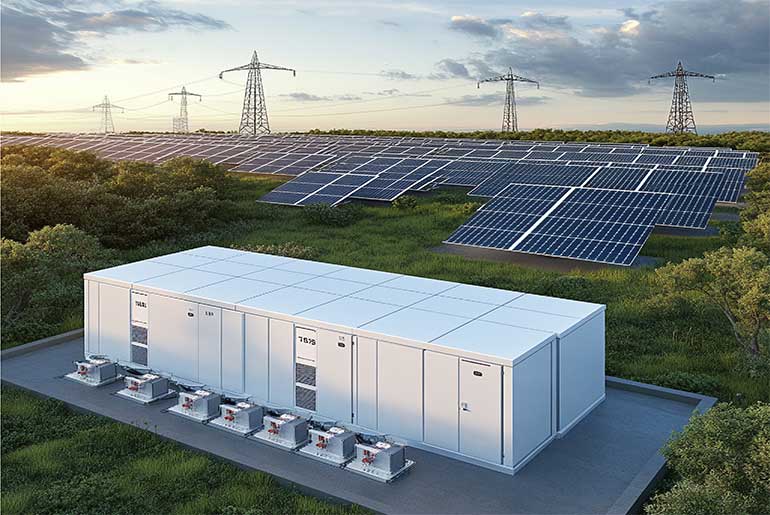
Under the draft regulations, a BESS installed as an integral part of a REGS or RHGS and scheduled as a single generating entity will be eligible for an ISTS transmission charge waiver for up to 25 years from the commercial operation date (COD) of the renewable project. The benefit will also extend to storage systems added later as a source change under the General Network Access (GNA) Regulations.
According to the explanatory memorandum, the waiver period will remain linked to the COD of the renewable generating station rather than the battery storage system. Even if the BESS is commissioned after the renewable project, the 25-year waiver will continue to be calculated from the renewable plant’s COD. Any battery replacement or technology upgrades during the project lifecycle will be carried out in line with the applicable power purchase agreement.
In another significant proposal, CERC has recommended separate ISTS waiver treatment for co-located battery storage projects based on different charging cycles. While a BESS charging from its co-located renewable energy source will continue to receive the existing waiver, charging from non-co-located renewable sources through the ISTS network may qualify under a separate waiver category. The National Load Despatch Centre (NLDC) will develop detailed procedures for accounting and implementation.
The draft amendment also proposes recognising renewable energy procured through the Green Day Ahead Market (G-DAM) towards the mandatory requirement that at least 51% of an Energy Storage System’s annual charging energy must come from renewable sources. Storage developers seeking this benefit will need to submit source-wise renewable energy transaction certificates issued by power exchanges.
For Pumped Storage Projects (PSPs), CERC has proposed a contract-wise approach to determine compliance with the 51% renewable charging requirement. Under the proposal, contracts meeting the renewable energy threshold will continue to receive ISTS transmission charge waivers even if the project, as a whole, falls short of the prescribed limit. NLDC will frame detailed implementation guidelines following stakeholder consultations.
The regulator has also proposed relief for eligible wind, solar and hybrid projects delayed solely due to the non-availability of transmission infrastructure. Projects with firm power procurement contracts executed by December 31, 2026, would retain ISTS waiver benefits based on their original connectivity schedule, subject to specified commissioning conditions.
Additionally, the draft introduces revisions to transmission deviation calculations for entities operating under General Network Access for Renewable Energy (GNARE) and Temporary GNARE, while also updating provisions governing projects with dual connectivity to both inter-state and intra-state transmission networks.
The proposed amendments were prepared after considering representations from stakeholders, including the Ministry of New and Renewable Energy (MNRE), Ministry of Power, India Energy Storage Alliance (IESA), Tata Power, and Grid-India. CERC has invited comments, suggestions, and objections on the draft regulations until August 31, 2026, before issuing the final amendment.
The proposed CERC ISTS waiver for BESS is expected to improve the commercial viability of renewable energy projects integrated with battery storage, supporting India’s clean energy transition and accelerating investment in grid-scale energy storage infrastructure
 Electrify your feed! Click here to join our Whatsapp group and to get the latest updates, expert insights, and innovations driving India’s energy storage revolution.